Steven Millward · · 6 min read
9 ways that e-commerce titan Alibaba diversified and went social in 2013
Alibaba’s much-vaunted IPO didn’t happen in 2013, but China’s e-commerce titan still provided enough action to qualify it as a global spectator sport. That was because 2013 was the year the company diversified like never before, focusing more on mobile and edging into social media and social commerce.
The shift to mobile is obvious, but Alibaba also indicated this year that it wants its e-shopping sites Taobao and Tmall to get more social and find new avenues to engage audiences and find revenue.
It was something started tentatively in 2012 when Alibaba was rumored to have invested as much as $40 million into China’s top find-and-flirt dating app. Then the company very quietly rolled out a messaging app but didn’t do much with it that year.
2013 was the year the company truly went social. Here are nine cases:
January: Alibaba invests in a music-streaming service
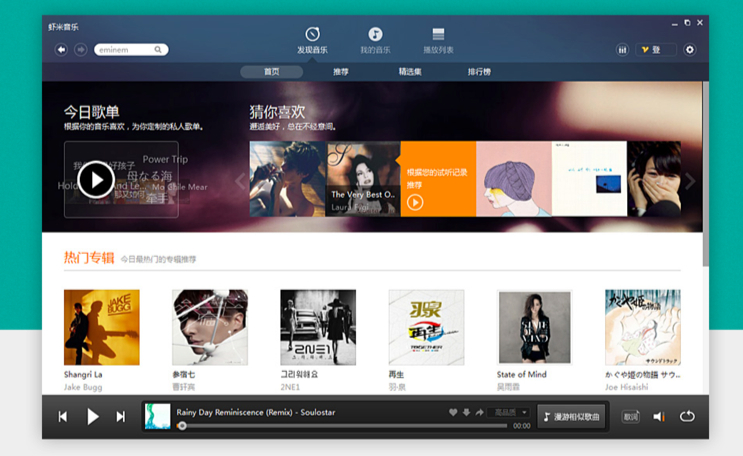
Xiami, a free music-streaming service, has been around for years as one of China’s coolest music-oriented social networks. Alibaba started off 2013 by acquiring the site for an undisclosed sum. The service soon got much-needed revamps to its smartphone apps, and brand-new apps for Windows and OS X. And then – no doubt pushed by the new parent company – Xiami launched a “VIP” paid subscription that gives better quality audio and a bundle of MP3 downloads each month. But the core music service is still free – and ad-free – for all users, unlike global equivalents such as Spotify.
April: Taxi app flags down Alibaba funds
This was a rumor back in April, but it has since been confirmed that Alibaba is the main backer of Kuaidi DaChe, one of several such smartphone apps for hailing taxis in China. Tencent, China’s biggest web giant, is an investor in rival taxi app Didi DaChe.
April: Alibaba pays nearly $600 million for a slice of Sina Weibo
In March 2013, Alibaba announced a transition to a new CEO in the form of Jonathan Lu, which eventually left founder and former CEO Jack Ma in the chairman’s chair by May. That transition liberated Ma to look at the big picture, be a lot more vocal, and steer Alibaba towards faster and more social diversification. The next move was a huge one.
Alibaba paid $586 million to take an 18 percent stake in Sina Weibo, the Twitter-like microblogging service run by Sina (NASDAQ:SINA). Despite having over 500 million registered users and lots of Facebook-esque features like social gaming and a virtual currency, Sina Weibo always struggled to make money. But Jack Ma’s company clearly saw a chance to fuse e-commerce with social media.
Indeed, just one day after the deal was announced, ads for Alibaba’s Taobao e-store appeared within Weibo; about a month later, Sina Weibo allowed any brand to incorporate Groupon-style daily deals into posts.
May: Alibaba pays $300 million for big stake in Autonavi
Shortly after the Sina Weibo deal, Alibaba went in a slightly different direction with a 28 percent stake in Autonavi (NASDAQ:AMAP) for $294 million. Autonavi makes China’s top map app, and is Apple’s partner in China for Apple Maps. The plan was to put e-commerce on the map – to share data, and to cooperate in the areas of mapping engines, location search, navigation, and cloud computing services. Cross-promotion between Autonavi and Alibaba’s Tmall and Taobao e-store apps will also benefit both parties in boosting their respective smartphone user-base.
July: Alibaba hits the big screen, makes a smart TV OS
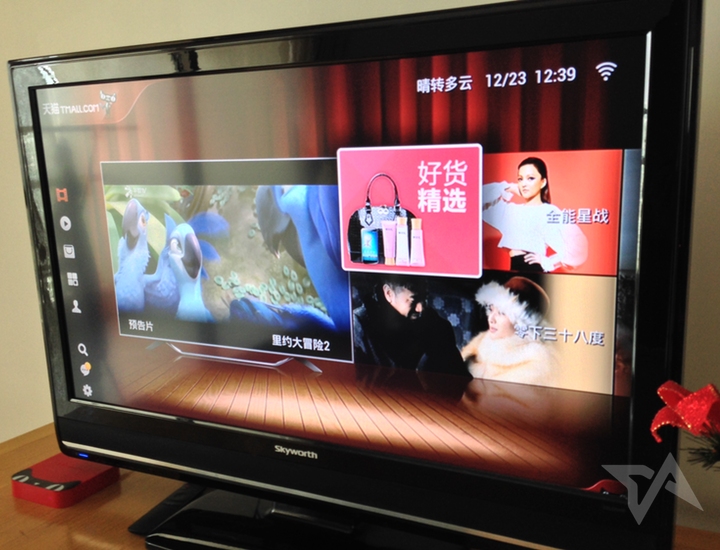
2013 was the year that Chinese web giants hit the big screen, shoving their way into China’s middle-class sitting rooms via smart TVs. They were all at it.
September: Alibaba pushes its messaging app in battle against WeChat
September: Alibaba acquired Dropbox-like service
October: Alibaba invests in US-based Quixey
December: Alibaba and WeChat go head-to-head over movie tickets
But is Alibaba’s phone OS dead in the water?





Stay updated on the go with our mobile app.
Get latest insights with smoother, more personalized experience through TIA mobile app.