Yesterday, we shared some data from Baidu’s Q1 2012 internet trends report about the overall makeup of China’s mobile browsing market — at least among those mobile users who access Baidu — but today I want to get even more specific: what handset models are the most common? Thankfully, Baidu has data on that as well.
Before we get to the shiny charts: a quick reminder that this is data gathered based on Baidu pageviews, so it doesn’t apply to the entire Chinese mobile web browsing market. That said, Baidu has such a huge percentage of China’s overall search market share that Baidu’s numbers are likely very representative of overall internet trends in China.
OK, let’s get to it! Here are the top twenty handset models in China, by percentage of Baidu pageviews (note the Android handsets in green):
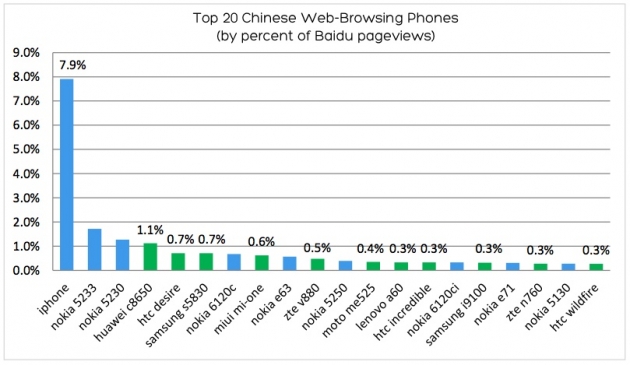
That iPhone stat has nearly doubled since we looked at Baidu’s previous report for 2011 Q4. At that time the iPhone’s lion’s share was at 4.48 percent.
It’s interesting to look at the massive contrast between this and the data we saw yesterday, which indicates that iOS users account for just 5.8 percent of mobile web browsing. Of course, the data is not contradictory; rather that big iPhone bar is the result of Apple’s limited handset offerings — there is only the iPhone. In contrast, note that while no single Nokia handset is anywhere near as popular as the iPhone, eight of the top twenty handsets are made by Nokia.
Diving more specifically into Android handsets, the fastest-growing segment of China’s smartphone market, we can also see some interesting things:
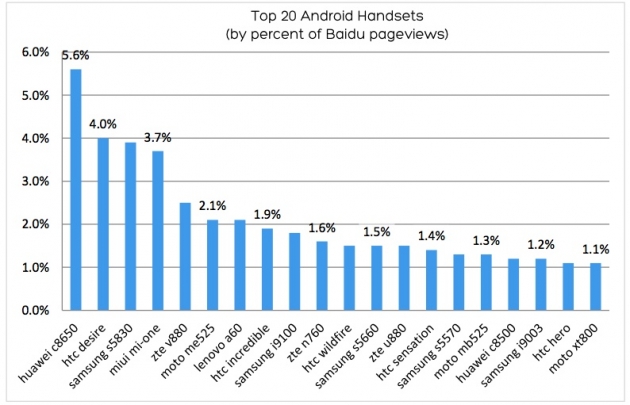
One of the most interesting things about this graph is the popularity of Xiaomi’s mi-one (also called M1) handset, apparently the fourth-most-popular handset model despite being only available in limited quantities and being generally difficult to find. That certainly bodes well for Xiaomi’s future device launches. Also of note are HTC and Samsung, whom eagle-eye readers (or just readers who can count) will note each have five devices on the top twenty list. Overall, there’s no one handset that’s blowing any of the others out of the water here. It will be very interesting to see how this graph looks a year from now, once the market has been flooded with the low-priced, Android-based smartphones we’ve been writing so much about lately.





Stay updated on the go with our mobile app.
Get latest insights with smoother, more personalized experience through TIA mobile app.