Luigi Leonardo · · 4 min read
Why traditional businesses are going digital

Photo credit: rawpixel / 123RF Stock Photo
Digitalization is no longer a strategy that can be ignored by either SMEs or big corporations. In our rapidly-advancing digital world, the companies that survive are those that can flexibly adapt to online strategies.
Despite how accessible digitalization is, implementation can be difficult. A majority of global companies have already attempted to go digital. However, more than eight out of ten of digitalizing companies fail in the attempt because they don’t adequately know how.
On July 27th, at International Enterprise (IE) Singapore’s iAdvisory Forum, decision makers from local companies aspiring to go digital got the chance to meet different professionals in five different tech backgrounds through a “speed-dating” segment, powered by Tech in Asia’s Community Recruiting. Instead of romance, participants were looking for a wealth of wisdom on how to make a switch from traditional to online.
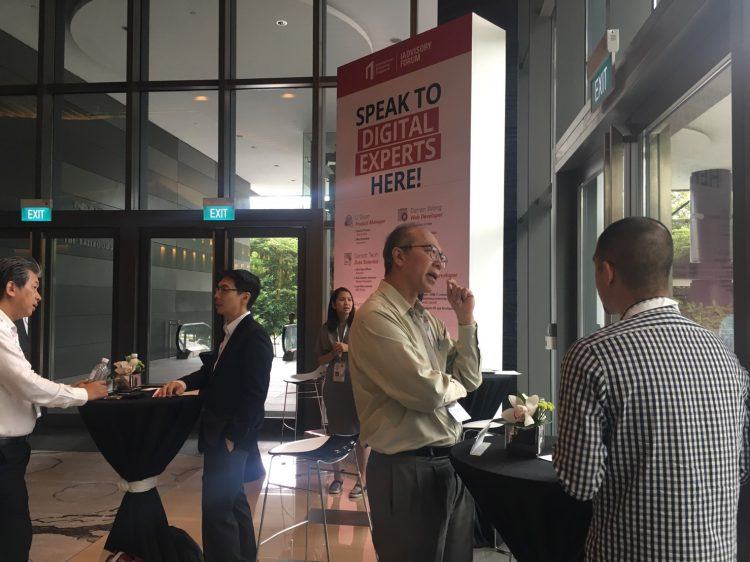
As was evident, participants had a flurry of questions and concerns they were more than willing to resolve with the help of tech professionals. Here are just some examples of what companies were troubling with when it comes to digitalization:
Customers are switching to mobile
Businesses realize that their markets are making the switch to online platforms. However, tapping your market online isn’t as simple as creating your own Facebook page. You’ll need your own ecommerce platform, a fully workable website, and mobile app flexibility, among others.
Even businesses who have already established their online presence aren’t immune to the rapid changes of the digital world. The tech industry is always changing. Once one trend peaks, another is hot on its heels. For example, Totobobo is a business that designs and sells respiratory protective masks. Totobobo founder Francis Chu shared his sentiments that most of his customers do prefer the convenience of online mobile shopping.
Another example is Saturday Club, an online fashion store that built their ecommerce platform five years ago. Despite already having an established website, Saturday Club now needs to make another switch—to mobile platforms. They realize that their customers are migrating from purchasing with their desktops to their mobile phones. Designing a wonderful website isn’t enough if consumers are redirecting their purchasing power into mobile platforms.
Speeding up business to business
Consumers aren’t the only beneficiaries with the transition to digital. Even more robust companies in traditional business-to-business transactions are preferring the ease and convenience of digital methods. They realize that traditional methods take too much time relative to the speed of online transactions. A few clicks can beat the hassle of red tape and multiple signatures.
For example, a long-established shipping and engineering company can analyze that their old business processes can be dramatically optimized by digitalization. Being deeply ingrained in traditional practices, the company may not know how to go digital at all.
Educating on the benefits of digital
While a majority of global corporations do recognize the value of digitalization, more traditional brick-and-mortar companies are reluctant to delve into unfamiliar territory, particularly when established methods have already been proven before. Why fix what isn’t broken, they ask.
Eunoia is an ecommerce platform that caters to food and beverage businesses. Living in an industry more traditionally known for face-to-face interactions with customers, several F&B businesses don’t see the need to go digital. Eunoia’s biggest challenge is educating businesses that a proper back-end solution can optimize even processes located in the front-end.





Stay updated on the go with our mobile app.
Get latest insights with smoother, more personalized experience through TIA mobile app.