Valeri Inting · · 5 min read
How social media is changing the Philippine elections

Imee Marcos hails from a powerful family in politics.
The Philippines is in the midst of a political transformation, and this change is best exemplified by the past month’s social media explosions.
Having moved to Singapore just a year and a half back, September marked the first time I ever closely observed the country’s general elections.
People’s excitement over whether the opposition will win either one or six seats out of a possible 89 was simultaneously puzzling and entertaining. But it was not difficult, even as a foreigner, to understand why. Local and international media covered the general elections extensively and the discussions were further amplified by social media.
Election coverage was not tough as this city-state has a population of five million, established political parties, and a relatively short campaign period. By contrast, the Philippines, an archipelago, has a population of almost 100 Million, politicians constantly shifting political parties, and a year-long campaign period.
In addition, the President and Vice President are elected separately, 64 percent of the population has no access to the internet, and we have a bajillion candidates for every electoral position available – 130 registered candidates for President alone, no kidding.
Clearly, the Philippine elections are bound to be more eventful than Singapore’s. In the past few years, a transformation seems to have been brewing, and everyone should take note.
It’s more fun in the Philippines
Campaigning in the Philippines used to be simple: pay for thousands of dollars’ worth of ad spaces, then follow the age-old tradition of developing a catchy campaign jingle. This one totally proves JV Ejercito is “For the Nation” because it’s to the tune of “Call Me Maybe,” while this makes Manny Villar “The Genuinely Impoverished” because children dressed in ragged clothes say so in song.
These songs have been around since before we changed constitutions, and it has elected actors, newscasters, and worse, politicians into public office.
Philippine elections are the epitome of personality politics, devoid of detailed platforms and voter engagement, filled instead with embellished personal anecdotes and song. All this even though we have long demanded for the contrary. We have long insisted for our politicians to speak to us with intelligence, engage us with the rigor that we deserve, and affect real, tangible change. Prior to the advent of social media, they obstinately dismissed our protests and demands. Now, there is no escape.
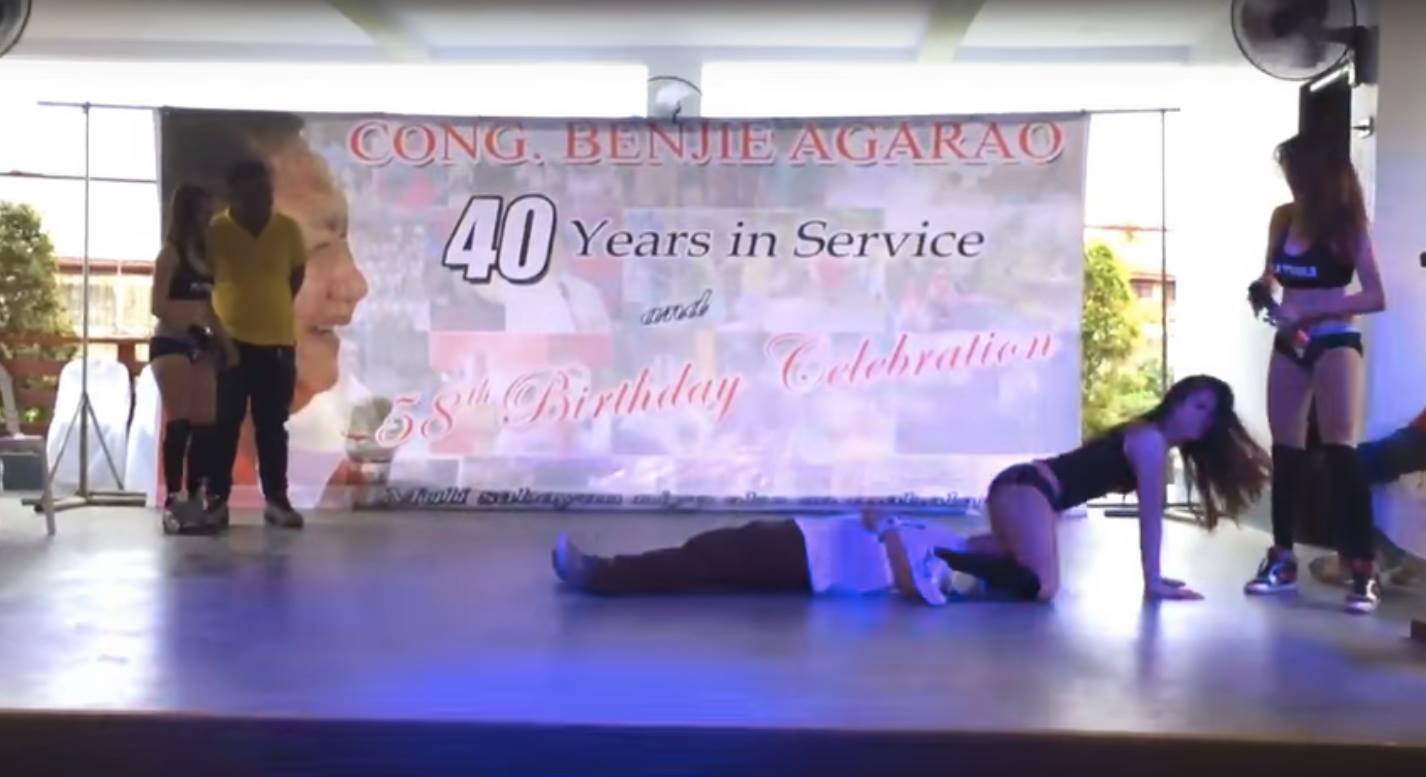
Just ask Francis Tolentino, who was forced to resign from heading a government agency and the Liberal Party’s Senatorial slate earlier this month. This was after a video went viral on social media, showing women in scantily clad clothing performing sexually suggestive dance moves on male members of the audience – Tolentino’s gift to a fellow Liberal Party member.
#NeverForget





Stay updated on the go with our mobile app.
Get latest insights with smoother, more personalized experience through TIA mobile app.