Ummi Amran · · 7 min read
The real ROI of events isn’t what you think it is
It’s been almost two months since we wrapped our Tech in Asia Conference 2026. In that time, B2B marketing teams including ourselves have been staring at spreadsheets, working to answer the inevitable post-event question from leadership:
“So, what’s our ROI for this event?”
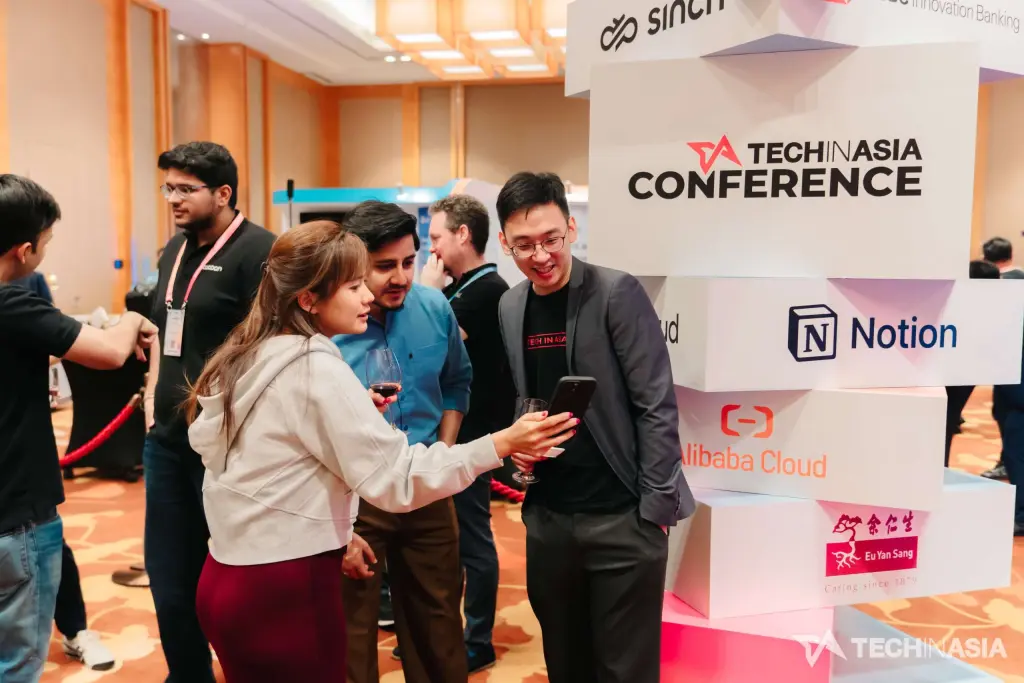
Terence Lee, chief editor and overall lead of Tech in Asia, with some Tech in Asia Conference attendees / Image credit: Tech in Asia
It’s the most loaded question in marketing. When a brand drops a significant budget to sponsor or exhibit at or an event, there’s intense pressure to immediately map attendees to potential business prospects.
But I’ll be honest: Treating an event sponsorship like a transactional, direct-response ad spot is setting yourself up for failure. And I learned this not just from looking at our post-conference data, but from standing on the frontlines – literally.
The view from the registration desk
This was the third time I was on-site for the TIA Conference. But this year, I felt a sense of dread when I found out I was going to be in charge of registration, managing a team of 10 student crew members.
I knew exactly what registration meant: putting out fires, solving technical glitches, and handling chaotic shifts. I walked more than 40,000 steps over our two-day event. By the end of it, my feet felt like they were going to break.
But amid the registration issues and the logistical chaos, something else happened. I recognized familiar faces from our past conferences and other events. People were randomly coming up to us at the registration desk, sharing their genuine excitement to be there. Attendees stopped by to tell us what a great time they had before making their exit.
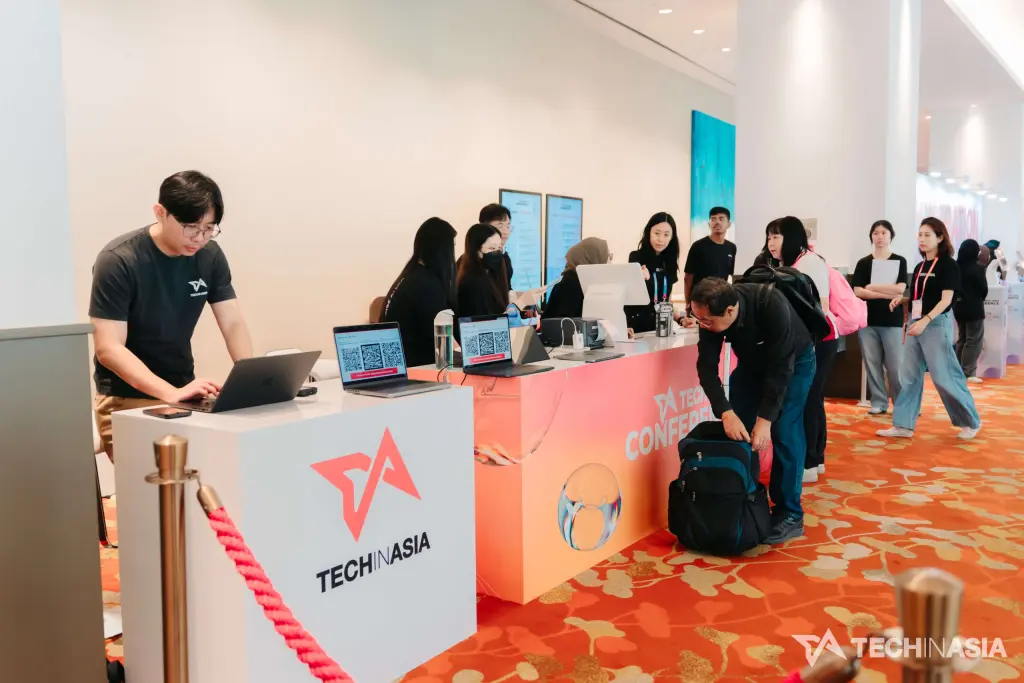
The registration desk / Image credit: Tech in Asia
As Kelyn Koh, our Tech in Asia Studios lead, later pointed out, the real success was the buzzy atmosphere on the floor and the audible chatter and laughter from the crowd. This indicates that people were actually connecting, not just passing through.
Looking out at 1,575 enterprise decision-makers and AI practitioners connecting on the exhibition floor and across satellite events, I felt an incredible sense of pride for what our team has accomplished. Unlike previous conferences, this one was a battle at every stage as we pivoted to a new theme, enterprise AI.
I typically spend my days looking at marketing copy, dashboards and spreadsheets. Seeing those real-life interactions – no matter how brief – reminded me how isolated our online metrics can be.
This taught me that the true ROI of an event is in the community, not a dashboard.
The danger of the main events metric
We live in an era where B2B buyers are exhausted by digital noise. As industry newsletters like Exit Five and Marketing Brew point out, buyers are actively seeking out authentic, experiential connections. They want to be in a room with peers who share the same headaches.
But facilitating that connection is messy, and the people who do the facilitating aren’t exempt from that messiness. At our Jakarta conference last year, feedback from a client highlighted that while our account management was stellar, the general footfall felt a bit unqualified, and a technical glitch with a lead scanner resulted in lost prospects.
It was a painful but necessary reminder: Relying on a piece of technology to scan a barcode is an incredibly fragile foundation for a business relationship.
Curating the room > crowding the hall
So, if mass footfall and badge scans aren’t the answer, what is? It’s curation.
This requires a fundamental shift in mindset, but such a change takes time and can spark internal debates.
“We can’t optimize for everything at once. We’re accountable for attendance, revenue, sponsorships, and experience, but getting more bodies in the door doesn’t automatically create more value for attendees or partners,” says Gabriella Benyamin, our community associate. “The challenge is finding the balance between hitting our targets and getting the right people in the room.”
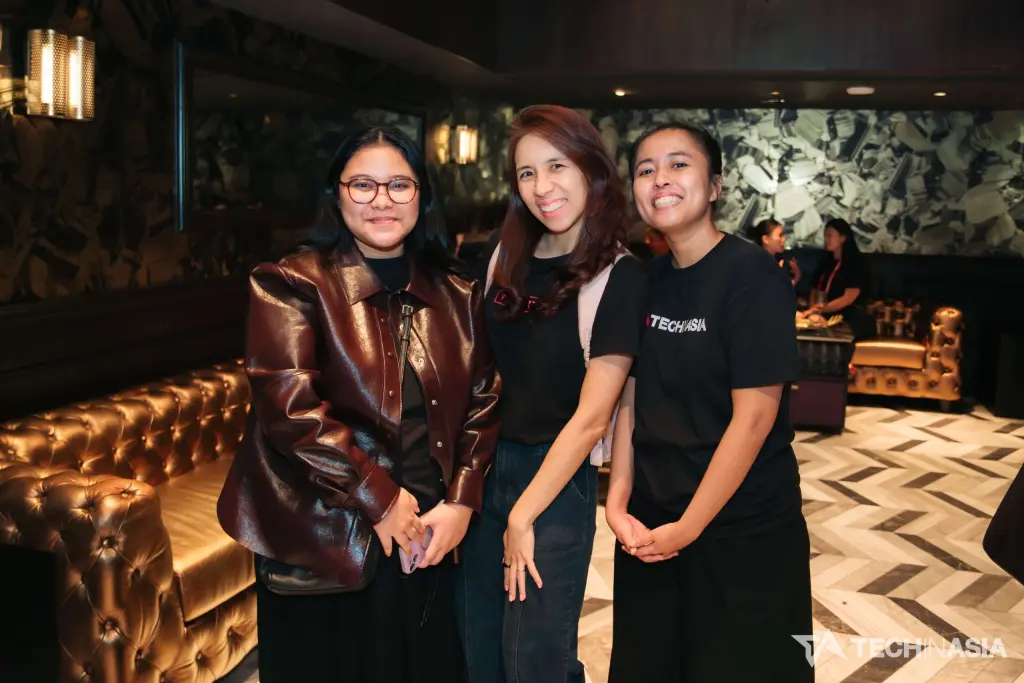
The marketing team including, Gabriella Benyamin (left) and Kelyn Koh (center) / Image credit: Tech in Asia
When you stop chasing pure volume, the entire look and feel of an event changes. We saw this in honest feedback from Wayne Wee, vice president of corporate development strategy at Avtica.
“We had a fantastic experience. The event execution was flawless. We are very grateful for the speaker slot, which provided great value for us. We were just a little disappointed by the size of the event. Seems like it’s been decreasing over the years. We are rooting for your success,” he wrote.
His observation is spot on: The sheer volume of bodies has changed. But the era of a 10,000 person mega-hall filled with unqualified foot traffic is over, so the smaller size wasn’t a decline.
We deliberately traded crowd size for curation.
Take our work with Notion at this year’s conference. Yes, the AI company had a highly visible booth right in the center of the exhibition floor that captured general traffic. But the actual business conversations happened behind closed doors.
We collaborated with Notion to host an executive luncheon. Instead of inviting all 2,500+ registrants, we filtered over 100 sign-ups down to just 31 exact ideal customer profile (ICP) matches. The result is a room of 20 highly qualified enterprise decision-makers having real, unscripted conversations over lunch.
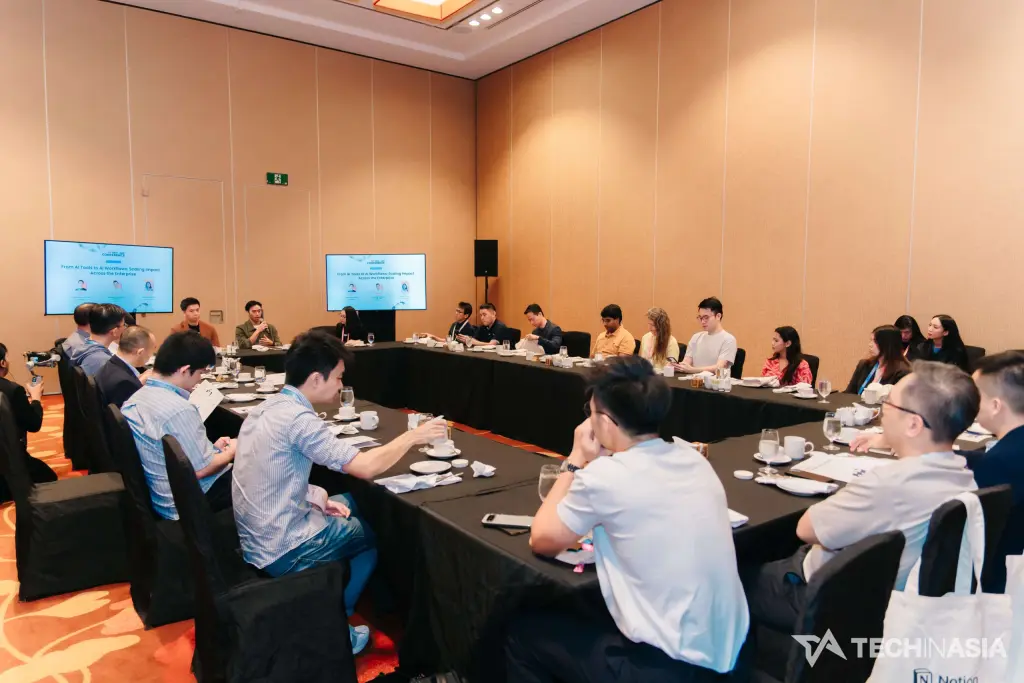
Notion’s luncheon / Image credit: Tech in Asia
Vanessa Lee, our account director, noted that Notion valued how closely we worked with them to filter those specific profiles on a tight timeline. This shows that transparency and constant communication makes all the difference.
“Sponsors naturally care about persona quality over sheer headcount because they’re calculating cost-per-pax ROI,” adds Jasmine Teo, the events director of this year’s Tech in Asia Conference. “But from an organizer’s perspective, having an empty room with only a handful of hypertargeted participants is far worse than a vibrant, well-attended room where people are genuinely engaged. If attendees are having a great time, that energy drives organic conversations with target prospects.”
This balance is why curated formats like our Strategy War Room and other satellite events worked. We gathered peers from the same industry under Chatham House rules so they could candidly speak about real roadblocks, creating a high-trust environment that can’t be reproduced on an open exhibition stage.
The unsung heroes
An event’s success rarely happens by accident. How the partnership is managed when plans change, timelines slip, and logistics break plays an important role in getting there.
“When things go sideways, our job is to keep the client anchored to their primary objective: meeting the right decision-makers. We provide alternative solutions early, give honest advice on what to prioritize, and maintain constant visibility so clients are never left wondering what’s happening,” shares Lee.
The ROI of an event is inseparable from the responsiveness and honesty of the team executing it alongside you.
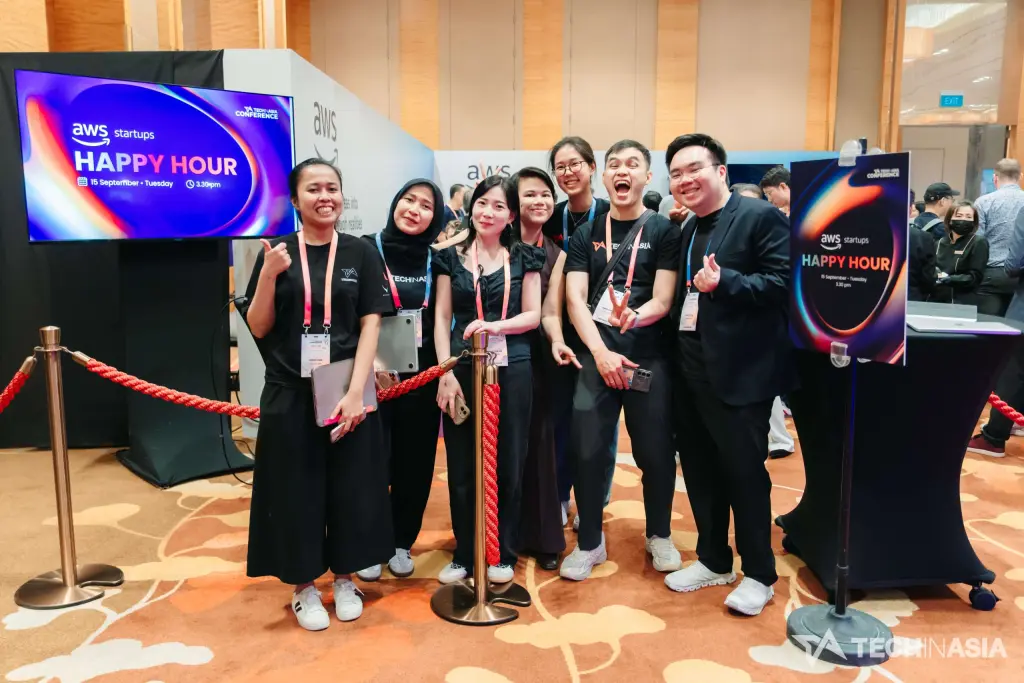
Account director Vanessa Lee (third from left), with some of the Tech in Asia Studios team / Image credit: Tech in Asia
The community long game
Events, like any B2B buyer journey, are complicated and rarely go in a straight line.
As our account management team noted in their post-event debriefs, clients are reporting closed deals directly from the people they met at the conference. But often, the payoff takes months.
“The value of an event goes beyond the day itself. Seeing familiar faces return and reconnect made me realize that the relationships we build don’t end when the venue closes. People become part of an ongoing ecosystem, and that’s what’s worth nurturing year after year,” says Benyamin.
That person you met at a luncheon or a Strategy War Room might not sign a contract by the end of the quarter. But six months from now, they might become a critical new hire, a strategic partner, or the internal champion who pushes your procurement deal across the finish line.
That said, sheer scale does work when aimed correctly. Our TIA Conference campaign in 2022 generated over 600 qualified leads for a sponsor by aligning their brand perfectly with the tech talent ecosystem).
Teo explained it best: “After 15 editions of Tech in Asia conferences, we are still testing, tweaking, and redesigning our formats to keep pace with how people actually want to meet.”
Generally speaking, sponsoring or exhibiting at an event shouldn’t be about matching your competitor’s strategy. You should do it because you are ready to stop broadcasting and start participating in the community.
If you’re trying to figure out how to navigate experiential marketing, or if you want to know how we are applying these hard-won lessons to our 2027 calendar (including the Upskill Fest in Jakarta and the next TIA Conference in Singapore), let’s talk.
We’ve made the mistakes so you don’t have to. Fill out the form below, and our team will reach out to continue the conversation.
This content was produced by Tech in Asia Studios, which connects brands with Asia’s tech community. Learn more about partnering with Tech in Asia Studios.
Stay updated on the go with our mobile app.
Get latest insights with smoother, more personalized experience through TIA mobile app.
Recommended reads
 High car costs give Singapore a robotaxi edge: Waymo founder
 Automating premium hotel kitchens with sensors
 Who pays for AI in your language?
 MoneySmart grows revenue by 26% in 2025, but AI threatens margins
 The truth about AI language models: No one wants to pay for them
 Tracking AI hiring in Singapore: OpenAI, Anthropic, and more
 Korea’s physical AI ambitions meet the factory’s bottom line
 SEA financials tracker: Moladin’s revenue rises 6% in 2025
 On‑demand services lift Line Man Wongnai’s 2025 revenue to $544m
 Flipkart’s costly late push into quick commerce and food delivery





Editing by Stefanie Yeo, Eileen Ang
(And yes, we’re serious about ethics and transparency. More information here.)