- Premium Content It takes our newsroom weeks - if not months - to investigate and produce stories for our premium content. You can’t find them anywhere else.
 Gabriel Budi Sutrisno · · 6 min read
For Indonesia’s couriers, cash on delivery is a headache
Indonesia has a large and well-funded fintech industry, but despite the government’s push for non-cash payments since 2014, 73% of online shoppers in the country still prefer cash payments, also called cash on delivery (COD), according to a Statistics Indonesia (BPS) report in December 2020.
Meanwhile, according to research by ecommerce cashback platform Shopback, 48% of ecommerce consumers choose COD, which comes in second after digital wallets.
There are many factors behind COD’s popularity, but the chief among them is Indonesia’s relatively low penetration of financial services. Only 42 million Indonesian adults – about 23.2% – were banked in 2019 while digital wallet penetration still stands at 29%.
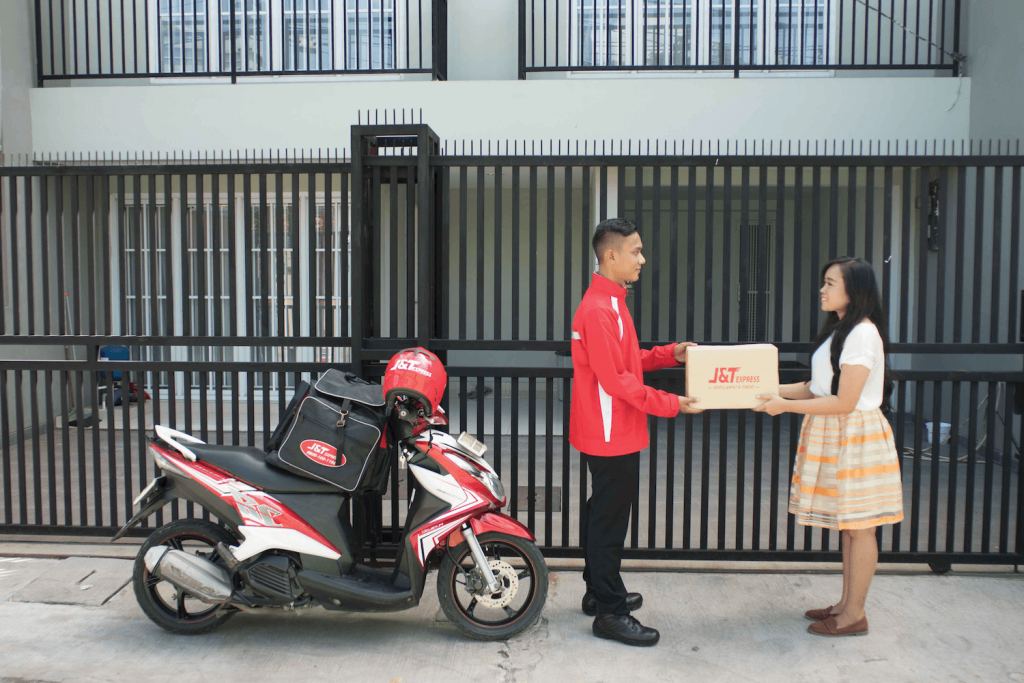
A J&T Express delivery man and his customer holding a box together / Photo credit: J&T Express
Understandably, every major ecommerce player offers COD as a payment option. It appears to be particularly useful in helping these companies’ penetration outside top-tier cities where a large bulk of the Indonesian population still resides.
But it has also led to multiple incidents. Some of them, like misplaced cash, are mundane. What’s less known, though, is the danger it brings to couriers, as seen in an incident where a disgruntled customer threatened a courier with a sharp weapon.
Indeed, COD is making some couriers’ jobs even more unpleasant, adding to their long list of grievances that include poor pay.
A valid strategy for lower-tier cities
Although ecommerce is already a large industry, its presence is still relatively small in Indonesia’s Tier 2 and Tier 3 cities.
In a recent virtual conference, Bukalapak president Teddy Oetomo said that outside big cities, the overall ecommerce penetration is only around 5%. This has prevented many micro, small, and medium enterprises (MSMEs) in such areas from reaching a wider market.
Bukalapak, whose top strategies include the grassroots-focused Mitra Bukalapak service, has shifted its focus on markets outside the major metropolitan areas, claiming that 70% of its current business comes from Tier 2 and Tier 3 cities. It has offered the COD option since August 2020. Indonesia’s other ecommerce giants have enacted a similar approach.
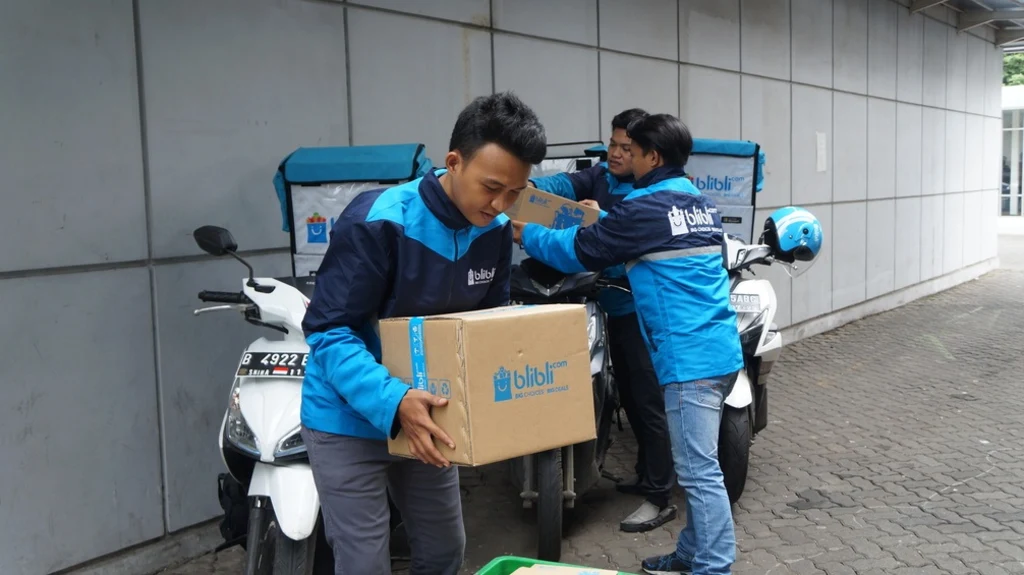
Blibli couriers transferring packaged products / Photo credit: Blibli.com
Blibli is perhaps an outlier. On its platform, at least 7% of its users have chosen the COD payment, claims Lisa Widodo, the company’s executive vice president of operations. But Blibli traditionally has had higher average order values relative to other players, with gadgets and electronics making up a sizable chunk of its sales, which could make COD less practical.
A former product manager in an ecommerce company who declines to be named believes that the cashless payments infrastructure is partly to blame for widespread cash payments adoption. He believes that bank transfers and digital wallets are also not reliable enough to attract new users in small cities and rural areas. Much education is still required.
High risks for couriers in the field
Ending COD is not an ideal option for businesses
Stay ahead in Asia’s tech landscape
This is premium content. Subscribe to read the full story.
Cash on delivery remains essential for ecommerce marketplaces and logistics firms but it’s causing problems for couriers.
We know this is not ideal. ⌛ Sign up in 20 seconds. Cancel anytime.
Our subscriber community includes professionals from these companies:





Stay updated on the go with our mobile app.
Get latest insights with smoother, more personalized experience through TIA mobile app.