Enricko Lukman · · 3 min read
After Singapore and India, Shopify launches in Indonesia and Malaysia
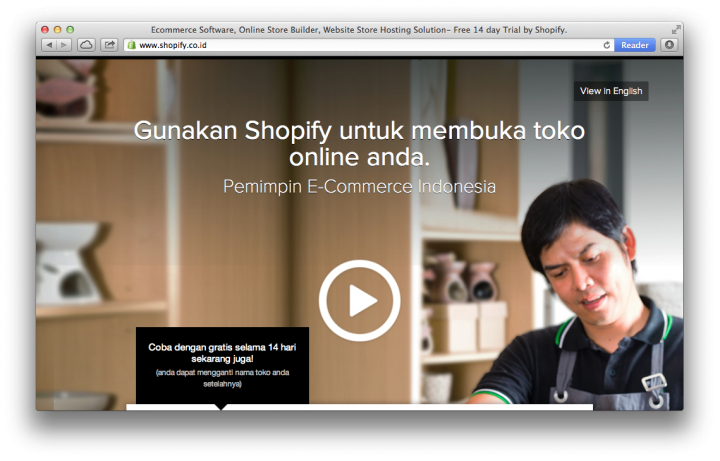
Last month, Canada-based e-commerce platform Shopify partnered with Singapore’s SingTel as its distribution partner in Asia. The e-commerce company launched in both Singapore and India since then, offering localized e-commerce solutions to each country. Today it’s rolling out in Indonesia and Malaysia (unofficial launch).
In short, Shopify lets users easily set up an online shop with their own domain using various available templates. The platform offers lots of e-shopping essentials, like a virtual shopping cart, payment methods, blogs, shipping services, and more. The company charges merchants a monthly fee according to their subscription plans.
There are three reasons why Shopify and SingTel chose to expand to Indonesia:
- Big online transaction value – over 19 million online transactions conducted this year in Indonesia with a total value of $478 million, almost double last year’s $266 million.
- Indonesia has the biggest number of online users in Southeast Asia.
- Tremendous growth opportunities for brands and retailers in Indonesia with the increasing number of middle class consumers.
(See also: Why Indonesia is an Upcoming Tech Market That Can’t be Ignored)
Localized approach
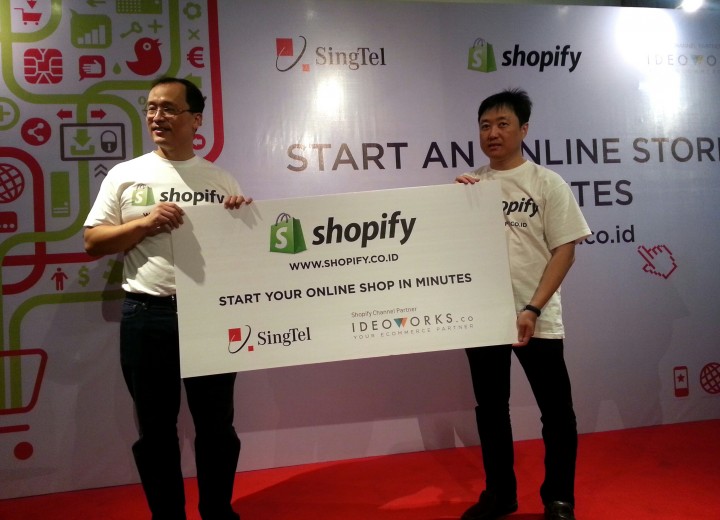
From the left – Loo Cheng Chuan from SingTel and Andi S. Boediman from Ideoworks
For the Indonesian venture, SingTel has a local partner in the form of Ideoworks.co, an e-commerce agency headed by Ideosource founder Andi S. Boediman. Shopify’s localized efforts in Indonesia include language support, payment gateways like bank transfers and cash-on-delivery (coming soon), and logistics. Ideoworks also helps Shopify with its local support feature, as well as marketing the platform through numerous workshops.
The team will offer Shopify merchants two interesting touches. First, the team is negotiating with Indonesian logistics companies to give Shopify’s merchants better rates than usual. Second, based on the fact that middle-income Indonesians are accustomed to services like drivers and maids – or that Indonesians are willing to pay for extra service – the team is considering offering users the option to pay a certain amount of money to get a fully customized website on Shopify. This can be a good option for users who are too lazy to set up their own e-stores.
Potential rivals?
As mentioned earlier, Shopify charges merchants who set up their stores using the platform. There are currently quite a few local e-commerce platforms available for free in Indonesia like the Tokopedia and Bukalapak marketplaces, C2C forum Kaskus, Craigslist-style TokoBagus, and Berniaga. Is there still be a place for Shopify? SingTel’s Loo Cheng Chuan says yes.
Loo says Shopify offers a very different product compared to the other e-commerce sites. He says setting up a shop there is like setting up a shop in a huge supermarket or shopping mall, whereas setting up a shop on Shopify is like having your own physical store without the noise of other shops in the shopping center. They are in a different industry.
I’d say that Shopify’s closest rivals in Indonesia are Jejualan and Pixtem. The former charges merchants from IDR 60,000 ($5) per month while the latter’s fee starts from IDR 500,000 ($45) a year. Shopify costs merchants $14 a month for its cheapest plan. Shopify, coupled with both SingTel and Ideoworks, definitely has more money and experience in this field compared to those two startups.
Next stop: Malaysia






Stay updated on the go with our mobile app.
Get latest insights with smoother, more personalized experience through TIA mobile app.