Khamila Mulia · · 4 min read
Pintek bets on Indonesia’s growing online education loan market
The online educational loan segment in Indonesia may not be as big and productive as consumer lending, with only a few fintech players targeting this market. However, with millions of students needing assistance to finance their education, companies are increasingly venturing into this field.
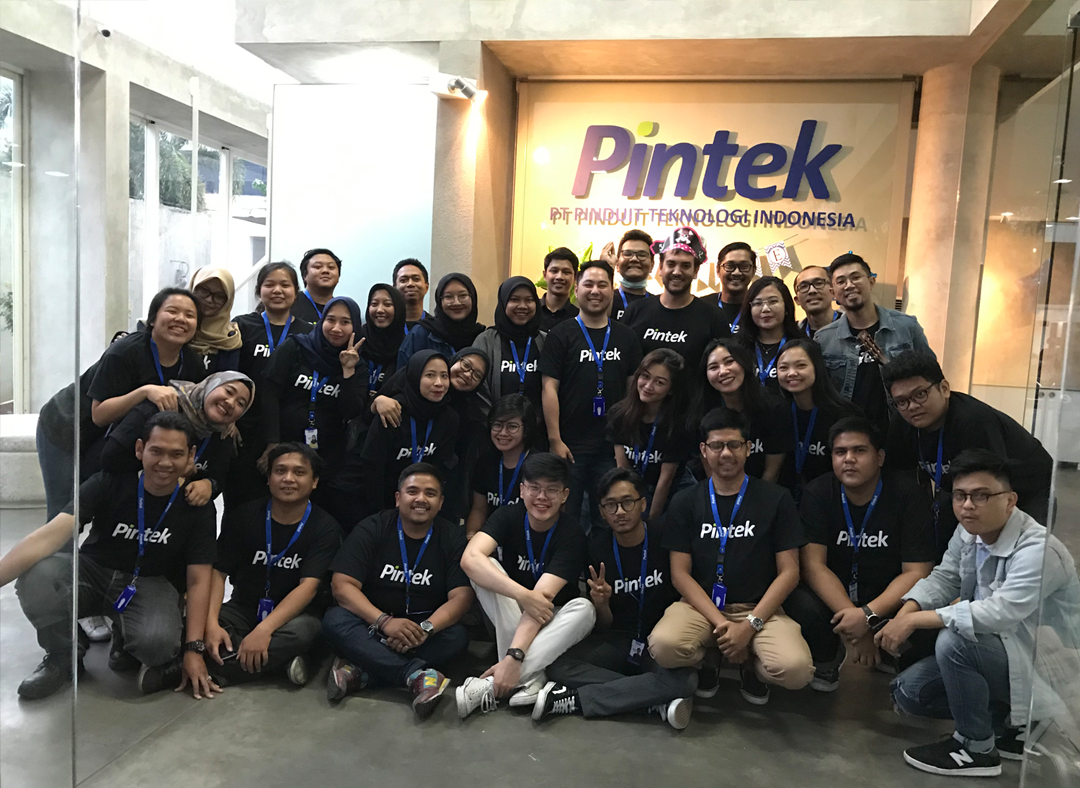
The Pintek team / Photo credit: Pintek
Indonesia’s President Joko Widodo also urged local banks in 2018 to provide more education-related loans in a move to enhance the quality of human resources in the country. Among some banks that followed the president’s instruction are state-owned Bank Tabungan Negara, which disbursed 33.83 billion rupiah (US$2.4 million) to 470 students per July 2019, and Bank Mandiri, which channeled student loans of 773 million rupiah (US$56,512) per August 2019.
Several fintech startups are tapping into this segment such as Dana Cita, Dana Didik, and KoinWorks, but educational loans have yet to gain major popularity according to The Jakarta Post.
This is what drove French investment executive Ioann Fainsilber and Indonesian entrepreneur Tommy Yuwono to establish Pintek in 2018, aiming to provide easy access to education in Indonesia through affordable and flexible credit.
“The education sector is something that’s really close to our hearts. Indonesia has a huge market for this segment and we believe that education is crucial in order to boost a rising middle class. However, student loans are relatively untouched by financial services and technology, and therefore we think that this is the right time for us to dive into this [education] segment,” Ioann Fainsilber said to KrAsia in a recent interview.
The firm raised a pre-series A funding round in November 2019, led by Global Founders Capital and with participation from existing investors Finch Capital and Amand Ventures. Fainsilber said that Pintek will utilize the capital with two focuses: spreading the word about Pintek’s products and connecting with as many institutions as possible, while also improving the firm’s technological capacity in order to deliver a convenient and seamless product.
Pintek provides lending to students from kindergarten up to postgraduate education, as well as to those in informal education programs specifically vocational courses that aim to prepare people for employment. Borrowers can apply for loans from 3 million rupiah (US$218) to 500 million rupiah (US$36,439) with tenures of up to two years. To date, the firm has channeled more than 27 billion rupiah (US$1.9 million) in loans to 1,700 students across 25 provinces in Indonesia.
Loans submitted to Pintek must be made by parents, although students who already have steady incomes are also eligible to apply. The company charges an interest fee of between 0% and 1.5% per month, Fainsilber said.
According to him, partnerships with educational institutions are an important strategy for the business. The startup has collaborated with at least 100 academic institutions, of which 40% are universities or colleges, such as the London School of Public Relations (LSPR), LaSalle College, and Institut Teknologi Telkom Surabaya.
“Partnerships are essential to us. Our partners will effectively roll out the products to their customers. So for example, if you’re a student in LSPR, you can opt to pay directly or in cash, and you can also pay your tuition in installments through Pintek,” he added.
Educating the market about the benefits of student loans is the biggest challenge for Pintek now, Fainsilber said. “Indonesians are generally happy to borrow anything for consumption. However, although education is certainly a great investment, there is hesitation from customers whether they really need it or not, so we make a lot of effort to educate the market,” he continued.
Introducing education outcomes loan
Indonesia has a low gross enrollment ratio for tertiary education of just 31%, well below other Southeast Asian countries such as Malaysia (38%), Thailand (54%), or Singapore (78%), according to a report published by Global Business Guide Indonesia. Financial problems are the main reason.
“The low enrollment ratio is one of the problems we’re trying to solve. But we don’t just provide financial support, we also want to better prepare students for the job market by collaborating with various institutions and companies,” said Fainsilber.





Stay updated on the go with our mobile app.
Get latest insights with smoother, more personalized experience through TIA mobile app.