Jonathan Chew · · 5 min read
Listen, understand, act: The keys to success in personalized customer engagement

A common misunderstanding among many business leaders is that a company’s growth is about acquiring new clients or customers, and that belief often prompts them to be more aggressive in user acquisition.
In practice, however, customer retention and engagement are the most powerful tools a business can wield in order to widen its user base.
This was one of the lessons, among many others, we learned during a recent event – Optimization Through Strategic Customer Lifecycle Marketing – organized by Tech in Asia in collaboration with cloud-based software company Braze.
The virtual panel discussion, held on June 29, saw customer engagement experts from Braze, Traveloka, Phiture, and Stripe come together to share and discuss concepts related to customer engagement, its importance, and how businesses can improve on it.
Driving growth
At the event, Chye Yien, a senior strategic business consultant at Braze, explained that when companies retain more customers, it frees up funds for marketing efforts. She went on to say that loyal users generate more word of mouth as well, essentially creating a growth loop.
It’s also not necessary to go all out when engaging customers, as even subtle tweaks in personalization could have a significant impact on conversion and retention rates.

Chye Yien, senior strategic business consultant at Braze / Photo credit: Braze
By personalizing its services, a company can reactivate former users as well. Andy Carvell, partner and co-founder of Phiture, a mobile growth consultancy that specializes in helping apps to acquire, engage, and monetize users, cited an example from his time working at SoundCloud. According to Carvell, users who did not regularly log into the audio platform would be sent push notifications that mentioned the songs they had previously listened to or saved to their own library. The strategy was highly effective at getting users back onto the service, he said.
In the case of Traveloka, personalization can be a tool for innovation and adaptation. The travel giant leveraged the expertise and personalization capabilities of the Braze platform in order to stay relevant in a travel industry that has been devastated by Covid-19.
Looking to create demand, Traveloka initially kept an eye out for certain behaviors from users – like the act of bookmarking certain offers – and tried to leverage those insights.
The company then implemented techniques to engage users across the board, said Alfonso Hartanto, senior vice president of platform at Traveloka.
“We had an assumption that if we gave more discounts, it could be the sweetener to close the deal.”
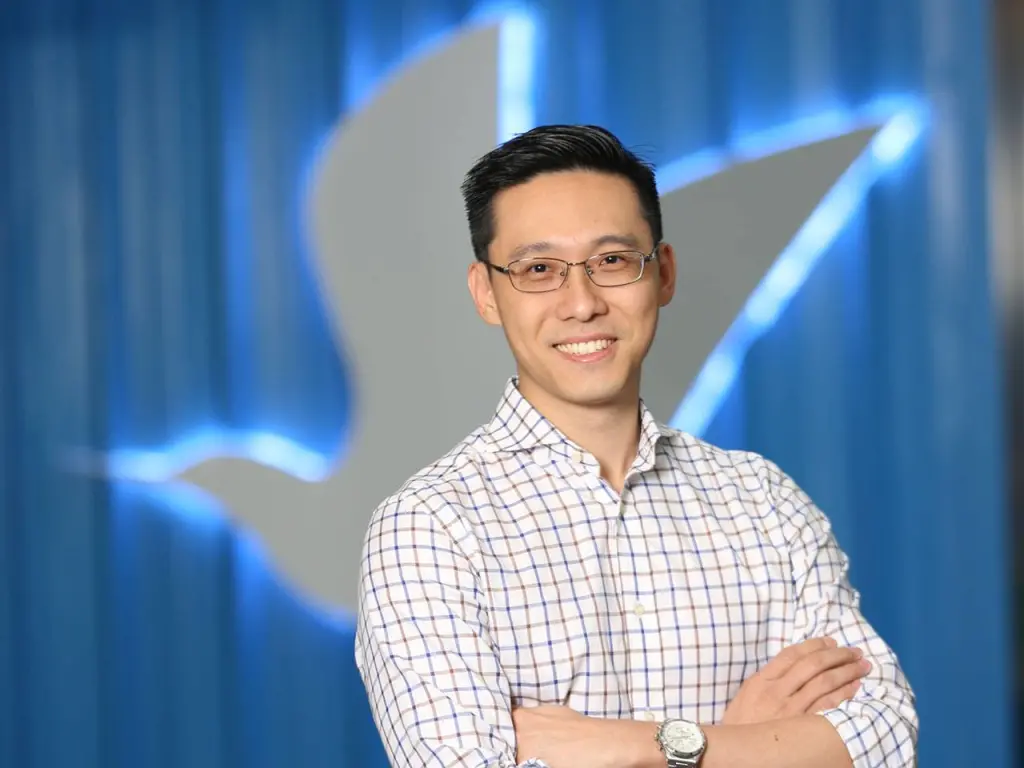
Alfonso Hartanto, senior vice president of platform at Traveloka / Photo credit: Traveloka
But the move wasn’t as effective as the team hoped, which drove Traveloka to seek out Braze’s assistance in building up an audience. Hartanto pointed out that Traveloka took note of the hotels that users viewed and bookmarked during livestreams. After the livestream, Traveloka sent these users push notifications to remind them of the hotel they bookmarked or viewed – an example of how to create a personalized experience based on user behavior.
Hartanto also highlighted how Braze was tapped to manage Traveloka’s smart trigger campaign for hotel remarketing. The campaign sent personalized messages to users who had shown signs of making a purchase, such as adding an item to their cart, but had yet to follow through with a transaction.
“We observed that the click-through rate for this trigger-based campaign is actually up to 100% better than broadcast-based messages,” he said.
Putting it into practice
Knowing the huge advantage that personalized engagement brings, the Braze framework of “Listen, Understand, Act” seeks to help businesses go about capturing their users’ attention.
At the event, Chye explained that the first tenet, “listen,” is about paying attention to the data and signals customers are willing to share with businesses. “You should always capture the data signals in a respectful manner,” she said.
“Understand,” on the other hand, is about knowing what the user is trying to say, classifying the kind of behavior they exhibit, and understanding why it is relevant. Finally, “act” encourages pushing out communication through the channels that are relevant to the customer at a given point in time.

Andy Carvell, partner and co-founder of Phiture / Photo credit: Phiture
User-specific engagement, Carvell added, also reminds customers of the value that they hoped to gain from the product – something they often identify when they start using a company’s product or service.
During the virtual session, Carvell discussed how a meditation app might ask a user questions such as “Why do you want to meditate?” while suggesting some common motives such as “reducing anxiety” and “increasing focus.” It would then craft all subsequent communication during the onboarding process to reference the user’s answer.
“We can send them a reminder to meditate at the time they’ve chosen, which is also personalization, instead of just saying: ‘Hey, it’s time to meditate in five minutes, find a quiet spot.’ We can say: ‘Hey, you want to meditate in order to reduce your anxiety,’” Carvell said.
Capitalizing on newfound information
After pinpointing the right data to focus on and how to go about gathering it, businesses also need to be able to engage customers through the right channels.
According to Chye, more than 65% of Braze customers use more than three channels. Engaging with newly acquired customers across several channels can significantly improve both frequency and volume, which means that not only are users more likely to spend money, there is also a greater chance that they will spend even more when making a purchase.
According to the Braze 2021 Global Customer Engagement Review, businesses that utilized more than one channel for engagement had customers who were about 7x more likely to make purchases and over 9x more likely to spend a larger amount more while doing so.
With so much information on hand, knowing which customer actions to pay attention to is equally important.
“It’s really about understanding what drives a business and what are the high-value actions you want customers to take, then assembling the data that’s going to allow you to determine those actions and then having the right platform to activate the actions with the messaging that’s going to influence the actions,” Chye shared.
Braze provides businesses with the customer engagement tools that they need across different platforms and sectors. Find out more about how you can benefit from Braze’s expertise through its 2021 Global Customer Engagement Review.
This content was produced by Tech in Asia Studios, which connects brands with Asia’s tech community. Learn more about partnering with Tech in Asia Studios.
Stay updated on the go with our mobile app.
Get latest insights with smoother, more personalized experience through TIA mobile app.
Recommended reads
 Life’s a game, and AI agents are Animoca’s new play
 Indonesian AI startup goes global
 Forrest Li on scaling Sea, building smarter bots, and founder grit
 An AI assistant that joins sales calls and scores team skills
 Beyond the check: Why VCs need more than capital
 SGX’s CEO says it doesn’t need a unicorn to win
 SMEs want AI too, but not the kind Big Tech is selling
 Oatside’s alt-milk rise hits a profitable gear
 Alibaba’s financial health in 12 charts
 Asia’s telcos bundle AI into mobile plans. Will it pay off?





Editing by Nathaniel Fetalvero, Arpit Nayak, and Jaclyn Tiu
(And yes, we’re serious about ethics and transparency. More information here.)