- Premium Content It takes our newsroom weeks - if not months - to investigate and produce stories for our premium content. You can’t find them anywhere else.
 Putra Muskita · · 5 min read
AI could unlock $82b for Indonesia’s factories, yet adoption lags
Manufacturing makes up 18% of Indonesia’s gross domestic product (GDP), but the sector has been slow to adopt AI.
That trend is evident for IBM, which offers its Watsonx generative AI platform and other solutions to Indonesian corporations. A bulk of the tech giant’s client base – 70% – are still financial services firms, says IBM Indonesia CEO Roy Kosasih.
This reluctance is apparent despite AI’s likely influence on what is often a very traditional industry. According to a 2023 Access Partnership study, AI could increase the production value of Indonesian manufacturing by US$81.9 billion.
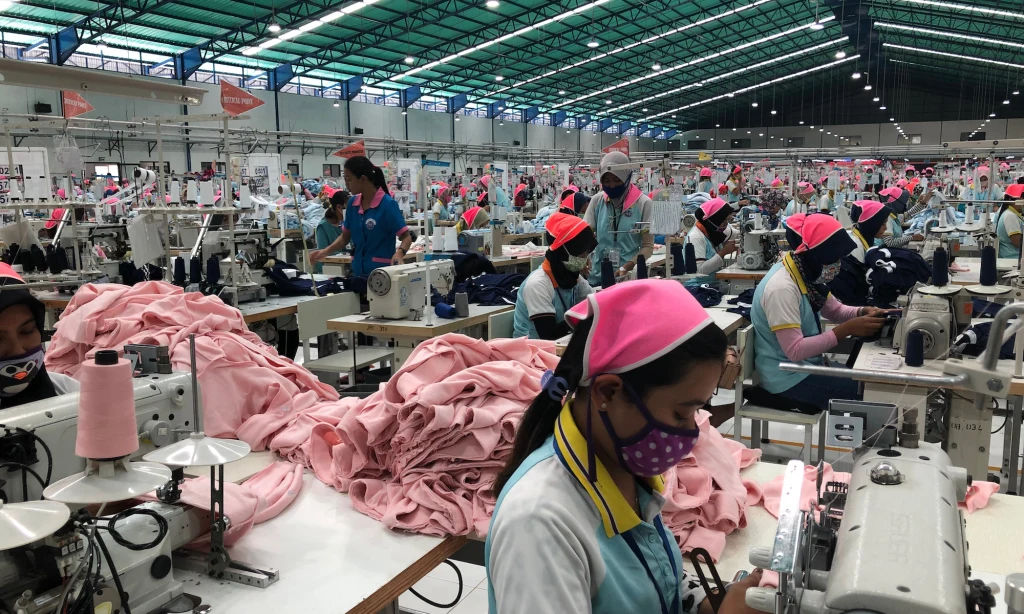
A clothing factory in Magelang, Indonesia / Photo credit: masruro / Shutterstock
That said, the AI revolution is coming at a tumultuous time for Indonesian manufacturing.
The country is in the midst of leveling up its capabilities by setting up electric vehicle factories, among other moves. But the slowing economy has also made things tough for other manufacturers.
See also: Indonesia’s stock plunge isn’t tech’s problem – yet
“One challenge is the significant capital expenditure required,” says Shinta W. Kamdani, CEO of Sintesa Group, whose business lines include stainless steel manufacturing. It’s a big ask for players in industries like textile, which have undergone mass layoffs and even bankruptcy.
Challenge for conventional firms
Many Indonesian manufacturers operate largely as traditional companies to begin with, so much so that their genAI usage is limited to shared service dashboards. That’s one of the findings of a survey from Advisia Group and Korika, the Indonesian government’s AI working group.
In IBM’s 2024 research of Indonesian businesses, 100% of the study’s manufacturing respondents said they are exploring AI for inventory management. Only 33% turn to AI to predict demand, while another 33% use it to process data for operational efficiency.
AI usage in the finance industry, on the other hand, is much more advanced. Current applications include loan disbursement verification, electronic know-your-customer process, and stock trading platforms.
Data is a major issue, according to IBM’s Kosasih. For these companies, data can be “scattered across various locations,” instead of being consolidated and centralized in one place. This is one task that must be done before firms even talk about AI tools, he tells Tech in Asia.

Most of IBM’s AI clients in Indonesia are finance companies. / Photo credit: Shutterstock
Palm oil plugs into AI
Human workers left behind?
Stay ahead in Asia’s tech landscape
This is premium content. Subscribe to read the full story.
Manufacturers are bogged down by high capital expenditures and traditional practices. But palm oil firms are leading the way.
We know this is not ideal. ⌛ Sign up in 20 seconds. Cancel anytime.
Our subscriber community includes professionals from these companies:





Stay updated on the go with our mobile app.
Get latest insights with smoother, more personalized experience through TIA mobile app.











📅 Upcoming Events
22 October 2026
Payoneer x CSPN Summit 2026