Daniel Tay · · 3 min read
Singapore government’s latest crackdown on drivers who use mobile devices falls short
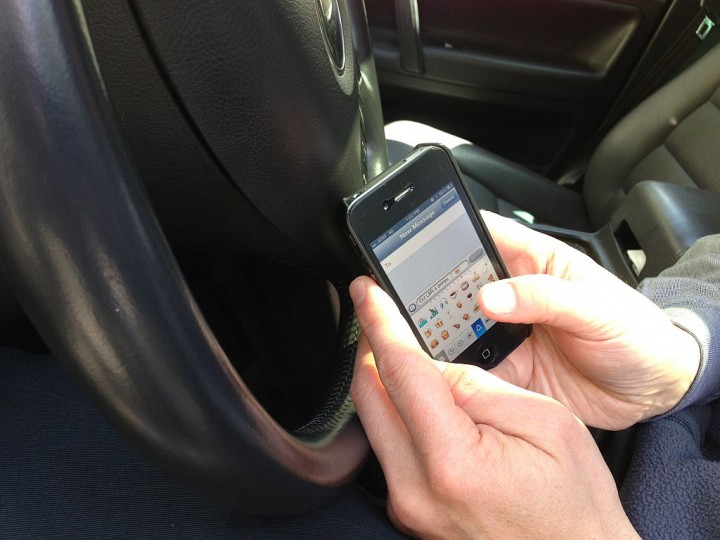
With major plane crash incidents dominating the headlines this year, it’s easy to forget that the odds of dying in a road accident is far higher than on a flight. Arnold Barnett, a professor of statistic at the Massachusetts Institute of Technology, said in a CNN report that “a traveler could on average fly once a day for four million years before succumbing to a fatal crash.” On the other hand, the odds of dying in a car crash are, according to Harvard University’s David Ropeik, one in 5,000.
It is perhaps for this reason that Singapore’s parliament passed a newly-broadened Road Traffic Act yesterday, according to The Straits Times. Of the new rules that were added, one in particular will cover the use of a whole slew of mobile communication devices, such as tablets and smartphones, while driving:
From Feb 1, it will be illegal for a driver to hold and use a mobile device, including tablets, when the vehicle is moving.
These rules, which would come into effect next February, are already coming under fire from the members of parliament. Eight of them reportedly approved of the direction that the Bill was taking, but brought up several details that they found lacking.
One of the points brought up, for instance, was why other devices, such as handheld game consoles and smartwatches, were not included. You could argue that the above-mentioned devices are not exactly widely used today, but it’s hard to say what will become mainstream in the future.
Already, much has been said about the upcoming Apple iWatch right now, and it’s probable that smartwatches and the like will become the smartphones of today in the near future. This means another update in the law would be necessary – why not phrase it in a way that is future-proof?
Another parliamentarian addressed a possible loophole in the rules – why not go further and ban the use of smart devices mounted on dashboards and steering wheels too? It’s worth noting that many drivers do this today, for instance using the smartphone for navigation purposes, and it is possibly as distracting as using the device in-hand. In the same vein, there are several cab drivers that mount their mobile devices on their dashboards to utilize apps such as GrabTaxi, Easy Taxi, and Uber.
One more possible loophole lies in the words “when the vehicle is moving”. It is likely that drivers, in an attempt to sneak past this rule, would use their mobile devices while the vehicle is stationary at traffic lights. While this might not be as dangerous as using while driving, it can still cause accidents.
See: Singapore passes law to curb online piracy; Pirate Bay first in the firing line
All in all, it does seem highly unfeasible for the government to blanket ban the use of mobile devices outright for drivers. However, senior minister of State for Home Affairs Masagos Zulkifli did add in the report that they will be keeping an eye out for such developments:
We have deliberately decided to take a measured approach in tightening the rules on handphone driving. But we will continue to monitor the situation after the new changes come into effect and study the practices of other jurisdictions as they evolve to deal with other types of smart devices that are being developed.





Stay updated on the go with our mobile app.
Get latest insights with smoother, more personalized experience through TIA mobile app.