- Insights This article was written by a TIA community member. Insights pieces undergo the same rigorous editorial process that newsroom-produced articles have.
 Hayk Hakobyan · · 4 min read
How GANs can turn AI into a massive force
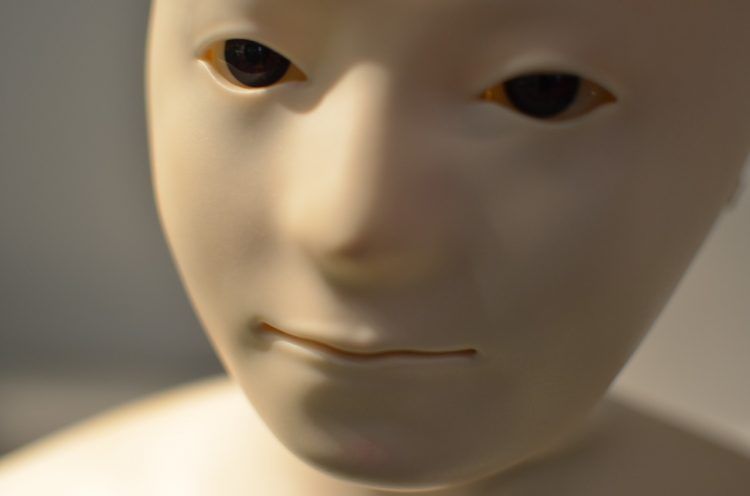
Photo credit: Kuloser
Deep learning models can already achieve state-of-the-art results in some applications, but their capabilities are still limited. Unlike humans, deep learning models are unable to handle minor changes, and hence can only be applied for specific and narrowly defined tasks.
Consider this conversation of what might be the most sophisticated negotiation software on the planet, which occurred between two AI agents developed at Facebook:
Bob: “I can can I I everything else.”
Alice: “Balls have zero to me to me to me to me to me to me to me to me to.”
At first, they were speaking in plain old English, but researchers realized they forgot to include a reward for sticking to the language. So, the AI agents began to diverge, eventually rearranging legible words into seemingly nonsensical (but, in their perspective, highly efficient) sentences. They invented their own codewords, abbreviations, and structures.
This phenomenon is observed again and again and again.
A vanguard AI technology that can learn, recognize, and generate information on a nearly human level doesn’t exist yet, but we have taken steps toward that direction.
What are generative adversarial networks (GANs)?
Generally intelligent systems must be able to generalize from limited data and learning causal relationships. In 2016, Ian Goodfellow, a fellow at Google Brain, suggested using generative adversarial networks (GANs) as an alternative unsupervised machine learning method. This aimed to address many of the ailing points of the existing methods.
GANs consist of two deep neural networks: generator and discriminator. The generator’s goal is to create data samples that are so indistinguishable to the real ones. The discriminator’s goal is to identify which of the generator’s data samples are real and which are fake.
These two networks compete against each other in a zero-sum game (i.e. one’s loss implies another’s win). Both networks would then become stronger in a relatively short period of time.
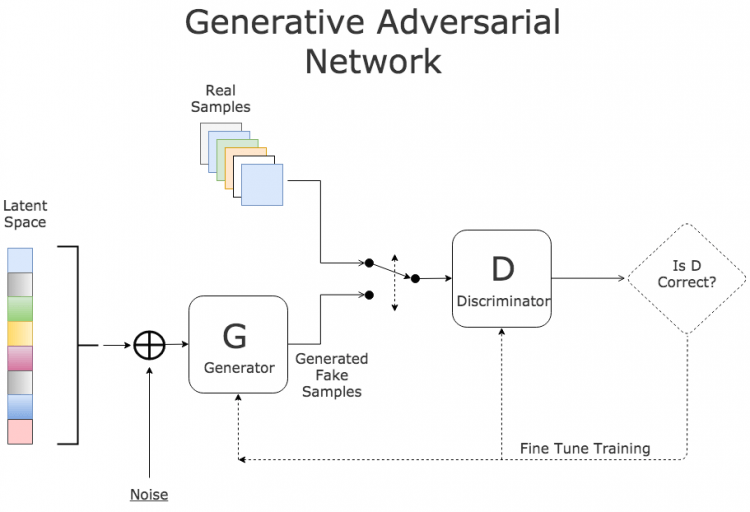
Backpropagation is used to update the model parameters and train the neural networks. Over time, the networks learn many features of the provided data. To create realistic forged samples, the generator needs to learn the data’s features and patterns, while the discriminator does the same to correctly distinguish between real and fake samples.
Applications of GANs
An existential threat





Stay updated on the go with our mobile app.
Get latest insights with smoother, more personalized experience through TIA mobile app.