Credit: Flickr user Almixnuts
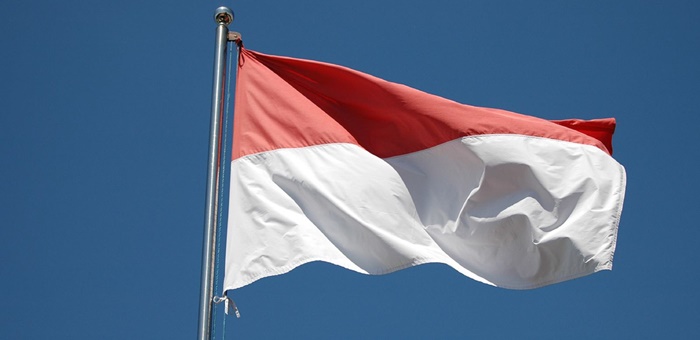
Indonesia is a beautiful country. It has its own quirks and polarized reputation in international eyes. On one hand, it is deemed one of world’s worst nations thanks to the large-scale bribery and corruption. On the other hand, it is lauded as an “unlikely role model for democracy” in Southeast Asia.
So how does Indonesia’s technology landscape look like to the rest of the world? For good or bad, here are eight unique things about it.
1. Telcos bombarding your screen with ads

We call this “intrusive ads”. Two of Indonesia’s biggest telcos – Telkomsel with 131.5 million users and XL Axiata with 68.5 million users – arbitrarily put their own ads onto users’ screens, despite consumers paying the full price for their internet service.
Telkomsel and XL Axiata have been doing this in the past year. Users would either be redirected to a full page ad – also called interstitial ads – or see an extra banner ad on top of the website they’re looking at. The top local websites are pissed, and are calling for a stop to the practice.
2. No, the one providing 4G isn’t a telco

You will raise your eyebrows for this one too. Indonesia claims that it has 4G mobile internet speed in place, but the one’s providing it is a company called Internux. And no, Internux isn’t even a telco.
Internux launched its flagship mobile wifi modem called Bolt back in November 2013. The device can reach internet speeds of up to 72Mbps, according to the company. That is a lot faster than what local telcos provide (the fastest one is up to 14.4 Mbps).
Bolt’s 4G modem only works in Jakarta, Bogor, Depok, Tangerang, and Bekasi areas. And in the space of nine months, the company claims to have over 650,000 registered users. The company even launched its own “powerphones”, the only phones with 4G capability in the country.
Note that Bolt’s internet speed is unreliable in some places in Jakarta (similar to the experience of using other telcos). Telkomsel plans to finally introduce its 4G network by the end of 2014 or early 2015, with Bali as its pilot province.
3. Porn-focused ICT ministry

ICT minister Tifatul Sembiring is the one in charge of bringing tech development into the country. However, his most famous/infamous feat would probably be crushing all things porn in Indonesia.
In his five-year tenure in the ministry, Sembiring – who is also a local Twitter celebrity with over 800,000 followers – has blocked more than one million porn-related sites. Some of these blockages are questionable though, as picture sharing site Imgur, video site Vimeo, and online forum Reddit are among the sites blocked in the country. The reason is that these sites include nudity – which is considered porn there.
See: Censorship in Indonesia: No porn please!
Thankfully he also pays attention to the other sectors. At one time, Indonesia was hailed as a country with one of the worst internet speeds. Fortunately, the ministry was able to do something about it and now the latest Akamai state of the internet report ranks Indonesia 93rd globally for internet speed.
4. Ineffective government regulations on internet companies

We’re still sticking to the government for now. The ICT ministry has enacted regulations to make sure Indonesians are safe on the internet. These include requiring local internet businesses to use a local .id domain, local data centers, and a few – not yet specified – certifications to operate in the country.
This is a controversial regulation because it puts more burden on local internet companies which operate in the country, whereas overseas companies whose online products are used by Indonesians do not need to follow. While the regulations have been passed this year, the government hasn’t imposed it yet.
In addition to that, the Indonesia Investment Coordinating Board has put online retail into the country’s negative investment list. This means that all online retail players can no longer have foreign ownership. Of course, there are still ways to work around it, like simply registering the company in neighboring Singapore. The regulation feels more like a hassle at this point.
5. No more IT in school curriculum
Credit: Flickr user Intel Free Press
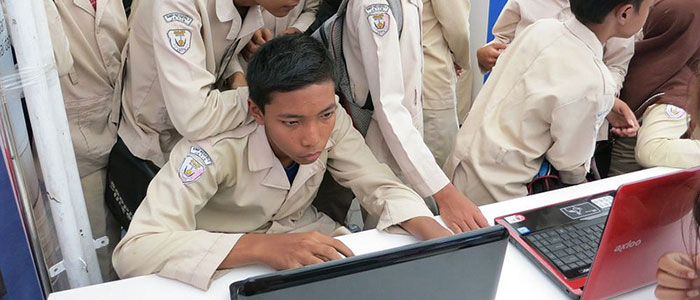
Yes, Indonesia no longer requires students to study IT in schools. The subject has become optional to those who are interested. Although the Indonesian government still encourages students to learn in an “IT environment”, meaning that they can study and do research using computers and the internet, this may not be enough to turn the students into IT-savvy professionals in the future.
On the other hand, Singapore plans to introduce programming lessons as early as in elementary school. This means that Indonesia’s next generation may have huge disparity with their overseas counterparts in the IT space.
See: A dilemma over Indonesia’s curriculum that “removes” IT studies in schools
6. You can get jailed for speaking out online

Credit: Flickr user Heath Morisson
Unfortunately, Indonesia doesn’t lack controversial regulations. One of them is its cyber law which lets citizens sue other people who offend them online. With over 50 reported cases of such incidents, the law effectively imprisoned citizens who post comments on social media sites.
One recent case is Florence Sihombing, who posted her ranting on private social network Path. Somebody took a screenshot of it and posted that on public social networks. Ironically, a few local NGOs then reported Sihombing for instigating online provocation, while the person who invaded Sihombing’s privacy didn’t get as much flak.
There are many other strange cases where people got sued for their online rantings. So be careful when posting anything online while you’re in Indonesia.
See: How Indonesia’s problematic internet law will impede freedom of expression
7. Social media sellers

Indonesia is a top five country for Facebook and Twitter users. During the recent presidential elections, there were 200 million interactions happened on Facebook and 95 million election-related tweets sent on Twitter. But besides tweeting, Indonesians love to shop on those sites as well.
Due to the ease of using social media profiles to list items, a lot of Indonesians decided to use it for business purposes. You can browse using #murah (means cheap) on Facebook, Twitter, and even Instagram, and you will find a lot of items that you can buy there.
This trend is so big that there are a few startups like LaguBgt and Onigi that popped up to specifically cater for this growing market. Doku, one of the country’s biggest epayment players, has also launched MyShortCart. It basically enables small online sellers on social media sites to accept bank transfer and credit card payments.
8. A truly beautiful presidential election
President elect Joko Widodo | Credit: Jokowi Center’s Facebook page
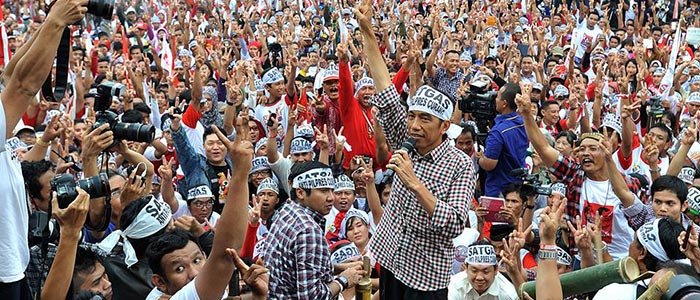
Indonesia’s last presidential election was breathtaking. For the first time in the nation’s history, both the government and citizens embraced technology to make sure the best man wins.
After the voting took place, the government released the raw ballot results from over 460,000 voting documents. As there were rumors of foul play coming from both sides to manipulate the ballot counts, citizens – both from inside Indonesia and those living overseas – wanted to safeguard the country’s future by building websites that crowdsourced for help to count the voting documents together. The results accurately predicted the winner.
Afterwards, when the losing candidate appealed to the constitutional court that he should’ve won the election, again the government released the candidate’s appeal documents for the world to see. And the world did see something, that the documents – which was crucial to proving the candidate’s claim – looked really sloppy. In the end, the victor stood, and the nation will see its seventh president – Joko Widodo – on October 20.
See: Why Indonesia is an Upcoming Tech Market That Can’t be Ignored
There are so many unique things you can find in Indonesia, tech or not. The country is deemed as the next powerhouse by 2030. Should you be interested to understand more about Indonesia, we invite you to join us on our flagship tech conference Startup Asia Jakarta 2014.
Tickets are still available! Register yourself with ILOVESTARTUPASIA code to get 20 percent discount. Register here.
Stay updated on the go with our mobile app.
Get latest insights with smoother, more personalized experience through TIA mobile app.
Recommended reads
 Life’s a game, and AI agents are Animoca’s new play
 Indonesian AI startup goes global
 Forrest Li on scaling Sea, building smarter bots, and founder grit
 An AI assistant that joins sales calls and scores team skills
 Beyond the check: Why VCs need more than capital
 SGX’s CEO says it doesn’t need a unicorn to win
 SMEs want AI too, but not the kind Big Tech is selling
 Oatside’s alt-milk rise hits a profitable gear
 Alibaba’s financial health in 12 charts
 Asia’s telcos bundle AI into mobile plans. Will it pay off?




Editing by Terence Lee
(And yes, we’re serious about ethics and transparency. More information here.)









