The internet is good for economic development, studies have found. Not only the big fish see growth as a result; internet use also benefits small and medium-sized businesses.
It’s therefore in each nation’s interest to provide reliable and affordable internet access to its people – obviously alongside other basic infrastructure like electricity, sanitation, and roads.
Yet, data from the UN broadband commission (PDF link) shows the spread of the internet around the world is slowing down. We’re still facing a gaping digital divide.
More than half the world
The UN says more than half the world is currently offline. It’s more extreme in developing countries. Even though the advent of mobile broadband technology made it easier for firms to bring web access to remote areas, it still takes a lot of cash to develop and maintain the infrastructure. Telcos have little incentive to do so because the rural communities they reach this way don’t promise a high return on investment.
In Indonesia, where I am, we witness this situation playing out. The archipelago nation suffers from uneven development. To counter this, the government introduced a national broadband plan which aims for improved connectivity for all of Indonesia by 2019. But three more years are an eternity in the internet age.
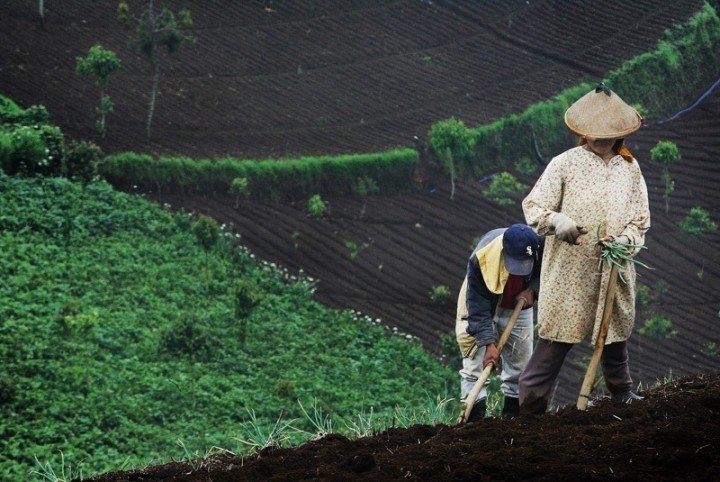
Rural life in Indonesia. Photo credit: Global Lives Project
What’s keeping people offline?
Tech leaders like Mark Zuckerberg, Sergey Brin, and Elon Musk say there are other, possibly cheaper ways to deliver internet to remote areas. They came forward with fantastic proposals. Google’s Project Loon wants to use balloons instead of stationary transmission towers. It chose Indonesia as one of the countries to test Loon this year. Facebook’s Aquila is a solar-powered drone that can beam internet signals with lasers. Musk’s company SpaceX is working on a fleet of microsatellites.
But are the schemes of these billionaire tech entrepreneurs feasible? Are there trade-offs to consider if we let the internet run on their infrastructure? Aren’t there alternatives? I’ll compare those schemes and some alternatives in the infographic later on, but first, some context.
There’s a camp of people who argue it’s not the lack of internet infrastructure that’s keeping people offline. What if you don’t even have a permanent power source? What if there isn’t any content available in the language you speak?
People like Marina Azcarate from the startup FireChat think it’s more helpful to connect people among each other, before considering a costly high-speed access to the global internet. She has in mind something called a mesh network. It’s low-cost, works without access to the internet and as such shows immense potential if you consider situations like natural disasters.
The cost of data is another issue. What if there is a signal near you but you can barely afford a data plan? Zuckerberg proposed offering certain internet services for free, but had to deal with a severe backlash in India. The Free Basics scheme allowed people to access Facebook and a handful of other sites, but they still had to purchase data to get onto the full web. Although now effectively banned in India, Facebook still offers this controversial scheme in other countries.
Subsidizing online time sounds like a reasonable idea if data costs are keeping some people away from the internet. Web broswer maker Opera has experimented with brand-sponsored web passes. It’s plausible that governments can do something similar to help particularly disadvantaged communities get online.
Who owns the airwaves?





Stay updated on the go with our mobile app.
Get latest insights with smoother, more personalized experience through TIA mobile app.












📅 Upcoming Events
22 October 2026
Payoneer x CSPN Summit 2026