Anh-Minh Do · · 10 min read
Here’s why Xiaomi is China’s most important tech company
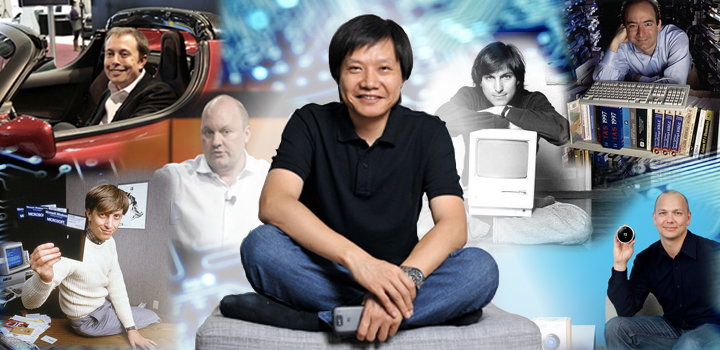
I can see why Lei Jun doesn’t want to be called the Steve Jobs of China. If you look at his history, he’s more like a quasi-Bill Gates with a hint of Jeff Bezos, with Marc Andreesen tendencies, and only a soupçon of Steve Jobs.
Look at his history:
- 1992 to 2007: he joined as an engineer and rose to president and CEO of Kingsoft in six years. This is a company that does word processing and antivirus software, gaming distribution, and even ecommerce. That’s the quasi-Bill Gates.
- 2000 to 2004: Lei Jun founds Joyo.com, an online bookstore, within Kingsoft, and eventually sells it to Amazon.com. That’s the Bezos connection.
- 2008: Having resigned Kingsoft in 2007, Lei Jun becomes chairman of UCWeb. It’s a mobile browser that now has over 500 million users and was recently acquired by Alibaba. Sound like a mobile Netscape?
- 2007 to 2010: Lei Jun oversees over 70 funding rounds for his portfolio companies. Surely, that rings of Marc Andreesen’s Andreesen Horowitz.
- 2010: He founds the now world-famous smartphone manufacturer Xiaomi, which may be raising funds at a US$40 billion valuation next year. Lastly, Xiaomi is constantly compared to Apple.
Given what we know of Lei Jun’s history and numbers, you would be hard pressed to make a deeper comparison of Lei Jun and Steve Jobs that goes beyond black shirts, blue jeans, and smartphone icons. Instead of chiding over the fact that Lei Jun ripped off Steve Jobs during his Xiaomi product launches, pause for a moment and consider the idea that he (and his entire PR and marketing team) wants you to think that he’s ripping off Steve Jobs. After all, it’s the single most important point about Xiaomi that the press talks about. And the fact that he goes out and says he doesn’t like the comparison, while the Xiaomi Weibo account mocked his death, make it all the more damning.
Remember, reading about Steve Jobs is what got him into being a tech entrepreneur in the first place. I would not be surprised if his team reverse engineered Steve Jobs’ identity and career and are now replicating it in Xiaomi fashion. That’s what makes Lei Jun a compelling and polarizing figure. He’s calculating.
Don’t forget Lei Jun’s connections too. Tencent, progenitor of WeChat, invested in Kingsoft. Alibaba acquired UCWeb. Robin Li, CEO of Baidu, is a personal friend. These are the big three of China. For Valley heads out there, that would be like a founder getting investment from Facebook for his first startup, getting one of his web projects acquired by Amazon, and then being chummy with Larry Page of Google. Lei Jun is arguably the most well connected entrepreneur in China. So, the recent PR hullaballoo around an air purifier that Jack Ma teased Lei Jun about is only something Lei Jun can do. Think about him in the context of the surrounding ecosystem that he is in (and that he creates). A case in point is WiWide.com, a startup that Xiaomi funded, and which got funding from Tencent last week.
Lei Jun is more than just a Chinese Steve Jobs, he actually looks more like every single Silicon Valley hero all wrapped into one. Maybe that’s what makes him worth US$9.1 billion. Or, as our own Paul Bischoff notes, he might be worth even more than Jack Ma.
Lei Jun’s numbers
When you follow the money, you really start to see the whole story of what makes Lei Jun tick. User numbers, revenues, and investments show an evolution.
First, Kingsoft. Lei Jun joined in 1992 after university. He began as an engineer but rose up to CEO in six years. Within Kingsoft, from 2000 to 2004, Lei Jun built up Joyo and sold it to Amazon for US$75 million. After that, he spent years bringing Kingsoft to its IPO in 2007, after which he resigned. He came back to Kingsoft in 2011. The return is often paralleled to Steve Jobs’ second coming to Apple. Here’s Kingsoft’s revenue numbers since IPO in 2007:
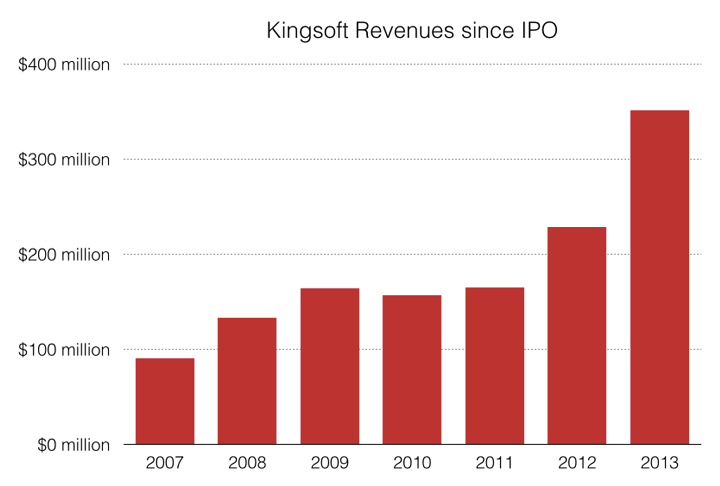
From 2008 to 2011, Kingsoft’s revenue stagnated. Upon Lei Jun’s return in 2011, Kingsoft aggressively pursued a mobile and cloud strategy (Nadella anyone?). As revenues indicate, this was the right play.
Lei Jun’s taste for mobile success continued when he joined UCWeb, China’s now top mobile browser, as Chairman. UCWeb dominated the mobile browser market share and was eventually acquired by Alibaba, which valued the company at a record-breaking US$3.8 billion. UCWeb’s first year after release saw 200 million new users and within four years it already hit 500 million users. Gaining 200 million users in one year is staggering.
Only Xiaomi
Xiaomi tomorrow





Stay updated on the go with our mobile app.
Get latest insights with smoother, more personalized experience through TIA mobile app.