Around a year ago, Netflix announced that it wanted to launch in China, and that it wanted to do so alone, without forming a joint venture with a local partner. It was a plan that was unprecedented, and seemed pretty unrealistic. When the company abandoned that plan just a couple months later, it wasn’t shocking, but it did make one wonder just how much Netflix really knew about China if it was forced to totally change its plans so quickly. At the time, I wrote:
It’s true that Netflix entering China alone would have been very tough given that it would have to finagle rare licenses out of China’s government in order to operate legally. But the fact that it has so quickly abandoned that dream and embraced a model it called “difficult to be successful” makes me question whether Netflix really knows what it’s doing here. Was the company fully aware of the difficulties when it said it planned to enter China alone? If so, why did it abandon those plans so quickly? If not, why should we believe it’s got a better grasp on China now?
Not confidence-inspiring. Nearly a year after Netflix first announced its China plans, has anything really changed?
Apparently not. At a conference in Germany on Monday, Netflix CEO Reed Hastings spoke again about the company’s China plans. He said Netflix is still working with the government, and though he’s optimistic, he doesn’t have any kind of timetable for a China launch. “It may be soon that we have a license in China,” he said. “It may take several years. So we’re going to be patient.”
Red flags
As with almost everything Netflix says about China, Hastings’ statement throws up a couple of red flags that indicate to me the company doesn’t really understand what’s going on here.
First, Hastings is still talking about Netflix having its own license in China. This is just as unrealistic now as it was in March of last year when the company first proposed it. Chinese authorities have given out internet TV streaming licenses to a very small number of players, and never to a foreign company. Even Disney, arguably the US’s most powerful entertainment company, had to partner with Alibaba when it launched its China streaming service last month. Perhaps by “have a license” Hastings meant that Netflix would have access to a license through a local partner, but if he’s really waiting on the company to be granted its own, he could be waiting quite a while.
That’s the second red flag: Netflix doesn’t have “several years” to wait in this market. Competitors are already on the ground. The Netflix-style services of Alibaba’s Taobao Box Office (TBO) are readily available right now, and by the time Netflix gets through its “several years” licensing process, it’s going to have a very entrenched competitor with the same business model, the financial backing of Alibaba, and convenient integration with all of Alibaba’s other services, which most internet-surfing Chinese use regularly. And foreign companies are getting in on the action too. British independent film streaming platform Mubi launched in China earlier this month through a joint-venture with Huanxi Media Group.
Hastings’ other comments about China on Monday also raise questions. He compared Netflix’s wait to enter China to the wait Apple faced when negotiating a Chinese launch of the iPhone, saying “We take away from that a great sense of patience.” But the iPhone is hardware; competitors could not simply sell their own iPhones. Netflix, in contrast, is a content platform, and if Netflix isn’t able to provide the desired content to Chinese users, other content platforms absolutely will. Chinese users had to wait to buy an official Chinese iPhone because only Apple could offer it. But tons of different streaming services can give them access to the fifth season of The Office (or whatever). Consumers have no real reason to wait for Netflix like they did for Apple. True, Netflix has its original programming, but that’s only a small part of what’s offered on its platform, and only one Netflix original (House of Cards) has really generated much interest among Chinese viewers.
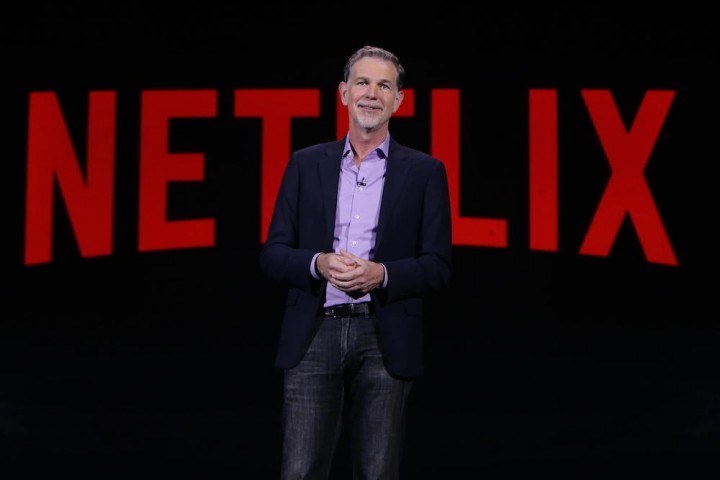
CEO Reed Hastings onstage at CES 2016. Photo credit: Netflix.
It’s dangerous to go alone
Certainly, I understand Netflix’s desire to go it alone in China. Joint ventures can get messy. And because the Chinese companies hold the licenses and therefore all the power, they aren’t always an even split; Mubi, for example, owns just 30 percent of its new China subsidiary, meaning that its Chinese partner Huanxi effectively has total control over the project if it wants it.
But time is a major factor here. If Netflix doesn’t find some way into the Chinese market soon, there’s a good chance that it’s going to be effectively out of the running, forced to resign itself to a tiny sliver of market share. Competing with Alibaba is hard enough when you haven’t given Alibaba a long head start. Netflix really cannot afford to be patient here, which means it probably can’t afford to go it alone. If the company doesn’t find a good China partner and get moving soon, I’d wager that Netflix will never be a major force on the Chinese media landscape.





Stay updated on the go with our mobile app.
Get latest insights with smoother, more personalized experience through TIA mobile app.












📅 Upcoming Events
22 October 2026
Payoneer x CSPN Summit 2026