- Insights This article was written by a TIA community member. Insights pieces undergo the same rigorous editorial process that newsroom-produced articles have.
 Dennis Ye · · 4 min read
Being a founder is hard, but you don’t have to be heartless
For most of my working life, it’s felt like global capitalism and Singapore’s economy have been in one kind of permacrisis or another. We have had to deal with property prices always on the rise as we head into a global recession – even as the ratio of good jobs to our nation’s wealth has decreased.
Now, across the tech ecosystem, we’re seeing mass layoffs that didn’t have to happen. A lot of hardship could have been avoided if founders had considered how global economic headwinds would impact their businesses and if companies had put happiness first.

Image credit: Timmy Loen
Happiness, moats, and economies of scale
According to billionaire investor Peter Thiel, only truly innovative and unique startups and businesses can be happy: “All happy companies are different; every unhappy company is doing the same as other unhappy companies.” This reversal of the Anna Karenina principle goes a long way in explaining what we’re seeing in the startup world today.
He also uses the example of the German Mittelstand, “which are hundred-year-old to hundred fifty-year-old companies that are specialized in extremely narrow markets where they are the best in the world. Even though there is no natural way for them to expand beyond that, it is still actually a very valuable place to be.”
What Thiel is trying to say is that the endgame is key: A business model with a sustainable competitive advantage – also known as a moat – can be translated into profit margins over time.
For an investment to have financial sustainability, profits must be greater than the interest lost during the time it takes investments in capital expenditure to be recovered – hence the use of discounted cash flow analysis.
This means that it’s not size that matters; a company, regardless of its size, can look after its workforce comfortably. Without a moat, any happiness found in your business is transient. As Tony Tan, a former defense minister of Singapore, is thought to have said, “You don’t own what you can’t defend.”
Professional investors have been telling me that some unicorns in Singapore lack moats, being entirely dependent on the cost of capital and investors. This explains why they have had to be heartless as of late.
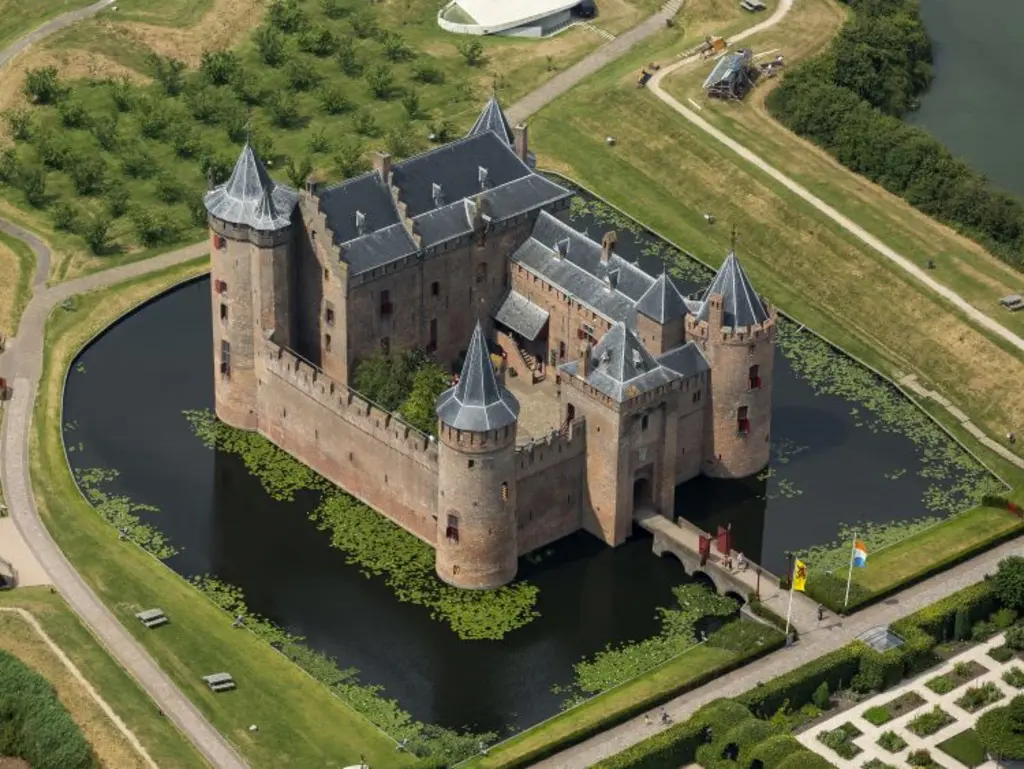
Just like castles, startups need moats. / Photo credit: Aerovista Luchtfotografie / Shutterstock
Just as investors try to fund stars and cash cows while defunding dogs, founders and employees should avoid establishing and working for companies whose business strategy lies in red oceans (competitive markets) rather than blue oceans (unexplored markets).
While it is true that the economies of scale that follow rapid scaling can become a moat, the competitive differentiator then becomes how much capital can be raised and how efficiently it can be deployed. But trying to succeed solely on the economics of scale means the business and the capital that it is built upon can be defeated by a competitor with more capital and efficiency.
Risk-reward imbalance
A large part of a tech company’s operating expenditure goes into salaries, so every retrenchment or hire can have a big effect on its runway. Still, I feel sorry for people who were “hired fast and fired fast” by a unicorn because the founder did not have robust plans to make the company profitable.





Stay updated on the go with our mobile app.
Get latest insights with smoother, more personalized experience through TIA mobile app.












📅 Upcoming Events
22 October 2026
Payoneer x CSPN Summit 2026