 Samantha Cheh · · 6 min read
A closer look at Cool Japan Fund’s $10m bet on Buyandship

When Sheldon Li, the CEO of ecommerce platform Buyandship, first heard that the Cool Japan Fund (CJF) would be investing US$10 million in his firm, he didn’t celebrate for long.
“I was happy for like 30 seconds, but then I started to get anxious,” he recalls. “We have a lot of work to do, but I’m excited.”
After a gruelling due diligence process and drawn-out term sheet discussions, the deal was sealed in September 2023. Private equity fund CJF would be leading Buyandship’s series B round alongside the Hong Kong Science and Technology Parks Elite Programme.
Since then, Li and Kenichi Sawaya, director of CJF, have been hard at work not just at building the company but forging a deeper, more strategic relationship between the two firms.
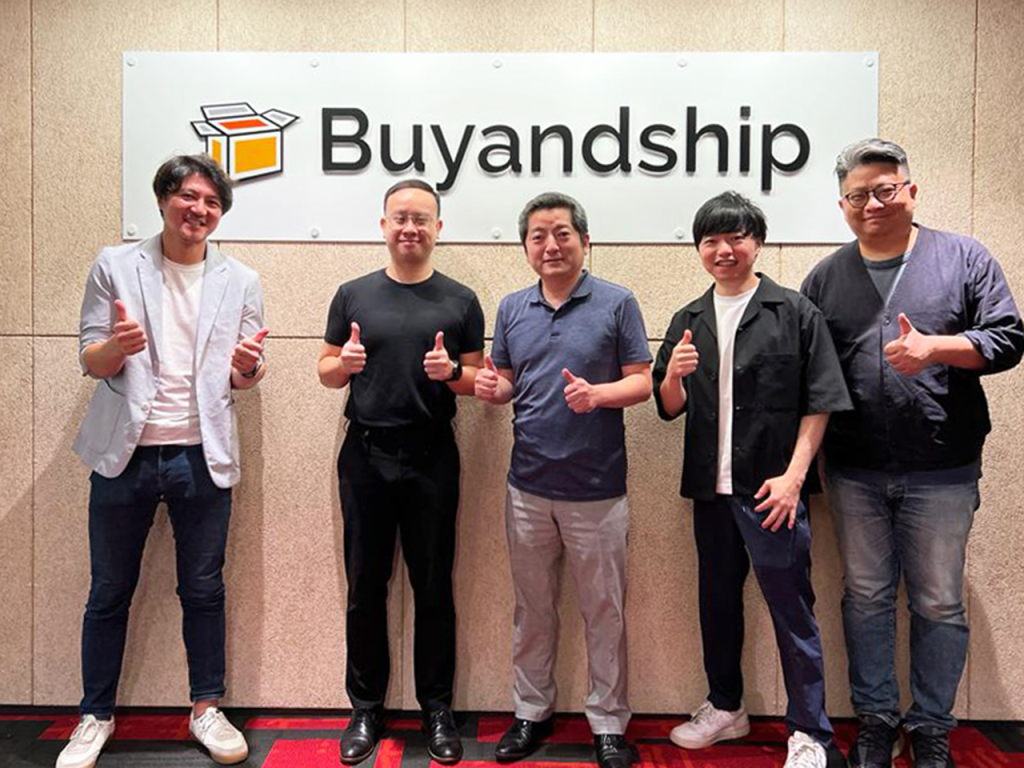
(From left to right) Kenichi Sawaya, director at Cool Japan Fund (CJF); Sheldon Li, CEO of Buyandship; Sano Kazushi, managing director at CJF; Takasawa Akihiro, vice president at CJF; and Hang Poon, COO of Buyandship / Photo credit: Buyandship
“We’ve been very encouraged by how open Li and his team were to our requests and processes, so we can increase our momentum and cooperation,” says Sawaya.
This partnership has just gotten stronger over the last few months.
Aligning interests
It’s easy to see how Buyandship’s business model aligns with CJF’s goals.
Founded in 2013, the fund actively invests in overseas companies that can help promote, market, and distribute Japanese products and other cultural exports in their respective local markets, explains Sawaya.
Meanwhile, Buyandship, which is based in Hong Kong, was founded in 2014 with the goal of empowering customers with an easy and affordable way to buy overseas products, says Li. There’s definitely strong demand for such a service, as Asia Pacific customers are already highly engaged cross-border shoppers. Within Southeast Asia alone, B2C ecommerce exports are valued at US$12 billion, though high logistics costs remain a major barrier, Li points out.

An inside look at one of Buyandship’s warehouses / Photo credit: Buyandship
Buyandship looks to address those problems by employing a model that riffs off of popular dropshipping practices. This allows Hong Kong customers to buy and ship products from Japanese merchants – alongside those from 12 other markets – without the hefty price tag.
“We give customers more choices, the best deal, and we make cross-border shopping as simple as shopping locally,” says Li. The CEO adds that in 2022 alone, the platform had already exported US$100 million worth of Japanese products.
“A closed market”
For Sawaya, Buyandship’s ability to ship Japanese goods overseas was undoubtedly central to its appeal, especially given that most local products – for example, certain ramen brands and flavors – are not exported abroad.
“Japanese products have always been popular among Asian consumers – it’s just that access is not there,” says Li.
That’s because outside major cities, Japanese merchants face language and cultural barriers in accessing export platforms, explains Sawaya. Further, given the size, sophistication, and diversity of Japan’s domestic market, local merchants rarely feel the need to look abroad.

Shibuya Crossing in Tokyo / Photo credit: Takashi Images / Shutterstock
With Buyandship, that access is radically expanded so customers can buy Japanese products directly from local merchants.
Other factors that fueled CJF’s interest in Buyandship include the latter’s impressive global footprint, cosmopolitan management team, as well as its innate global-mindedness, which Li says is a common trait among Hong Kong startups.
“Similar to Singapore, Hong Kong startups start with the mindset that our businesses have to be global because of how small the market is at home,” he explains. “Also, while Hong Kong has a lot of angel and series A investors, there isn’t enough funding for growth-stage rounds, which is why we looked overseas for investors.”
This strong sense of globalization was important to CJF, as it highlighted the firm’s understanding of the fund’s goal of promoting Japanese products.
“Even though they didn’t have a local team in place, their customers were already buying and shipping from Japan,” says Sawaya. “That told me there was a lot of potential to further expand.”
Another plus was the management team’s sensitivity to navigating the cultural differences between how Hong Kong and Japanese businesses approach relationship building.
“In Hong Kong, merchants are more open to starting partnerships, but there’s a likelihood that they’ll leave if a better opportunity arises,” says Li. “But in Japan, we understood that they’re really concerned with who you are because they want to make sure you’re the right partner for the long-term. They’ll take more time, but it’s also a more stable relationship.”
Buyandship’s investment plans
For Buyandship, working with CJF helped it penetrate Japan’s “closed” market, especially given the firm’s past failures to connect with local merchants.
“Because of language barriers and the lack of a foundation of trust, we really struggled before we met CJF,” recalls Li. “We love working with Sawaya and CJF because they helped us open doors.”
The fund’s US$10 million investment will also be used to bankroll three areas of development: automating Buyandship’s operations, increasing its artificial intelligence (AI) and machine learning (ML) capabilities, and expanding further across Southeast Asia and South Korea.
By automating the startup’s facilities, Li says that the platform can make its services “cheaper and faster” for their customers, while leveraging AI and ML will improve the accuracy and relevance of its product discovery services.

Better automation in logistics always sounds good / Photo credit: Buyandship
“Cross-border ecommerce services alone are not very interesting, until I start to show you what you can buy on the platform,” he says. These include “chocolates from Italy or shrimp crackers from Japan, which are 80% cheaper than in Singapore.”
Unlike its competitors – which may only focus on shipping services – Buyandship employs user-generated content to drive sales and discovery. By highlighting customer reviews and social posts rooted in actual experiences, the platform generates a strong sense of authenticity which bolsters enthusiasm for products.
“Everything in Buyandship is content-driven, so once you open the app, you’re not just thinking about how you’re going to ship this thing, but what you can buy and the savings you’ll earn,” says Li.
Not just about the money
With the investment done and dusted, CJF and Buyandship are focusing on building up a local team for the startup’s Japan operations. In the past, Li shares that Buyandship’s investors have been key assets to help them overcome talent shortages, especially during expansions to foreign markets.
“We’re approaching some Japanese merchants, but the most important thing to us is that we pick the right country manager,” says Sawaya. “Once that’s done, we’ll start looking into how we can introduce them to Japanese companies and local governments so we can expand the range of unique products on the platform.”
The company is also exploring the potential for Buyandship to turn tourists into recurring customers.
“When they visit Japan, their shopping is limited by how much they can carry back in their suitcases,” says Li. “Buyandship enables them to continue buying from those same merchants, so we’re not just creating a bigger basket size for those merchants but also long-tail purchases.”
Realizing these aspirations will remain central to the partnership, but for Li, the most important aspects go beyond questions of money.
“We’ve always looked to work with our investors,” he shares. “We aren’t focused on purely financial partners, but those who are on the ground to help and support us as we build together.”
Buyandship is a cross-border ecommerce platform on a mission to empower consumers to buy any product globally. To do this, it uses big data, global pricing comparison, social commerce, and logistics technologies. The firm, which adheres to the core value “more product, lowest priced, and easy,” has a vision to become the default shopping platform for consumers. The company has expanded its presence across 11 countries and regions and currently operates 12 warehouses in total.
To find out more, visit its site.
This content was produced by Tech in Asia Studios, which connects brands with Asia’s tech community. Learn more about partnering with Tech in Asia Studios.
Stay updated on the go with our mobile app.
Get latest insights with smoother, more personalized experience through TIA mobile app.
Recommended reads
 Indonesian AI startup goes global
 Forrest Li on scaling Sea, building smarter bots, and founder grit
 An AI assistant that joins sales calls and scores team skills
 Beyond the check: Why VCs need more than capital
 SGX’s CEO says it doesn’t need a unicorn to win
 SMEs want AI too, but not the kind Big Tech is selling
 Oatside’s alt-milk rise hits a profitable gear
 Alibaba’s financial health in 12 charts
 Asia’s telcos bundle AI into mobile plans. Will it pay off?
 M-Daq chases bigger clients as revenue falls, losses grow





Editing by Jonathan Chew, Stefanie Yeo, and Jaclyn Tiu
(And yes, we’re serious about ethics and transparency. More information here.)





