- Insights This article was written by a TIA community member. Insights pieces undergo the same rigorous editorial process that newsroom-produced articles have.
 Tim Romero · · 5 min read
This edtech startup is using AI to help students with their entrance tests
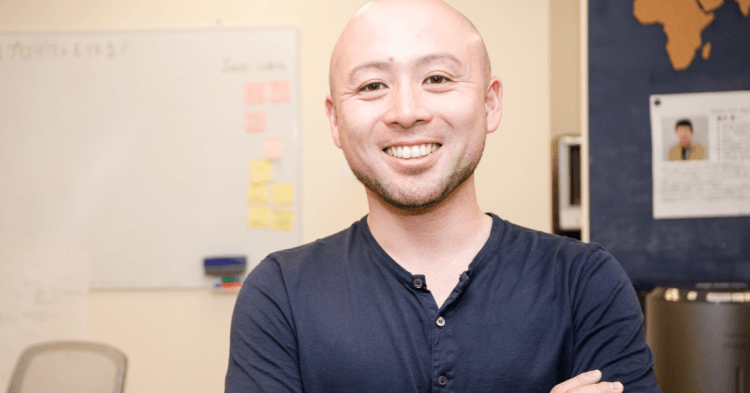
Daisuke Inada, founder and CEO of Atama Plus
This article is part of Tech in Asia’s partnership with Disrupting Japan where we publish the revised transcripts from the show’s podcast interviews with Japanese entrepreneurs. This is heavily revised from the original transcripts. For the full interview, go here.
Daisuke Inada is the founder and CEO of Atama Plus, a Japanese edtech startup leveraging AI. He left an 11-year lucrative career at Mistui to build his own startup. In this interview, Inada and I talk about his journey and his company.
We also talk about jyuku or cram schools. To give you a background, the purpose of these schools is to help students score higher on their college or high school entrance exams. Unlike the regular schools themselves, jyuku are private companies and some are even publicly traded. They compete fiercely for students, and they’re evaluated based on how well their students do on tests. It’s no surprise that they’re willing to try new technology and why most education innovation in Japan focuses on jyuku.
Here’s my conversation with Inada.
What does Atama Plus do?
We provide an AI program for high school and junior high school students in Japan. We have a personalized curriculum consisting of video lectures, exercises, and tests, which analyze students’ data such as proficiency, running history, consideration level, and so on.
At this moment, we provide math lessons to high school students, but we are also preparing other subjects like English and physics.
Our business model is based on B2B2C—business to jyuku to students.
Why did you leave Mitsui to start a startup?
When I was working in Mitsui, I stayed in Brazil for five years. Then, we founded a joint venture between Mitsui and Benesse, which is a large education company in Japan. Since there was no education business in Mitsui, we tried to bring Japanese education know-how from Japan to Brazil. Unfortunately, the financials weren’t good, so they decided to close the company.
Then, I returned to Japan to start a new education business inside Mitsui, but it was slow and difficult to innovate education in a huge company. That’s why I thought it’s better to start from scratch.
How did you meet your co-founders?
I called my friends from university. Our COO was a CEO at Recruit China, and our CTO was with Microsoft. We’ve been talking about the possibility of starting a new business back in university. But it took me a year to get the CTO’s decision because he has a family with two children.
How do you measure success at Atama Plus?
We improve based on the students’ scores. It’s important for us to observe our users, so we conduct interviews with them to easily understand how they feel about our product. We also look at the raw data of the students’ interaction with our product.
Do you plan on changing your business model or going purely online in the future?
Actually, we want to start a new structure of jyuku. Currently, each class has 15 to 20 students and one human coach. But this coach does not teach; they only focus on encouraging the students. Also, one big thing about jyuku is the lack of teachers. So, in the new model we’d like to create, we’d like our AI technology to focus on teaching and to support the coaches.
If we provide just online programs, only top students would benefit the most, as they already know their weaknesses. But the majority of students are not aware which subjects or topics they’re weak at. That’s why a coach has to support them and it’s better to study together with their friends.
Will Atama Plus expand internationally? Why is it difficult for some edtech startups to move into new markets?
What would you want to change to make Japan better for startups?





Stay updated on the go with our mobile app.
Get latest insights with smoother, more personalized experience through TIA mobile app.