Grace Priscilla Teo · · 5 min read
How big agritech companies built a perfect system for the wrong problem
This article summarizes an episode of X, The Moonshot Factory’s video series featuring agricultural scientist David Guerena.
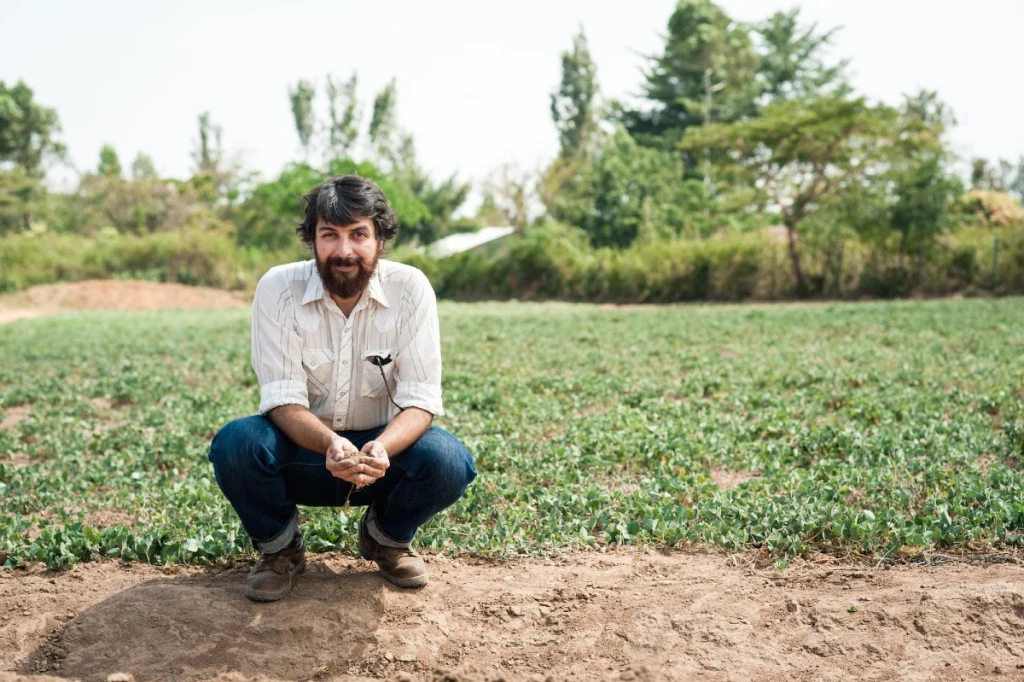
Agricultural scientist at The International Center for Tropical Agriculture, David Guerena / Photo credit: David Guerena’s Twitter
The world’s largest agricultural companies have created a technology gap by focusing on industrial farms while ignoring billions of smallholder farmers. That’s the view of agricultural scientist David Guerena, who is partnering with Mineral, a project from the tech incubator X, to close that gap by transforming plant breeding with computational tools.
The work signals a shift from centralized, top-down agricultural innovation to a decentralized, farmer-integrated model. By closing the data gap for smallholder farms, computational tools are accelerating the development of resilient crops for global food security.
The 99% market failure in global agriculture
The world’s largest agricultural companies focus on industrial farms in developed nations, leaving billions of smallholder farmers without access to modern tools or crops suited for their environments.
Large companies target a niche market
Guerena uses agricultural science giants like Syngenta and the Bayer-owned Monsanto as examples, saying, “the Syngentas and Monsantos, they’re targeting a very specific market and that’s going to be the large industrial farms in North America and Europe and maybe some parts of Brazil or China.”
Smallholder farms represent the global majority
He continues, “whereas maybe 99% of farmers in the world are small holder farmers. These are farms that are managed by one family, usually maybe one or two acres. And they have a very diverse amount of crops they’re producing.”
The unserved market is vast
The result is a gap in innovation, and Guerena asks, “so when 99 plus percent of the farmers in the world aren’t having plants being bred for their changing needs, who’s doing that for them?”
The cascading impact of climate on subsistence farming
This market failure means smallholder farmers are vulnerable to climate shocks. Unpredictable weather threatens crop yields, which can destabilize a family’s ability to afford food, education, and healthcare, creating a cycle of poverty.
Climate change is disrupting established farming cycles
According to Guerena, “over the past, 15 years that I’ve been there, the short rain has been becoming more and more erratic to the point now where farmers [in] the entire northern Tanzania no longer plant in the short rain because they don’t know if their labor is going to be productive.”
Manual data collection is a bottleneck to progress
AI-powered tools deliver speed and precision
Centralized research creates a performance gap
A new model for distributed agricultural R&D





Stay updated on the go with our mobile app.
Get latest insights with smoother, more personalized experience through TIA mobile app.