Winston Zhang · · 11 min read
Unstoppable Expansion: Laying the foundation for scalability

Before the 2020s, it seemed like startups were popping up everywhere. Companies from all over were developing apps for everything, and there was a huge boom in tech services.
But the years that followed were like a startup apocalypse, with businesses shuttering from almost every industry. However, a lot of the companies that survived the tough times also seem to be thriving, raising the question of what it takes for a business to be successful when headwinds hit.
In Unstoppable Expansion, a new podcast miniseries produced by Tech in Asia in collaboration with G-P, TIA’s Winston Zhang and G-P Asia Pacific general manager Charles Ferguson dive into what makes a successful business. They also discuss some of the strategies companies need to know to thrive – not just survive – in any economic climate.
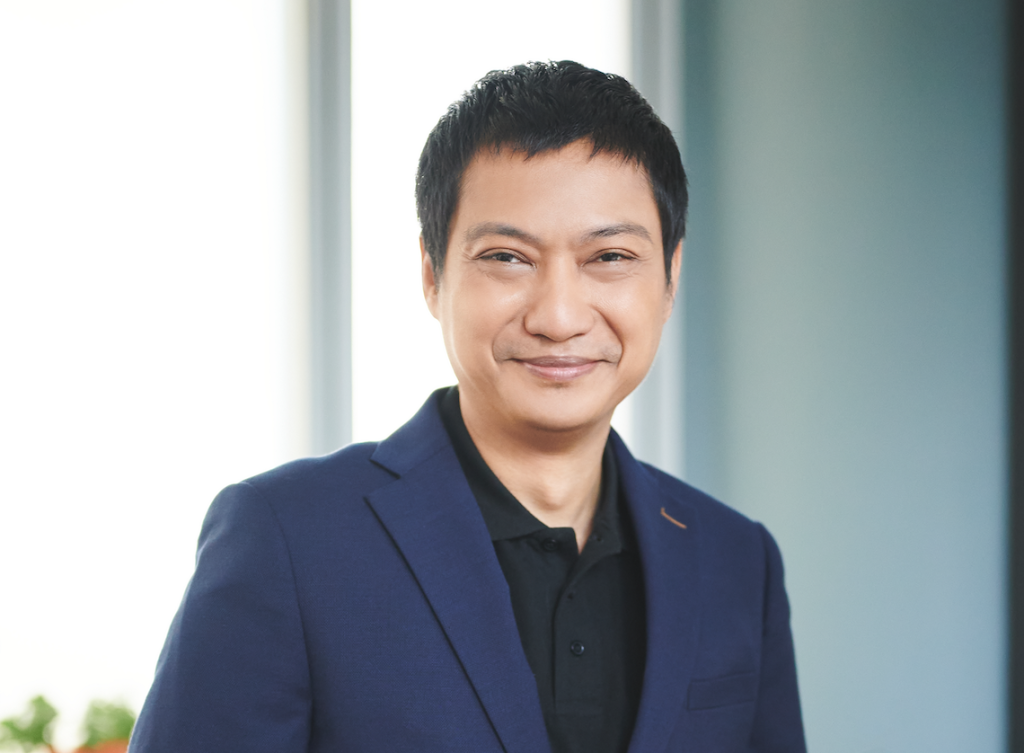
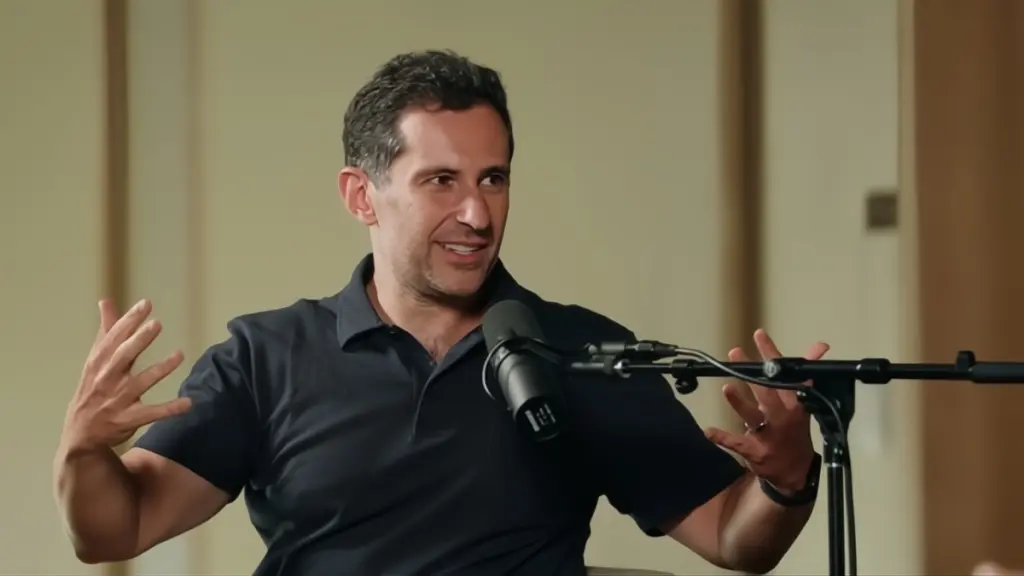
Aung Kyaw Moe, CEO and founder of 2C2P / Image credit: Tech in Asia
For the first installation of this series, the duo speak to 2C2P CEO and founder Aung Kyaw Moe to find out how the Singapore-headquartered payments platform ensured that it had all the fundamental building blocks to scale sustainably from the beginning.
Time codes:
00:00 – The 2020s: A case study for the startup world
01:16 – Welcome to Unstoppable Expansion
01:50 – Introducing Aung Kyaw Moe, CEO and founder of 2C2P
02:35 – The first business Aung launched
03:29 – Pivoting to developing software for banks
04:41 – Coming to Singapore
05:55 – Half of Aung’s management are ex-customers
07:15 – 2C2P’s market entry strategy: Follow the customers
08:48 – Parachuting management into a new market for abroad vs. hiring locally
10:31 – The customer always comes first
12:50 – How can companies bypass the many barriers that exist in an expansion attempt?
13:31 – Thanks for listening – stay tuned for episode 2!
Hosts:
- Charles Ferguson, general manager for G-P’s Asia-Pacific operations
- Winston Zhang, managing editor of Tech in Asia Studios
Featured Interviewee:
- Aung Kyaw Moe, CEO and founder of Singapore-headquartered payments platform 2C2P
Unstoppable Expansion is a podcast by Tech in Asia, produced in partnership with G-P. Visit G-P’s website to learn how the company can help your business gain an edge in the talent economy and scale your operations sustainably.
You can listen to the full series on Spotify here.
Transcript
Winston Zhang:
Hey Charles, how’s it going?
Charles Ferguson:
Not too bad, Winston. Got something on your mind?
Winston Zhang:
Well, I was just thinking, these past few months and years have been an absolute case study for the startup world.
Charles Ferguson:
How do you mean?
Winston Zhang:
Before the 2020s, it seemed like startups were popping up everywhere – and I mean everywhere. You had companies left, right, and center developing apps for everything, there was a huge boom in tech services enabling businesses and providing the means for everybody, everywhere, to change the way they live. But the moment we left the twenty-teens, it was like a startup apocalypse, with startups shuttering every other day. Our front page on Tech in Asia felt like an obituary at the time.
Charles Ferguson:
Ah, yes. But you might’ve also noticed that the companies that made it through the cull of the early 2020s didn’t just survive – they thrived.
Winston Zhang:
Exactly. Can’t help but wonder why, though.
Charles Ferguson:
Well, it’s simple, really. They laid the foundation and all the fundamental building blocks for their business that enabled them to scale sustainably from the beginning.
Winston Zhang:
Either that or they were just really lucky.
Charles Ferguson:
You’re not wrong! But that actually reminds me of a conversation I had recently with someone who had a little bit of both. But before I introduce him, how about we introduce ourselves?
Winston Zhang:
Sure thing.
Charles Ferguson:
Welcome to Unstoppable Expansion, a podcast by Tech in Asia and G-P, where we’re going to discuss some of the strategies every business needs to know to be able to thrive – not just survive – in any economic climate. I’m Charles Ferguson, APAC general manager of G-P.
Winston Zhang:
And I’m Winston Zhang, managing editor of Tech in Asia Studios, and I’m incredibly curious to hear about this conversation you mentioned earlier, Charles.
Charles Ferguson:
Of course – let me introduce you to my friend, Aung Kyaw Moe, founder and CEO of Singapore-headquartered payments platform 2C2P.
Aung Kyaw Moe (Recorded Interview):
I am trained as a computer programmer, originally from Burma, and I moved out to Bangkok when I turned about the age of 24. Then I was [in Bangkok], happily working for a company as a computer programmer, and then I started my first company out of the blue. I thought that it would be better for me to provide for my family if I have my own company – obviously, very naive and silly.
Winston Zhang:
Ah, I’m familiar with Aung and 2C2P – we have quite a number of articles on Tech in Asia featuring him and the company.
Charles Ferguson:
Well, then you’ll probably also know that the first company he started wasn’t in fact 2C2P but a business where he would develop games and wallpapers for Nokia phones.
Aung Kyaw Moe (Recorded Interview):
I wanted to write mobile games for the Nokia platform. At the time, Nokia – I mean, 2003 – Nokia was as big as, I will say, Android, nowadays.
And then I realized that there is no distribution platform like we have today, like App Store or Play Store. I will have to distribute my application through telco portals one at a time, and telco will be taking like a 50% cut and pay six months later. So that’s the reality I hit.
Charles Ferguson:
Since, as you heard earlier, Aung’s whole motivation for starting a business was to better provide for his family, seeing that developing Nokia wallpapers and games wouldn’t really cut it, he pivoted into developing software for banks, something he stumbled upon almost entirely by accident.
Aung Kyaw Moe (Recorded Interview):
I was desperate, looking to survive, and discovered that one of the banks in Thailand was in need of something called 3D secure, which basically is sending one-time passwords – OTP – to customers’ or cardholders’ mobile phones every time they are buying something online.
So then I told the banker that I can write that piece of software, downloaded the specification, wrote the code, and, well, eventually successfully licensing that software to the bank. And with that, here I am stepping into the land of fintech.
Charles Ferguson:
That one interaction gave Aung so much more than he expected. He learned how the banking system works, identified a few other shortfalls in their system that he could probably solve, and developed all the things a bank would need to operate a payment gateway service.
Aung Kyaw Moe (Recorded Interview):
Until then, we simply licensed our software to the banks and then, eventually, we switched our business model to become our own payment gateway.
Charles Ferguson:
Aung picked up a few more notable successes along the way – starting a payment app that got acquired by the Thai Central Bank, for one – which got him the opportunity and the means to join an initiative by the Singapore government to establish an entrepreneurial ecosystem.
Aung Kyaw Moe (Recorded Interview):
That was only 2008, 2007, right? At the time, we started having IDA (Infocomm Development Authority of Singapore) and MDA (Media Development Authority), Singapore was kickstarting entrepreneurship in the nation. So I was one of the early boring entrepreneurs, came into Singapore, and was given a chance to start a company there and became headquartered in Singapore, and received a few government grants from the Singapore government from their various organizations. And that’s how I got a chance to jump out of Thailand into Singapore. Then because we receive grants, investment follows, then we have a chance to expand our company around the region.
Charles Ferguson:
And as they say, the rest is history.
Winston Zhang:
That’s cool and all, but what does all this have to do with what we were discussing earlier about foundations and building blocks?
Charles Ferguson:
Well, it’s less the founding story of 2C2P and the zero-to-hero journey that Aung experienced but more the conversation we had after that that struck me.
Aung Kyaw Moe (Recorded Interview):
Half of my management are my customers. So the gentleman who, I mean, who was my business partner and my dear friend – who is running Thailand operations – was my first customer who purchased my authentication software from me. Ten years after I received investment, I went back to him and requested that he come and join me and run the Thailand operation and beyond for me. And he accepted my offer. And then he is with me since then.
The same goes for the head of Singapore, the same goes for the head of Malaysia, Philippines, you know, every single country. These are the people from the payment industry, bankers – most of them older than me, most of them with much more experience than me in their own industry. They know how to interact with people, they know how to sell – all I do is tell them, “Please tell me what kind of software you need, what kind of product you need. I won’t let you down.” That’s all.
Winston Zhang:
Wow, that’s quite a feat. But I’m still not getting how this relates to building a business. What are you getting at, Charles?
Charles Ferguson:
Well, maybe this will help paint the picture a little bit better. I asked Aung how he executes market entries at 2C2P, and he had this rather interesting thing to say.
Aung Kyaw Moe (Recorded Interview):
Most of the time, the way we enter new markets is by following the customers. So today, we get the chance to work with the global brand names, where they will tell us that they are going to be in a particular market two years before they are in. In fact, they are already planning to be in that particular market and they are building their store locally, but nobody knows.
Because of that, we have a chance to go into the market, with customers in hand, the day we start operating in that market.
From time to time, we are also very ambitious. So we wanted to go into a market where we don’t have a particular customer in mind yet. But those market entries, we discovered that we don’t have as successful operations as we want it to be.
Winston Zhang:
I think I’m starting to get it. For 2C2P, the crucial factor to their success is the fact that they’re always chasing the customer – from their wants and needs to their gripes and pains, to the point that even the heads of various markets for the company are former customers who can inform the business on what the best move would be to capture and serve customers in those markets.
Charles Ferguson:
That’s right. As I like to say, “The customer is your compass.” And for 2C2P, that even meant ensuring that the people they chose to spearhead expansion efforts into new countries actually came from there.
Aung Kyaw Moe (Recorded Interview):
I truly believe that parachuting someone in from abroad or, you know, one of our guys jumping into that particular country, while they may have business know-how, it will not be a successful approach. If we want to enter a new market, I make sure that the head of that market is local in that particular market, and we find someone with the right business knowledge and, at the same time, the right culture to fit into our bigger team.
My experience has been that if we have that country head rightly hired, and if that country head is in tune with our culture and the same language we are speaking, to bring support for the country heads, such as operating or sales or many others are pretty straightforward, because they can attract talent by themselves.
What I did observe is that as soon as we send someone outside from that country as the like foreign experts trying to run the country, we have trouble assembling a good team together because the vibe changes completely. And this has been my experience so far because, in our case, we are in the middle – we have to be between payment channels, which is suppliers, and our merchant, which is our direct customers. So as soon as we have someone who is not local managing a country, we will always have difficulties establishing a relationship with personal partner, especially with the local banks and local payment methods.
Winston Zhang:
So is that the foundation for building a business that you’re talking about? Ensuring that everything you do is following your customers as the north star?
Charles Ferguson:
Exactly. Look at 2C2P, for instance. Anyone can write code, anyone can come up with solutions to the gaps in the payments system of the time. So their core differentiator as a business was that they put the customer first in everything that they did. This extended even to how the company treats potential competitors.
Aung Kyaw Moe (Recorded Interview):
Every time we enter a new market, those markets will have a strong player, be it a bank or wallet, or sometimes a third-party payment player. Our role is not to go and compete with them, but our role is to partner with them so that they can also expand their reach, and we can also serve our customers.
For example if we are bringing in our airline customer from Thailand into, say, Indonesia, it means we are bringing airline business opportunities to our Indonesian partner so that they will have a new opportunity or a new TPV (total payment volume) from Thailand Airlines. Conversely, we are helping our existing airline customers to sell more efficiently to Indonesian consumers. So that’s the role we play, and that’s how we operate regionally.
Charles Ferguson (Recorded Interview):
That’s brilliant, you are the glue, sir.
Aung Kyaw Moe (Recorded Interview):
Yeah, we’ve tried to be. So what we do is we connect all these channels and merchants together so that they all can win together – and of course, we also win along the way.
Charles Ferguson:
To punctuate that point, I can’t really think of any reason why a budding startup shouldn’t chase their customers. It really is core to product development, finding product-market fit, executing a go-to-market strategy, and so many factors that all contribute to the success of a scaling business.
Winston Zhang:
Right, the same problems and opportunities in different markets could have very different solutions based on the target customers in those markets because they have different habits, different environments, and hence, different concerns.
Charles Ferguson:
That’s an astute way to put it. However, that isn’t to say that following the customer is the only building block that businesses should be concerned with in their expansion efforts.
Winston Zhang:
So let me ask you this then: What specific building blocks would work best for a business intending to overcome country borders and be able to bypass the many barriers that exist in an expansion attempt?
Charles Ferguson:
Funnily enough, I recently caught up with someone whose own experience might be the answer to that question.
Dorothy Yiu (Recorded Interview):
If you want to start a business, an idea is not good enough. You need to have an advantage, an edge – be it connections to markets that other people don’t or very deep expertise and know-how that other people don’t – so that you can actually solve a problem better than anybody else, right? And ideas are just not going to guarantee that success for you.
Winston Zhang:
And who was that?
Charles Ferguson:
Well, that’s a discussion for the next episode. For now, thank you – you, the listener – for tuning in. If you like what you’ve just listened to, make sure to follow us for more episodes of Unstoppable Expansion, where Winston and I will dive into some of the strategies every business needs to know to be able to thrive in any economic climate.
Winston Zhang:
And if you like us enough or have any thoughts on this episode, make sure to let us know by giving us five stars and a nice review on your podcast platform of choice.
Charles Ferguson:
Of course, if you are a business leader and thinking of – or in the process of – scaling your business, and you’d like to know how we at G-P can help you in your expansion endeavors, make sure to visit our website at www.g-p.com. Until next time, I’m Charles Ferguson –
Winston Zhang:
And I’m Winston Zhang.
Charles Ferguson:
– and we’ll catch you next time.
Stay updated on the go with our mobile app.
Get latest insights with smoother, more personalized experience through TIA mobile app.
Recommended reads
 Sequoia partner reveals 4 types of ‘poor quality’ revenue
 Sam Altman’s lesson from Google: Trust over ads
 The Starbucks vs. Luckin debate misses the real winner
 What it takes to stand out as a product manager in the AI era
 Why buying, not building, is winning fintech’s scale race
 Sam Altman: Why Google’s success saved OpenAI
 Inbound vs. Outbound: one is for AI, the other for humans
 A milk tea a day keeps troubles at bay
 A $650M AI founder: Your ‘demo-level’ AI is a ‘real danger’
 Why Google is forcing travel sites to pivot or die





Editing by Jaclyn Tiu
(And yes, we’re serious about ethics and transparency. More information here.)