Thomas Price · · 8 min read
Ultra Street Fighter IV review: a lackluster single-player experience made up for by the genre’s best multiplayer
When Street Fighter IV hit Japanese arcades in 2008, it began a gaming revival unlike anything else. The title successfully brought 2D fighting games back from the dead. Now the latest, and possibly last version has seen full release on PC and consoles, but with the game now in its fifth major iteration, is it time to move on and look to the future, or is the veteran title worth picking up for one more round?
(See: On a scale of one to Hadouken, how good is Street Fighter: Assassin’s Fist?)
If you’re a gamer, you know how Street Fighter works, and Ultra Street Fighter IV (USF4) is no exception. Two fighters, a 2D stage, a timer, some special moves, and a health bar. You might have played Street Fighter II in the arcades with your buddies from school, or seen the now decade-old Daigo parry comeback video, or simply know what the Evolution Fighting Championship is. Regardless, Street Fighter is a known quantity.
To a degree. There’s a huge divide between those who play with their friends on the couch, and those who’ve spent hundreds of hours in training mode over the years. Fighting games have always operated on both a casual and a hardcore level, and each group demands something different from the game. But as we reach what is likely to be Street Fighter IV’s final version, how successful has Capcom been in pleasing both crowds?
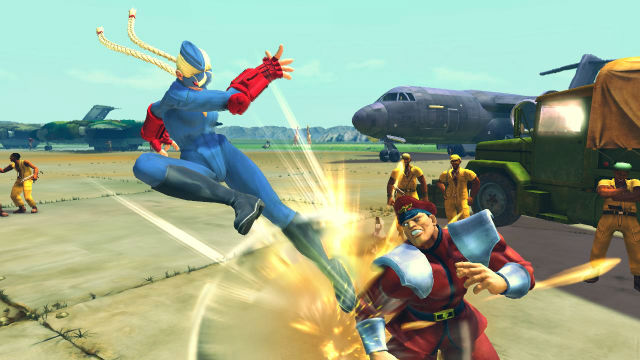
Single-player’s slim pickings
An important thing to note is that this a multiplayer game. Not in that it has a multiplayer mode, but that if you don’t plan on playing with other people, there is precious little to keep you occupied here. More recent fighters like Injustice, Mortal Kombat 9, and the Blazblue series have spoiled those who don’t wish to play online or with friends by including a beefy single-player campaign, and this makes Ultra Street Fighter IV feel barren in comparison. This is a major blow to the casual players who might not know anyone to play with regularly, though it’s less of an issue with the hardcore fans, who’re happy to spend hours in the game’s training mode.
The meat of USF4’s single-player experience is its arcade mode. As with other versions of Street Fighter IV, each character has a cartoon opening and ending video, as well as a short in-game skit with their rival character and the final boss. Besides beating arcade mode with different characters on varying difficulties, you have a training mode for learning your combos, and a challenge mode that helps you get a feel for what each character can do.
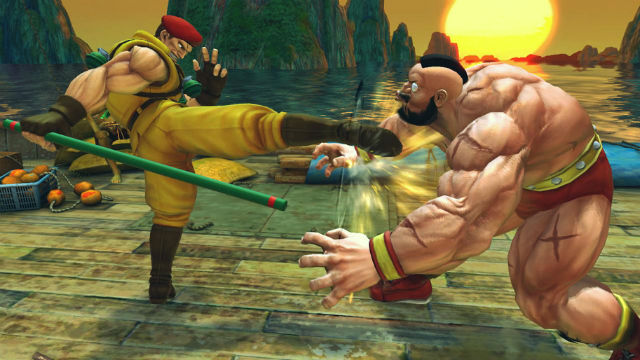
Unfortunately, the challenge mode in USF4 is exactly the same as the one found in Super Street Fighter IV: Arcade Edition—meaning that none of the new characters to the game have challenges to complete. The mode features combo trials that walk players through a character’s primary moveset, and some of their basic combos and technique synergy. Lacking new trials means that players (experienced or otherwise) have less tools to get to grips with the new characters than some may like. Capcom has talked about a possible later patch that will update these challenges, as well as add new ones for the new characters. But you should know that they’re missing at launch, and no dates have been announced.
(See: Capcom announces Street Fighter V release no earlier than 2018)
Character unlocks proved unpopular with the competitive circuit, since it needed all characters to be unlocked from the get-go in order to simplify running tournaments. It’s likely for that reason that you’ll find none of those here. Costume unlocks, meanwhile, have been a DLC affair since the first version of the game. The full version of USF4 has some bundled costumes (though if you purchase the title as an upgrade to Arcade Edition 2012, you won’t get these), but they’re all ready to be used as soon as you boot up the game. Colors have to be unlocked by playing as each character a certain number of times, but that’s about it as far as unlockables go.





Stay updated on the go with our mobile app.
Get latest insights with smoother, more personalized experience through TIA mobile app.