Video gamers are always looking forward to what’s next. What new games are coming out next month? What new consoles are coming out next year? This week, we’re throwing the dial even further forward, and time-traveling into the (possible) future of video games.
At 50 years into the future, we’re now into the realm of the very speculative. But what might gaming be like in fifty years? For one thing, it might be never-ending.
Digital immortality
In parts one and two of this series, I talked about technology facilitating the creation of increasingly realistic virtual worlds, but fifty-plus years into the future we might physically be living in them. Forever.
The basic concept is pretty straightforward. If human brains can be mapped and modeled down to the neuron by a computer, then “copying” your entire brain onto a hard drive would, at least in theory, allow “you” to live well beyond the point at which your physical body ran out of gas. The computer simulation of your brain would be connected to a virtual reality simulation, or more likely many simulations, that your virtual self could inhabit. Imagine that: an afterlife that consists of basically playing video games forever.
It’s a long way off, sure, but it’s not as far-fetched as you might think. In fact, neuroscientist and author David Eagleman has been talking about the future of digital immortality for some time, and he thinks we may just see it realized within our lifetimes. In his article “Silicon Immortality,” Eagleman explains:
If the computational hypothesis of brain function is correct, it suggests that an exact replica of your brain will hold your memories, will act and think and feel the way you do, and will experience your consciousness—irrespective of whether it’s built out of biological cells, Tinkertoys, or zeros and ones. The important part about brains, the theory goes, is not the structure, it is about the algorithms that ride on top of the structure.
So if the scaffolding that supports the algorithms is replicated—even in a different medium—then the resultant mind should be identical. If this proves correct, it is almost certain we will soon have technologies that allow us to copy and download our brains and live forever in silica. We will not have to die anymore. We will instead live in virtual worlds like the Matrix. I assume there will be markets for purchasing different kinds of afterlives, and sharing them with different people—this is future of social networking.
Indeed, scientists are already working on recreating the brain digitally. There are, of course, a number of major hurdles to jump between now and then. The first is that our understanding of the way the brain functions could be wrong. If the computational hypothesis that Eagleman mentions proves to be incorrect, then it might not be so easy to recreate the brain on a hard drive.
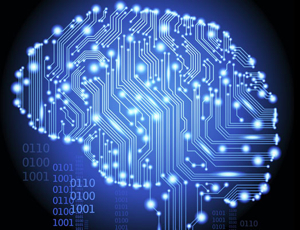
We need to build this.
Second, just how daunting a task recreating the brain in virtual reality will be depends on what proves to be important, and right now, we simply don’t know. Presumably we need to record the connections between all of the brain’s many neurons, but is their three-dimensional positioning also important? Would we need to record the strength of each synaptic connection? Would we also need to record the state of each individual protein in the brain? Will recording the brain itself be enough, or will we also need to map and model other parts of the body that interact with it? These are questions we don’t yet know the answer to.
Finally, as Eagleman points out, a virtual brain wouldn’t be any use at all unless it was still capable of changing and modifying itself the way that normal brains do. You would still want to be able to create new memories from within your new virtual reality life, of course. But will that be possible, and if so, how can it be done? We don’t know.
Eagleman argues that computing power, at least, is on track to be able to tackle these problems within the next fifty years. Although running a virtual brain in a virtual simulation would be an extremely complex task, computers wouldn’t need to perform these simulations in real time for your virtual self to experience time normally.





Stay updated on the go with our mobile app.
Get latest insights with smoother, more personalized experience through TIA mobile app.