
Photo credit: Tech in Asia.
Chinese search giant Baidu has had it good. For years, the tech firm has enjoyed a near monopoly of the country’s multi-billion dollar search market. Domestic competitors Sogou and Easou trail behind, each with less than 10 percent market share. Google, its most threatening rival overseas, withdrew from China in 2010, citing hacks by the Chinese government.
But now, the tide seems to be turning. Tencent, China’s gaming and social tech titan- and the world’s ninth most valuable company – is focusing its attention on search.
Yesterday, the company’s killer app WeChat launched a new feature conspicuously named “Search.” Created just for the app’s search engine, it lets users trawl through WeChat brand accounts, articles, music, and more. Though it’s simply a new entry point for search queries for now, it signals commitment from Tencent – and perhaps new features to come.
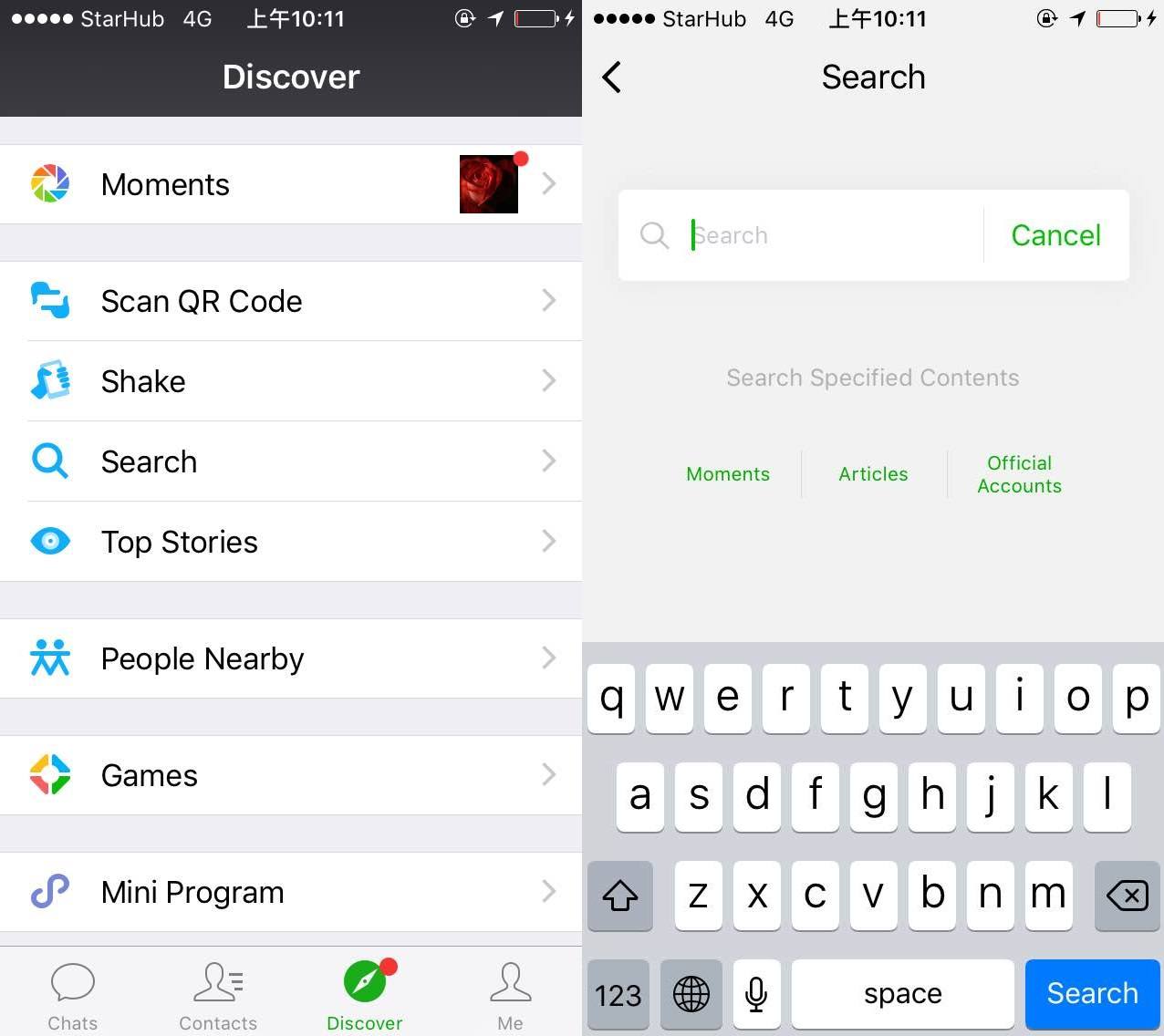
Left to right: WeChat’s latest version includes two new sections: one for its search engine and another for trending stories. WeChat’s internal search function lets users use keywords to look through related articles, brand accounts, mini programs, newsfeed items, and more.
Search-related news about WeChat has been circulating for months. At the end of April, Chinese media leaked information about WeChat’s new search team, which would be responsible for the app’s “search business, content recommendations, artificial intelligence research, and the creation of WeChat’s data platform, as well as related applications.”
The combination of social data, plus payment data, plus search query, will kill Baidu.
In March, the app also launched its own search index, opening up data on popular trends to users for the first time. WeChat has also started beta testing some of its new search features – namely, integration with Zhihu, a Quora-like Q&A platform and one of Tencent’s portfolio companies. That means that for select users, content outside of WeChat is searchable within the app – probably for the first time ever.
“As WeChat becomes more and more ubiquitous, it’s quite possible people will start looking for content more and more inside WeChat,” Thomas Graziani, founder of WeChat-focused marketing firm WalktheChat, tells Tech in Asia. The app has a wealth of data “that Baidu couldn’t dream of,” he says, such as the data gathered through WeChat Pay, the app’s digital wallet.
“The only advantage of Baidu is that they are a search engine – so the queries are purpose-driven,” he says. “But if WeChat users start to make search queries inside WeChat, the combination of social data, plus payment data, plus search query, will kill Baidu.”
According to a Tencent spokesperson, WeChat’s new search team – which is now called the “search application department” – is simply a restructuring of an existing group. They declined to comment further on its specific responsibilities or the app’s integration with Zhihu.
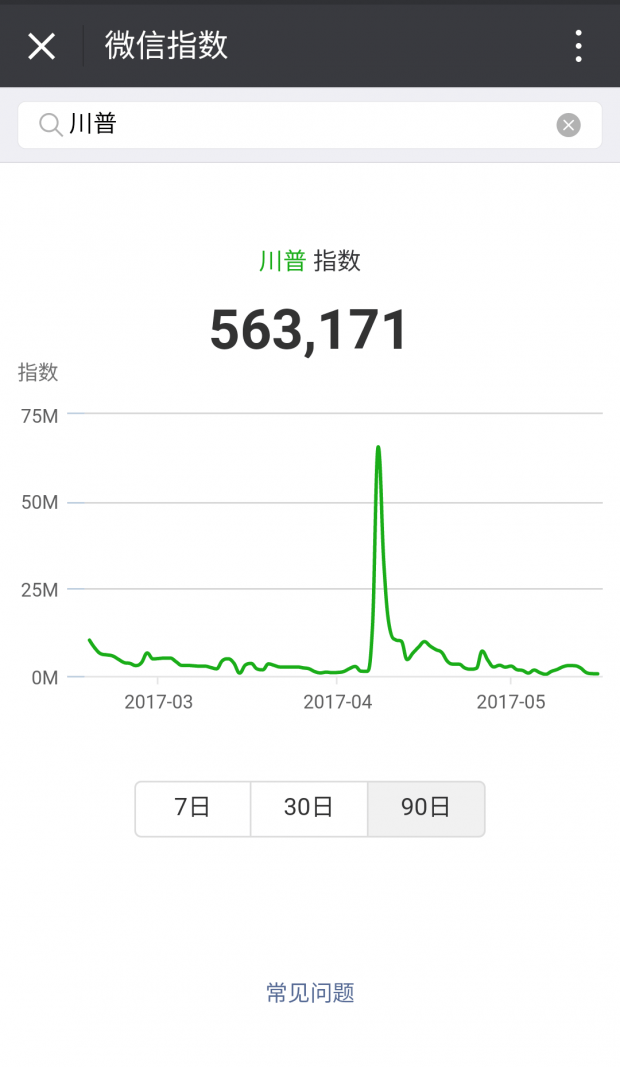
How “Trump” has fared as a keyword in WeChat for the past 90 days. The peak is from early April, when President Xi Jinping met with the US President.
Walled garden
Bottom line





Stay updated on the go with our mobile app.
Get latest insights with smoother, more personalized experience through TIA mobile app.












📅 Upcoming Events
22 October 2026
Payoneer x CSPN Summit 2026