 Nikita Peer · · 2 min read
Shenzhen is rivalling Silicon Valley in hardware, says Hax founder
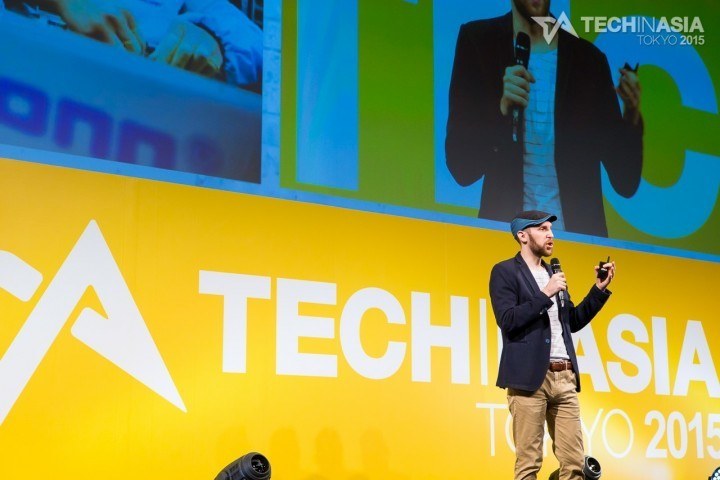
Hax general partner Benjamin Joffe
In the last few years, hardware startup activity in Shenzhen has increased dramatically. It is now comparable to the software innovation system in Silicon Valley.
The city has several startup accelerators, including Hax. At Tech in Asia Tokyo 2015, Hax general partner Benjamin Joffe explains why Shenzhen is a good hardware innovator.
“Shenzhen is two times the size of Silicon Valley. It is the electronics capital of the world and more recently it is seeing a surge in startup activity,” says Benjamin. His accelerator receives most of the entries from the US and Canada and only one-tenth of them are from China.
Hax has a portfolio of 80 startups from sectors like smartphone devices, internet of things (IoT) tools, robotic kits, and medical devices. It’s keen in these areas because loT products are getting commoditized at a fast pace, Xiaomi has become a top cheap smartphone maker, and most consumer lifestyle products can be manufactured at scale and for a cheaper price in Shenzhen.
Benjamin says, “There is a Xiaomisation of consumer electronics. [Xiaomi] is not just a manufacturer of smartphones but has also invested in companies Ninebot which later acquired Segway, a self-balancing scooter, among others to tap into other hardware device spaces.”
No rising sun in Japan
According to Benjamin, Japan has great engineers but doesn’t churn enough startups. “Japan is a large market, but it’s too local. But startups have to compete globally. Using the best resources is key to success. Both Shenzhen and Silicon Valley are part of this equation,” he says.
“In contrast, China has a large domestic market, adequate venture capital, pool of entrepreneurs, but lacks employees because most of them aspire to be entrepreneurs,” Benjamin points out. He also says that the Chinese are quick at execution. Teams from Silicon Valley say that they get as much done in a week in Shenzhen as a month back home. China works at startup speed.
Hax is aiming to combine the strength of any team with that of China’s hardware and supply chain capability.
Echoing what nobel prize winner Nakamura said, Benjamin thinks Japanese entrepreneurs who have global ambitions should embrace the resources offered by both Shenzhen and Silicon Valley. There are startups in Japan who already embraced this view such as Cerevo and UPQ, doing mass market devices with direct distribution like Xiaomi.
This is part of the ongoing coverage of Tech in Asia Tokyo 2015, our annual conference taking place on September 8 and 9.
Stay updated on the go with our mobile app.
Get latest insights with smoother, more personalized experience through TIA mobile app.
Recommended reads
 🇮🇳 Roundup: GlobalBees buys fitness brand Reach, more
 Mastering the art of virtual pitching at our TIA Live event
 New and returning investors betting on SEA
 Who’s investing in India’s AI startups?
 The Aspiring Founders Program – Fall 2022
 Singtel pours additional $100m in VC arm Innov8
 Singapore’s co-living firms are on the rise
 Founders, we’re looking for more potential ESG unicorns
 New SOSV program announces inaugural cohort
 Balance of power tilts in favor of self-sustaining startups





Editing by Terence Lee
(And yes, we’re serious about ethics and transparency. More information here.)






📅 Upcoming Events
22 October 2026
Payoneer x CSPN Summit 2026