Anh-Minh Do · · 23 min read
Startup Scenes Across Asia: Let’s Look At 11 Of Asia’s Top Tech Cities
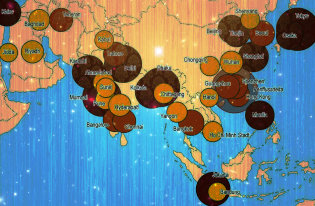
Asia is very young and fresh in terms of tech, so the continent is just getting started. In fact, economically, Asia’s only really had its growth spurt in the last few decades. Whereas the West has had a head start and we all know the big players and key areas – Silicon Valley, New York, London, Paris, etc. – who really knows Asia? It’s so vast, it’s hard to know where to start. So, we went around and talked to bloggers, investors, and entrepreneurs across the region to ask them to share a bit about the startup eocsystems in their respective cities and countries.
We’re lucky our friends were so forthcoming and open to share about their ecosystems. It gives us all a very intimate picture of what the most important centers of commerce and technology in Asia have to face in the next decade. You can read more about who they are at the bottom of the page. Here’s the list of 11 startup ecosystems across Asia.
1. Singapore, Singapore.
2. Tokyo, Japan.
3. Beijing, and Shanghai, China.
4. Kuala Lumpur, Malaysia.
5. Taipei, Taiwan.
6. Hong Kong, China.
7. Seoul, South Korea.
8. Jakarta, Indonesia.
9. Bangkok, Thailand.
10. Hanoi and Ho Chi Minh city, Vietnam.
11. Manila, Philippines. (NEW!)
12. India.
13. Pakistan. (NEW!)
14. Contributing Authors.

Singapore
Darius Cheung: Singapore is the first stop in Asia for the majority of westerners. It is often ranked as one of the top places to live in the world and is poised to take over from Switzerland as the largest offshore wealth center by 2020. In other words, Singapore is rich and has great infrastructure that includes a stable, clean, and efficient government and legal and finance systems; plus there are solid transport and IT networks, a highly educated work force, and English-speaking multicultural society, and lots more. While Singapore has a small population of close to five million, it also has extremely strong internet, mobile, and smartphone penetration rates, a mobile average revenue per user ARPUevenue per user) of $40, and growing e-commerce market size of $2 billion.
Singapore probably has the most developed startup ecosystem in the region, with a handful of growth stage startups and many more in angel or seed stage. It also highly active accelerators like JFDI and many active early stage funds spawned in part due to government funding under the NRF TIS scheme. There are also many notable angel investors, including Skype co-founder Toivo Annus (whose Singapore investments include Coda, Luxola, Redmart, Referral Candy, ADZ, and Garena). There is a general gap in series A funding except for a handful of investors such as DMP, Walden and JAFCO, but this might well change quickly with further NRF programs in the works and funds such as Vertex becoming more active in the series A range, as well as an influx of foreign, particularly Japanese, funds such as Global Brain, CyberAgent Ventures, and Rakuten Ventures.
Despite the funding gap, Singapore is a gathering point for startups in the region and serves as a launchpad for local, and more often foreign, entrepreneurs to launch their businesses for the region. With a handful of local (SGCarMart, HungryGoWhere, etc.) and international exits (JobsCentral, Brandtology, TenCube, etc.) in recent years, and growth companies like PropertyGuru, Reebonz (now recycled capital which is the quintessential rocket fuel for startup ecosystems.
However, its potential as a startup hub for Southeast Asia is threatened by undertones of tightening immigration control, overly strict and bureaucratic government and regulations, and general xenophobia. Especially with the clear rise of neighboring cities with larger talent pools and domestic markets, Singapore will need to be more aggressive and risk-taking to strengthen its position as a startup city.

Tokyo, Japan
Anh-Minh Do: Of course, Japan is one of the more mature markets in the region, and it’s got big influential hits that shape the region. The center of all the activity is in Tokyo. But gone are the days when big guys like Hitachi, Sony, Fujitsu, and Panasonic are the rising stars (with Japan struggling economically, and hardware alone being less of a factor for consumers) and new players are on the scene now, with folks like GREE, DeNA, and Rakuten looking increasingly global and influential. If you want a quick look at the local scene, take a click over to our friends at Startup Dating and you’ll see a particularly vibrant ecosystem of business, VCs, and incubators.
Beijing and Shanghai, China
Kuala Lumpur, Malaysia
Taipei, Taiwan
Hong Kong, China
Seoul, South Korea
Jakarta, Indonesia
Bangkok, Thailand
Hanoi and Ho Chi Minh city, Vietnam
Manila, Philippines
India
Pakistan. (NEW!)
Contributing authors





Stay updated on the go with our mobile app.
Get latest insights with smoother, more personalized experience through TIA mobile app.