Elaine Ramirez · · 6 min read
Want to see an all-star K-pop concert in your hometown? Crowdfund it
K-pop is huge. Sometimes called “Korea’s greatest export,” it’s a US$3.4 billion industry and counting. Well-choreographed supergroups like Girls’ Generation and Big Bang made the music phenomenon huge well before the invisible-horse rider broke YouTube, and the craze has spread beyond Asia to all corners of the world. Look at this guy who took the K-pop obsession to the next level.
Investors are also seizing opportunities in the startup scene, with Softbank acquiring DramaFever, Rakuten acquiring Viki and, in turn, Viki acquiring Soompi just last week.
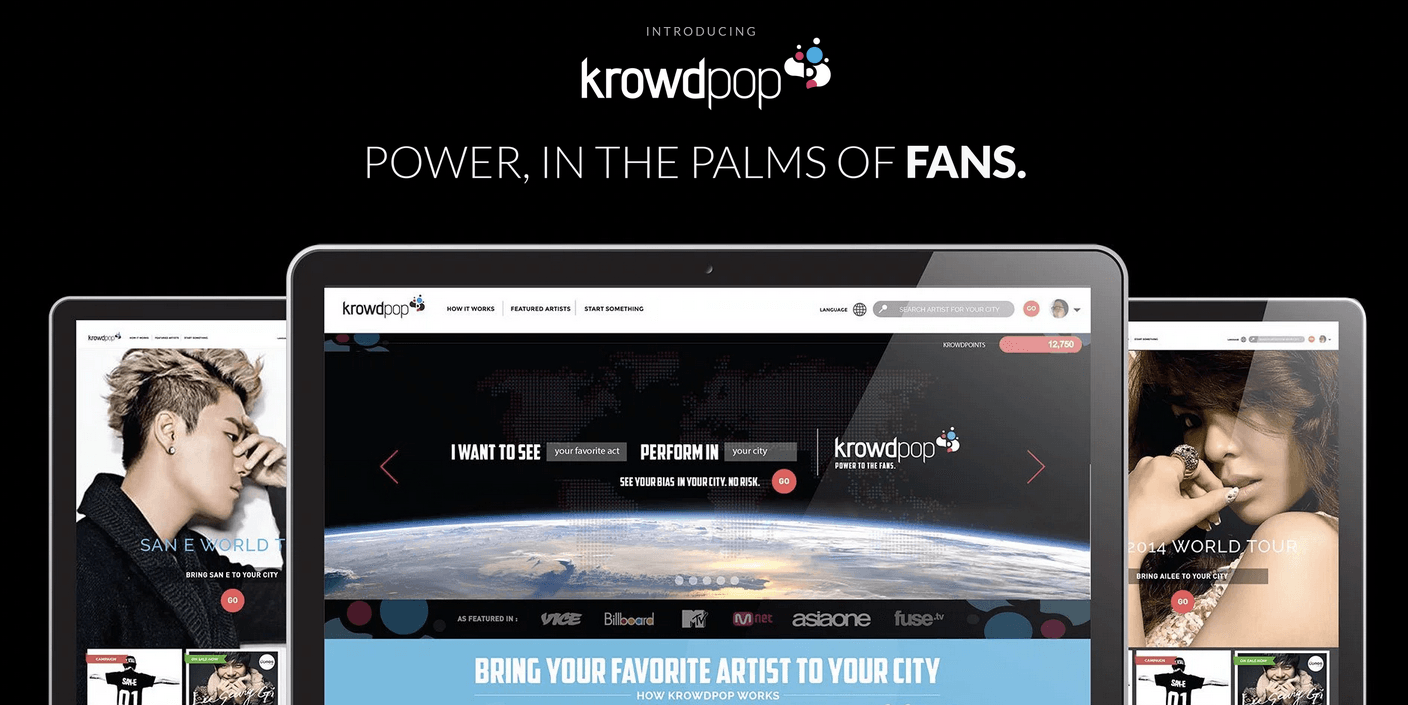
Krowdpop encourages the fans to turn their ideas into reality.
But the thriving industry has struggled with its global reputation because of unscrupulous people who want to capitalize on unwitting fans or partners, giving Korea a bad rap. That is what Korean-American entrepreneur Richard Choo found out in his brief foray producing K-pop concerts. “After producing shows, I started realizing that K-pop has a lot of difficulties getting out to the foreign market because there are so many assholes in the entertainment industry,” he recalls.
So he sought to disrupt the K-pop concert market by letting fans call the shots with K-pop United. Under the tagline “power to the fans,” the startup runs a crowdfunding site called Krowdpop that allows fans to create campaigns to bring their favorite K-pop idol to their town, from Jay Park in Brazil to Ailee in Istanbul. So instead of middle-aged men trying to figure out who teenagers in Guatemala want to see, Krowdpop encourages the fans to come up with ideas and turn them into reality.
Star appeal
Krowdpop is also a payment channel that manages ticket purchases, delivering a 100 percent refund to fans if the show is cancelled, thus minimizing losses to buyers. Early-bird Krowdpop tickets give the added perk of allowing the fan to meet the artist and get an autograph and a high-five at the end of show.
It also takes out all the guesswork even for major agencies, which have problems connecting with promoters on the ground to produce and finance the shows. A production by YG (think Psy and 2NE1) for 20,000 fans could cost US$2 million per show, and the risks are even higher when the customers are kids without their own incomes.
Less famous singers who are too small for promoters to bet on can catch a break if their fanbase mobilizes.
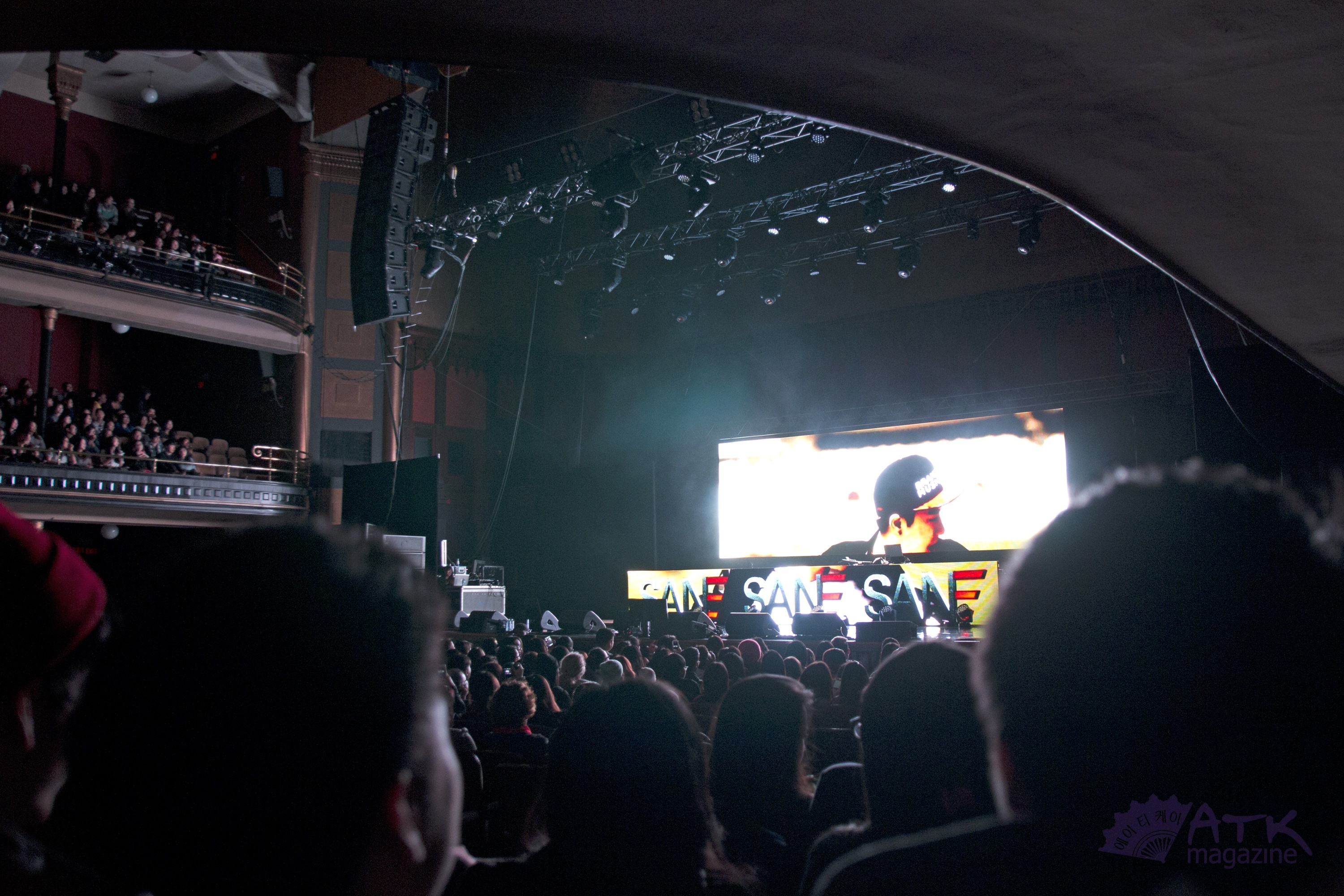
Hip-hop rapper San E performs in March for the Unite The Mic Show in Toronto.
“On the promoter’s side, it minimizes the risk. On the artist’s side, all the artists that don’t have any kind of way to get to the foreign market now has an opportunity to do so. And from the fan’s perspective, now you can finally get to see who you want to see,” Choo explains. All the startup does is connect the fans, the stars, and the promoters, without fronting any funds because the customers pay up front.
Boom, everybody’s happy – including the startup, which raked in US$600,000 in total revenue in 2014, its first year.
Getting burned
Choo was sick of the entertainment industry when he set up this new startup. After helping to put on a K-pop concert for the heartthrobs JYJ – who were working with Kanye West and a creative director for Mariah Carey – he realized how big the trend was for K-pop. He got together with an old partner to put on a K-pop show for Billboard Magazine at MGM Las Vegas in 2011, but things took a turn for the worse.
“I got screwed by my partner. I got swindled pretty hard, and it left such a bad taste in my mouth because I was never that into entertainment. And I said, this sucks, because it actually hurts a lot of people,” he recalls. So instead of diving back into showbusiness, he created K-pop United as a nonprofit in the US to hold a charity event called the One Wish Campaign, which helps K-pop fans in need.





Stay updated on the go with our mobile app.
Get latest insights with smoother, more personalized experience through TIA mobile app.