Leighton Cosseboom · · 8 min read
This guy turned Go-Jek from a zombie into Indonesia’s hottest startup
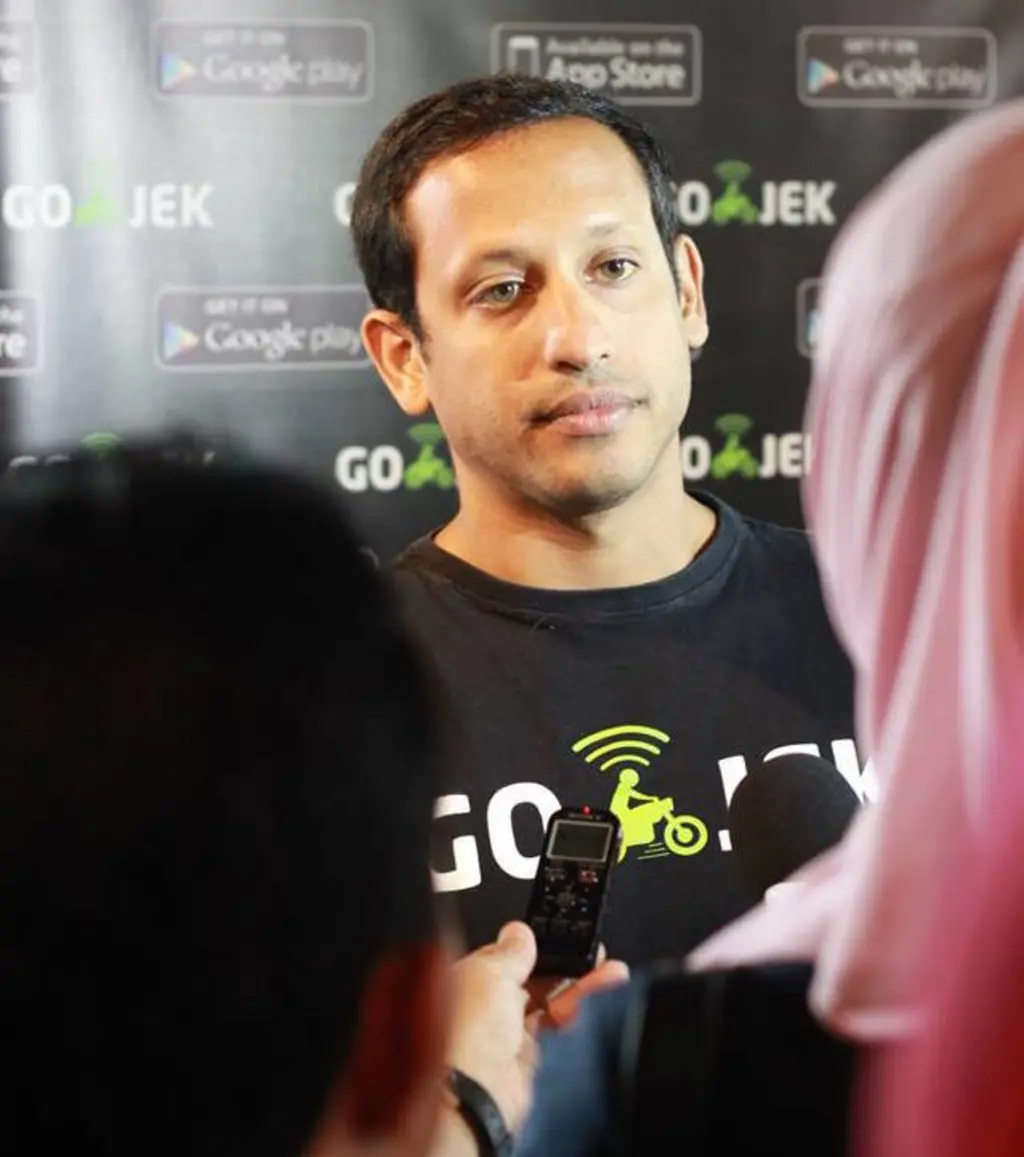
Go-Jek founder and CEO Nadiem Makarim
We arrive at a basketball court in West Jakarta, Indonesia, squeezing through a mob of excited, young working class Indonesian men. Straight ahead, thousands of them are being herded into lines, but the sheer number of bodies makes the crowd difficult to control. These guys are here because they want to become Go-Jek drivers.
In case you’re new to the scene or have been living in a remote cabin somewhere, Go-Jek is one of the fastest-growing and most visible tech startups in Indonesia. The courier, transport, and shopping service legitimizes previously informal motorcycle taxis — ojeks in Indonesian — by outfitting drivers with green uniforms and helmets, but also by organizing them through a mobile app which lets users book drivers.
The event is a mass recruiting session, an aggressive play by Go-Jek’s founder Nadiem Makarim to keep up with local competitor GrabBike, a service offered by Southeast Asian startup and ridehailing unicorn GrabTaxi.
Despite his rise to relative fame in Jakarta over the past months, Go-Jek founder and CEO Nadiem Makarim is elusive. He shows up to the press tent outside the basketball court to answers a few questions, then dips back out of the scene like a secret agent. Dogged reporters pursue him. It seems we won’t be interviewing this man here, so I head down to his office in South Jakarta’s upscale Kemang district.
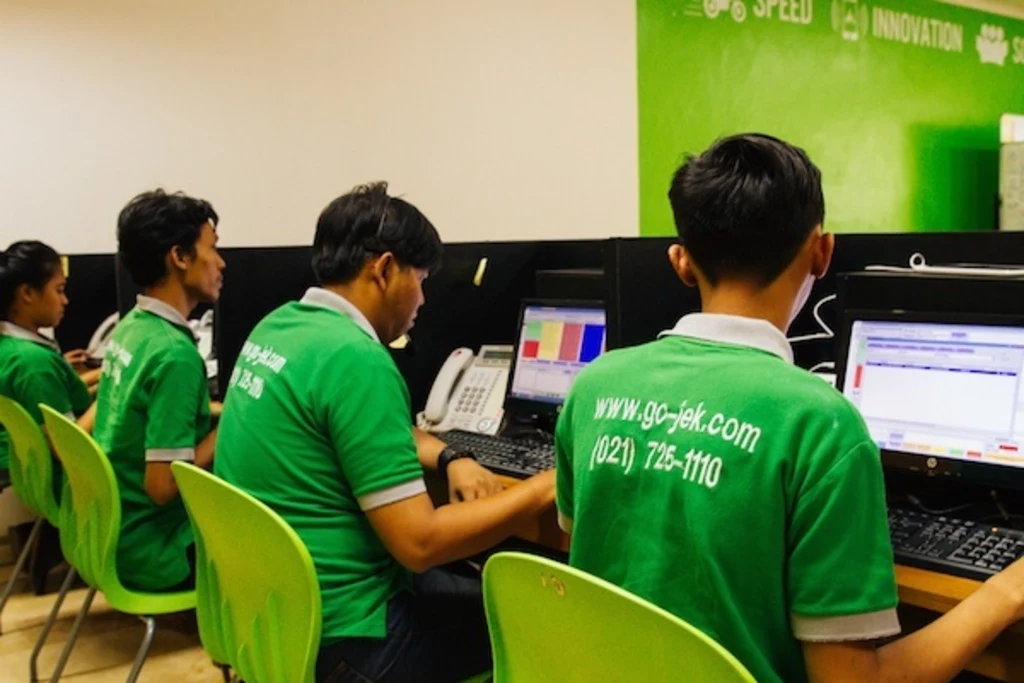
A tiny call center with 20 drivers
The spacious office building is buzzing with green jackets and activity. Nadiem greets us, stops what he’s working on, and lights up a cigarette in the smoking lounge.
As a reporter, I’ve got to hand it to the guy; he knows what he’s doing when it comes to engaging the media. Most of our conversation remains off the record, and when Nadiem truly doesn’t want to divulge a piece of information, he simply grins like the cat who ate the canary and says “What do you think bro?”
After a thoughtful smokey inhale, he reflects on Go-Jek’s progress over the past half a year. He credits much of its success in Jakarta to the “right place, right time” factor:
Momentum is a very ephemeral thing, right? It goes up and down, and if you don’t catch it at its peak then you’ll lose it, and there’s nothing worse than losing momentum.
After majoring in international business at Brown University, Nadiem joined the Jakarta branch of global research and consulting giant McKinsey and Co. As a native Indonesian, he always wanted to return to the Big Durian, but in fact he admits it was his only option at the time.
He stayed at McKinsey for about three years, and made the most of it. He did jobs for some of the country’s state-owned enterprises, then started an initiative called Young Leaders for Indonesia. It was a program to prepare third-year university students in Indonesia to enter the working world. Nadiem cites the project as one of the main reasons he was able to get into Harvard Business School in 2009.
A rocket-powered detour
Grabbing the Uber wave
Logistics as a keystone





Stay updated on the go with our mobile app.
Get latest insights with smoother, more personalized experience through TIA mobile app.