- Insights This article was written by a TIA community member. Insights pieces undergo the same rigorous editorial process that newsroom-produced articles have.
 Sega Cheng · · 5 min read
From chips to AI, Taiwan builds its next mountain
The new documentary A Chip Odyssey tells the story of how Taiwan’s pioneers built the world’s leading semiconductor industry.
Its Chinese title can literally be translated as “Mountain Makers,” a nod to another Chinese term that translates as “the sacred mountain that protects the nation” – which is commonly used to describe Taiwan’s semiconductor industry.
What could the nation’s next mountain be?
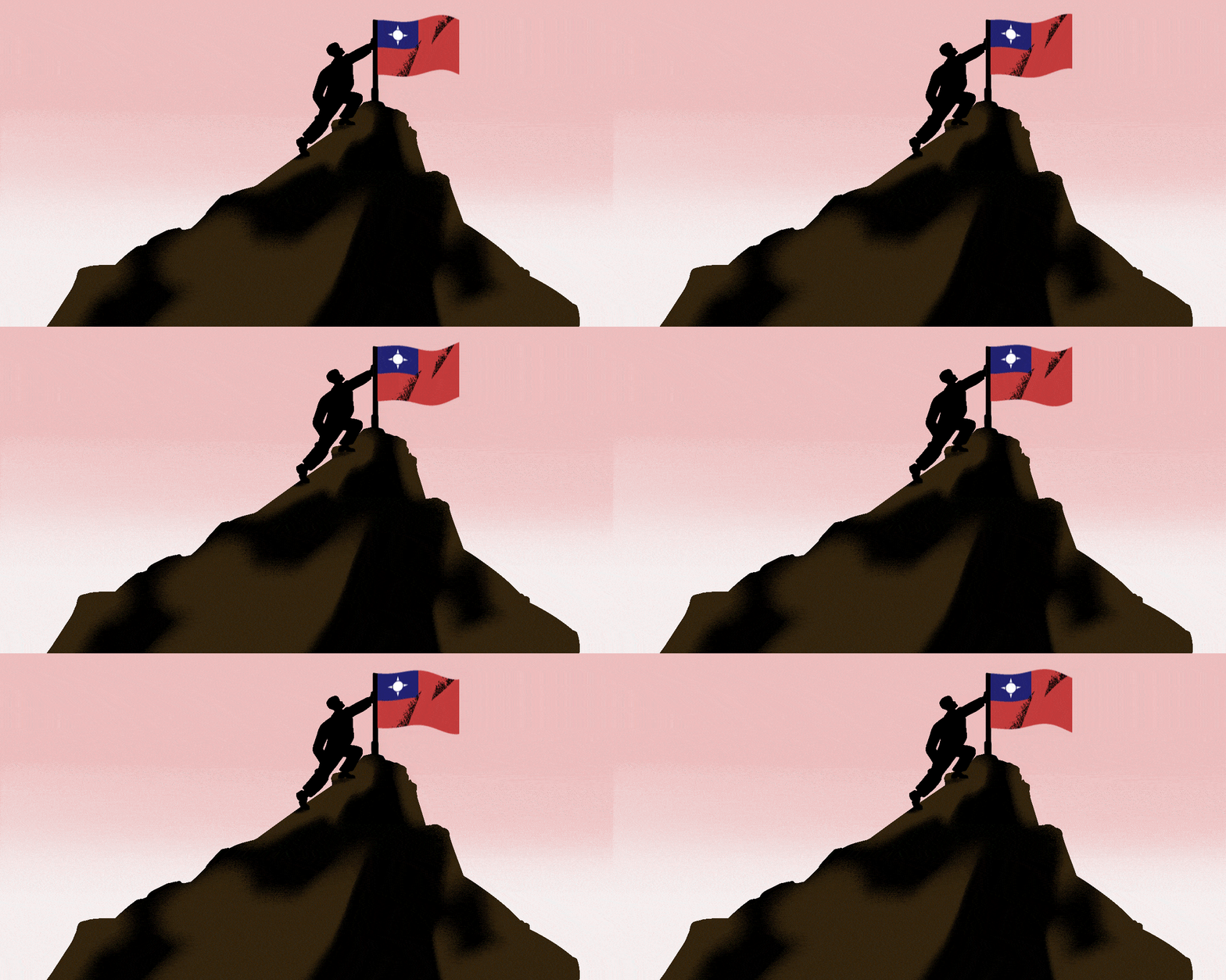
Image credit: Timmy Loen
The answer is AI. This isn’t a fresh take – Bloomberg wrote last year that AI’s future hinges on Taiwan, as the industry’s largest companies are looking to the market to “fabricate their chips, build their servers, and cool their devices.”
That said, the market lacks an AI industry of its own. Instead, it’s part of the global industry value chain by offering the computing power that AI apps need.
But Taiwan’s ambitions don’t have to end at being the AI industry’s supplier. It could become a market where global leaders choose to build and Taiwanese companies themselves innovate.
Hardware moon rising
The first wave of AI companies – such as Perplexity, OpenAI, and Anthropic – have become household names by building general-purpose models in the cloud. While these firms have found success, they have not brought AI to its full potential, and the next wave of players will look different.
Why? Because the future of AI will not be driven by software alone, but by companies that combine software with hardware.
Industries such as manufacturing, logistics, and healthcare need AI that runs close to where data is generated – in machines, on devices, and inside enterprise systems.
On a factory floor, defect detection and production adjustments must happen in milliseconds. This means AI inference needs to run locally at the edge instead of relying on the cloud to minimize latency.
See also: Ex-Googlers take AI offline for billions of devices across Asia
Some firms also prefer to keep tech on-site due to regulatory pressures and security concerns.
In healthcare, privacy-first solutions are critical because patient data must stay secure and compliant. Vietnam’s VinBrain has deployed AI diagnostic models across more than 100 hospitals, and these run on-site so sensitive medical data never leaves the facility.
Taiwan’s unique edge in edge
AI mountains or molehills?
Building Taiwan’s next mountain
Stay ahead in Asia’s tech landscape
This is premium content. Subscribe to read the full story.
As AI shifts from cloud to edge, here’s why Taiwan is positioned to become a global industry leader – and what it needs to overcome to get there.
We know this is not ideal. ⌛ Sign up in 20 seconds. Cancel anytime.
Our subscriber community includes professionals from these companies:





Stay updated on the go with our mobile app.
Get latest insights with smoother, more personalized experience through TIA mobile app.