Kaya Domingo · · 5 min read
The impact of Covid-19 on the Philippines’ microseller economy

It’s been over a year since the Philippines entered into one of the world’s longest lockdowns, and to say it has disrupted the country’s economy would be an understatement.
Manila’s first lockdown in March 2020 saw a ban on mass gatherings, the imposition of curfews, and the suspension of land, sea, and air travel (not including international departures). Even domestic travel in and out of the Philippine capital was barred.

Photo credit: Michael Davis-Burchat
Since then, the country has seen its fair share of lockdown variations, and their effects have reverberated through key industries such as transport, logistics, commerce, tourism, and food and beverage, to name a few.
Filipinos had their lives similarly shaken up as many had to adopt new ways of working from home. Restrictions placed on citizens caused a decrease in household spending by a whopping US$45.72 million, leading to a 9.5% shrinkage in gross domestic product – the most it has ever shrunk since 1947.
In a physically restricted world, many have turned to online options to cope with day-to-day living. Before the pandemic, brick-and-mortar outlets reigned supreme in the Philippine retail scene and cash was the go-to method of payment. But since restrictions were imposed, online shopping quickly rose in popularity, as did cashless payment. The country saw the largest shift to shopping applications across Southeast Asia and a higher growth in ecommerce adoption compared to the global average.
“We saw millions of buyers make their first online purchases, and we saw thousands of riders – the frontliners of ecommerce – take over the movement of goods so that people can stay home and stay safe,” says Patricia Jacinto, head of GoGo Xpress at QuadX, a local experience innovation company specializing in digital logistics, last-mile deliveries, and payment processing.
And as buyers moved online, so did sellers.
Microsellers get social
Microsellers make up a massive portion of businesses in the Philippines. And once lockdowns were in effect, those reliant on selling or offering services offline were heavily hit. For example, sari-sari stores – small neighborhood retail outlets that sell general merchandise – and computer rental shops were hard-pressed to keep things going as they rely on foot traffic to bring in business.
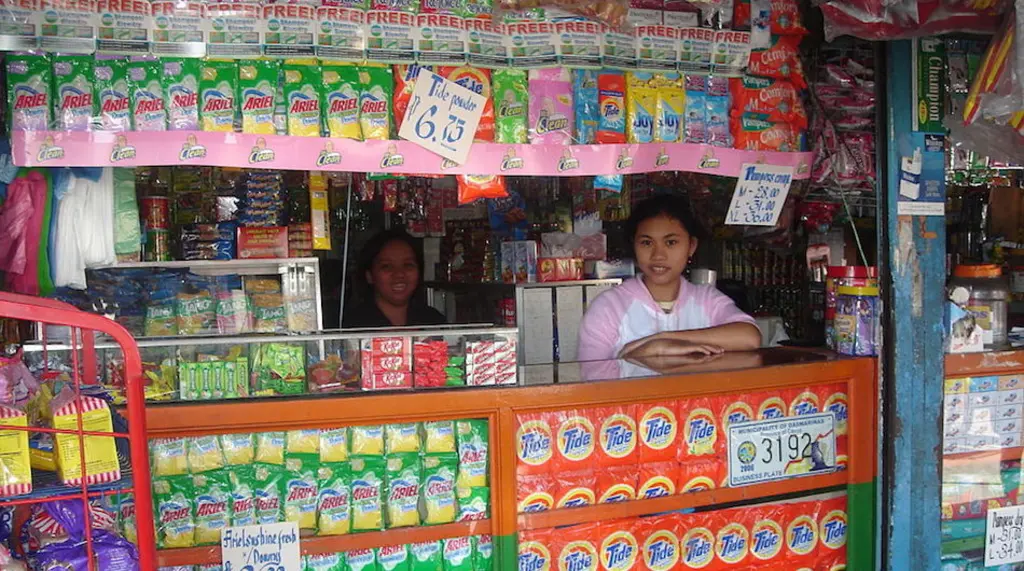
A sari-sari store in the Philippines / Photo Credit: Glen
While some were forced to shut their businesses, others looked into alternative venues for selling like online marketplaces, which give microsellers a platform to reach wider audiences at affordable rates.
Once an order is made on these platforms, a courier drives over to the microseller’s pick-up location to collect the product and delivers it straight to the buyer’s doorstep, giving them greater capacity to work on expanding their businesses.
This easy process, coupled with remote working, gave rise to more microsellers. With less time spent being stuck in traffic, those working from home have more time to pursue their passions. More home-based bakers, cooks, artisans, and crafters have started selling online, but instead of selling on online marketplaces, they took to social media to reach buyers.
Being in a country that has the world’s highest social media usage, many Filipino sellers saw social media as the easiest way to reach large audiences.
“We’ve seen both social sellers and buyers grow in numbers across all age groups, and we believe that this behavioral shift is here to stay,” says Jacinto.
Lockdowns transform microselling
Among the pool of microsellers born during the onset of the pandemic is FarmPH. Initially, its dream was to put up a physical store where it could sell goods that have been locally sourced from farmers and producers to its target market of 40-year-olds and older. Lockdowns disrupted these plans, however, and so the team had to pivot to get their products to consumers’ kitchens.
Ecommerce emerged as the best solution.
“We had to halt our plan to open a physical store, and we were glad we did,” says FarmPH CEO Arvin Basilio.
Operations since then have been 100% online. But while profits for the microbusiness remained strong, thanks to the power of paid advertising, logistics challenges remained.
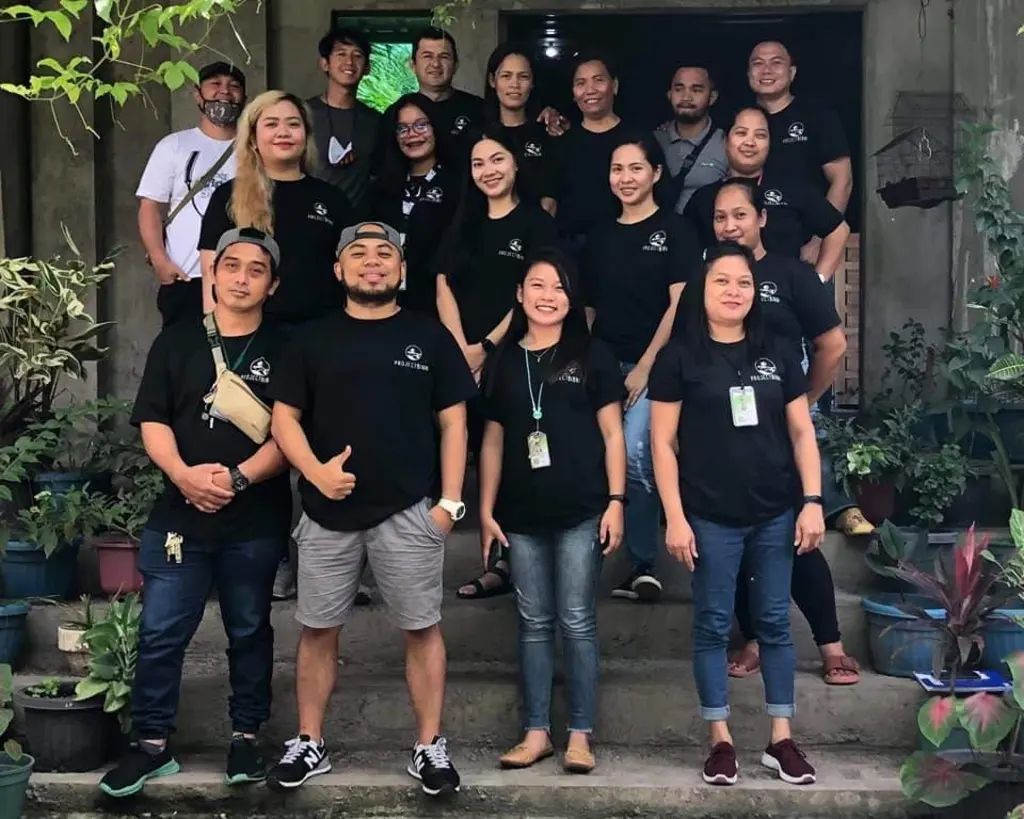
The FarmPHH team / Photo credit: FarmPH
For a microseller, the success of a transaction with a buyer lies in the safe and speedy delivery of a product. With interstate or inter-province movement of goods hampered by lockdowns, transporting products to buyers became trickier than before.
Community selling emerged as one of the many solutions to this problem. Localized community groups – think condominiums, subdivisions, or districts – formed their own buy-and-sell or bartering trade groups. The process was quick: Buyers and sellers could confirm order details, payments, and fulfilment through a single conversation on social media messaging apps.
“While platform marketplaces such as Shopee and Lazada will continue to provide sellers access to buyers, other platforms such as Facebook Marketplaces, WhatsApp, Viber, and Instagram are making strategic plays toward enabling conversational and social commerce,” says Jacinto. “This is definitely an area with high growth potential.”
Staying afloat amid Covd-19
For FarmPH, solving its logistics dilemma was key to its survival, given how it is fully reliant on logistics to get products to buyers. That’s why GoGo Xpress assumed a vital role in its operations.
“GoGo Xpress was one of the few bold ones to continue their operations during lockdown, despite all the hurdles and challenges brought about by Covid-19, and they have delivered,” says FarmPH’s Basilio. “They have been flexible in terms of catering to our business and have been instrumental in building the future and direction of our company.”
Since working with GoGo Xpress, FarmPH has seen its consumer base increase steadily and has expanded its operations to cater to this growth.
“As long as service providers are able to continuously offer speedy, safe, and reliable pickup and delivery services, purchasing will continue to shift online,” notes GoGo Xpress’ Jacinto.
With more Filipinos discovering the benefits of online shopping and retail technologies continuing to advance, Jacinto hopes to see accelerated growth in the sector. She shares, however, that while online shopping continues to take off, many sellers will still retain an omnichannel approach in anticipation of a post-Covid world.
Many are also blending offline and online commerce while keeping a keen eye on investing in the digitalization of their businesses. Big retailers are likewise investing heavily in their online platforms so that when brick-and-mortar stores are allowed to reopen, their branches can be used as pick-up points for online purchases.
“I believe there is a fundamental shift in the buying and selling behavior, such that even with the population being fully inoculated, we won’t be expecting a full return to the level of offline retail pre-pandemic,” explains Jacinto.
“I expect – and hope – that industry players will work together to continue to push the more aggressive shift toward ecommerce in the years to come.”
Anyone can be a microseller today with GoGo Xpress. To find out more, download the GoGo Xpress app.
This content was produced by Tech in Asia Studios, which connects brands with Asia’s tech community. Learn more about partnering with Tech in Asia Studios.
Stay updated on the go with our mobile app.
Get latest insights with smoother, more personalized experience through TIA mobile app.
Recommended reads
 Indonesian AI startup goes global
 Forrest Li on scaling Sea, building smarter bots, and founder grit
 An AI assistant that joins sales calls and scores team skills
 SGX’s CEO says it doesn’t need a unicorn to win
 SMEs want AI too, but not the kind Big Tech is selling
 Oatside’s alt-milk rise hits a profitable gear
 Alibaba’s financial health in 12 charts
 Asia’s telcos bundle AI into mobile plans. Will it pay off?
 M-Daq chases bigger clients as revenue falls, losses grow
 VC tracker: Accel raises US$3.5b, including US$550m for India





Editing by Nathaniel Fetalvero and Eileen C. Ang
(And yes, we’re serious about ethics and transparency. More information here.)