C. Custer · · 5 min read
Why China’s favorite PC games haven’t changed in two and a half years
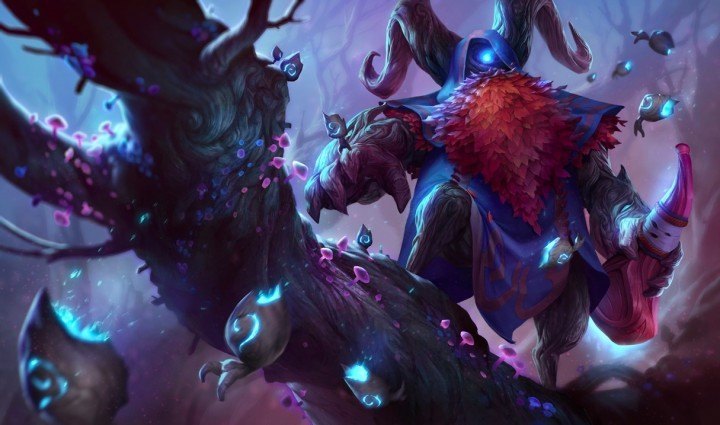
Bard, a character from League of Legends
When the tech industry talks about gaming in China, we tend to focus on the mobile gaming market, which is expanding rapidly, or the console gaming market, which is tiny but now finally legal. It’s easy to forget that even now, after years of rapid mobile gaming growth, it’s good old PC gaming that brings in the most revenue in China’s games industry.
Perhaps one reason the PC gaming market in China is so frequently ignored is that it’s surprisingly static. If you turn the clock all the way back to June of 2013, you’ll see that China’s top PC games were (in order of most to least popular): League of Legends, Dungeon & Fighter, and CrossFire. Now turn the clock back to the present, and take a look at Chinese gamers’ top three favorite games right now: League of Legends, Dungeon & Fighter, and CrossFire.
Of course, the deeper you dive into that list, the more changes you’ll find. Hearthstone, which currently sits at number five on the list, didn’t even exist back in 2013. But the top three have been locked in place for years, despite the fact that they’re all relatively old games. League of Legends was released in China in 2011, Dungeon & Fighter is from 2005, and CrossFire hit China in 2007. And the three have another thing in common: they’re all published in China by Tencent.
In the time since these games came out, thousands have tried to replace them. Chinese developers of all sorts built MOBA games to take a shot at League of Legends‘s number one spot, but all have failed. Even Tencent itself can’t seem to dislodge them; its self-developed CrossFire clone Assault Fire hasn’t been able to beat out the Korean-developed original, and its deal to bring Call of Duty to Chinese gamers also hasn’t resulted in CrossFire handing over the FPS crown.

This year’s League of Legends world championship garnered hundreds of millions of views.
Why are these games so successful?
It would be difficult to point to a single reason why these games have remained on top, but they do share some common factors that are important to look at for anybody interested in interacting with the PC gaming market. I’m more familiar with CrossFire and League of Legends than I am with Dungeon & Fighter, but focusing especially on those two it is easy to highlight some interesting commonalities.
Free to play: This one almost goes without saying – in China, if you want a PC game to do well, it almost has to be free-to-play. Of the current top ten most popular games in China, numbers one through nine are all free-to-play.
Social experiences: Social relationships have always been an important part of Chinese culture, and perhaps not coincidentally social interaction is also at the core of these games. While they occupy different genres, all three are multiplayer games that allow players both to cooperate with each other on the same team and to compete with each other in battle. In fact, every single PC game in China’s top ten is an online game; single-player epics like Fallout 4 (which is massively popular in the West right now) don’t really play in China.
Strategic and tactical complexity: While all these games feature gameplay that is immediately visceral and fun, they also feature a level of complexity that makes them difficult to master even for those who’ve played for years. League of Legends is probably the best example of this; imagine a game of chess played in real-time with ten players on a complex map and in which the abilities of each chess piece can change significantly over the course of a game and you’ll have some idea of what the game is like. To play it at its highest level, players must invest thousands of hours and learn the complexities of more than a hundred different characters, each of which has multiple abilities and each of which can be augmented and modified with dozens of items.
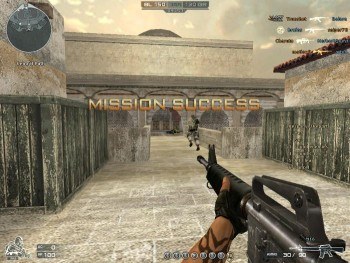
CrossFire
This means that the game is continuously interesting, but it also may mean that users are less likely to abandon the game once they’ve spent so much time acquiring the knowledge required to play it effectively.





Stay updated on the go with our mobile app.
Get latest insights with smoother, more personalized experience through TIA mobile app.