Sumit Chakraberty · · 6 min read
Microsoft accelerator picks 14 startups it can connect with global clients
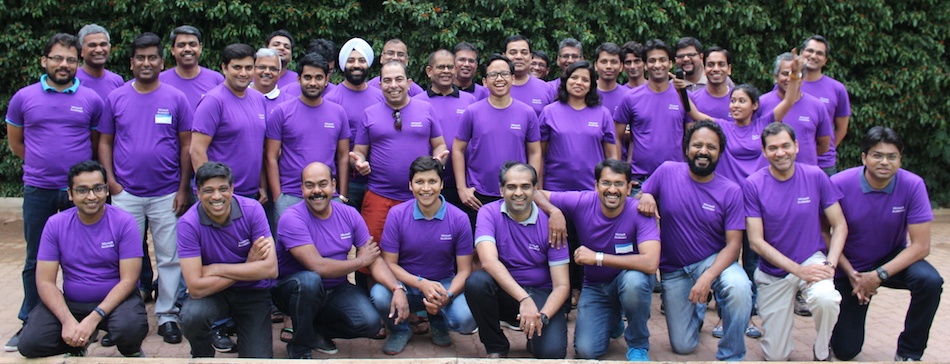
The 11th cohort of the Microsoft Accelerator in Bangalore. Photo credit: Microsoft.
The Microsoft accelerator in Bangalore is five years old now, and has been shifting focus to later-stage enterprise tech startups. This was evident in its 11th cohort – the average funding raised across the 14 startups is US$4.9 million and average annual revenue, US$2.6 million. So it is more in terms of scaling and access to global clients that the program aims to help the startups.
Microsoft Accelerator CEO Bala Girisaballa tells Tech in Asia that the program received over 1,500 applications, but most of the ones selected were ultimately from referrals or direct contact. That’s because the idea was to find startups most suitable for the kind of support that the corporate accelerator program could best provide.
See: Why Microsoft wants to dance with startups
Girisaballa describes it as a two-step process. The first step is to connect them with Microsoft product and R&D teams to build out the tech and cloud synergy. Then, the sales team comes into the picture to work out potential deals for global clients, where Microsoft and the startup go in as partners for “solutions-oriented conversations.” The go-to-market push is tied in with the startups using or migrating to Microsoft’s Azure cloud technologies.
Cross-channel customer engagement startup CustomerXPS, for example, could get Bank of Jamaica to overcome its security and regulatory concerns over moving data to the cloud because Microsoft was part of the conversation, says COO and co-founder Balaji Suryanarayana. CustomerXPS was in an earlier batch of the accelerator.
Here are the 14 startups in the latest Microsoft accelerator batch in Bangalore, which includes one from Indonesia for the first time:
Kata
Kata helps brands connect with consumers on messaging platforms with Indonesian speaking chatbots. It has developed a natural language processing engine to enable this. The problem it solves is that conversational automated chat is hard to do in Bahasa which is most commonly spoken in Indonesia.
Jakarta-based YesBoss, which earlier offered SMS-based virtual assistants, shifted to chatbots last year with the launch of Kata. CEO and co-founder Irzan Raditya tells Tech in Asia he’s looking forward to the peer-to-peer learning from other startups, apart from the mentors, in view of India’s well-developed SaaS (software-as-a-service) scene.
See: Sequoia plays matchmaker: Go-Jek acquires 2 Indian startups for tech muscle
VideoKen
Video-based learning site VideoKen provides tools for personalized learning and sharing. It enables curated collections of video clips, adding notes, and collaboration. Its artificial intelligence engine can connect a phrase cloud with specific parts of a long training video, for example, explains CTO and co-founder Ashish Vikram to Tech in Asia.
Current and former senior executives of Indian ecommerce company Flipkart were among its angel investors when it raised US$1 million in April. CEO and co-founder Manish Gupta is a former VP of Xerox Research. That’s where the technology for VideoKen was initially developed.
See: 20 Indian startups poised to expand in global markets
Ace Turtle
Ace Turtle provides a suite of cloud-based products and services to integrate online and offline retail. It helps ecommerce companies go omni-channel, and offline retailers to build up their online presence. The four-year-old startup counts big brands like Puma, Arrow, and RayBan among its clients.
MegDap
MintM
Liv
Gieom
Clonect
KrypC
I-Exceed
Docswallet
Simplilearn
Hotelogix
Udaan





Stay updated on the go with our mobile app.
Get latest insights with smoother, more personalized experience through TIA mobile app.