Nadine Freischlad · · 6 min read
Indonesian speaking chatbots are here! Soon everyone can use them

Photo credit: Pixabay.
On the last Friday of October, 35 employees at the YesBoss office in South Jakarta cleared their desks. It was their last day working for the startup.
“We had a small farewell,” says CEO Irzan Raditya. “We made it as if it were a graduation.”
YesBoss announced late September that it would phase out its Magic-like virtual assistant within a month. It let you send out simple requests via SMS or app. You could, for example, ask for a table reservation, concert tickets, or send someone flowers. The task would be solved for you effortlessly – you wouldn’t even need to open a website. In the background, a customer service team would process your requests.
Like similar startups in the region, YesBoss struggled to make this concept work at scale. It wasn’t efficient.
See: Magic-clones in Southeast Asia are dying
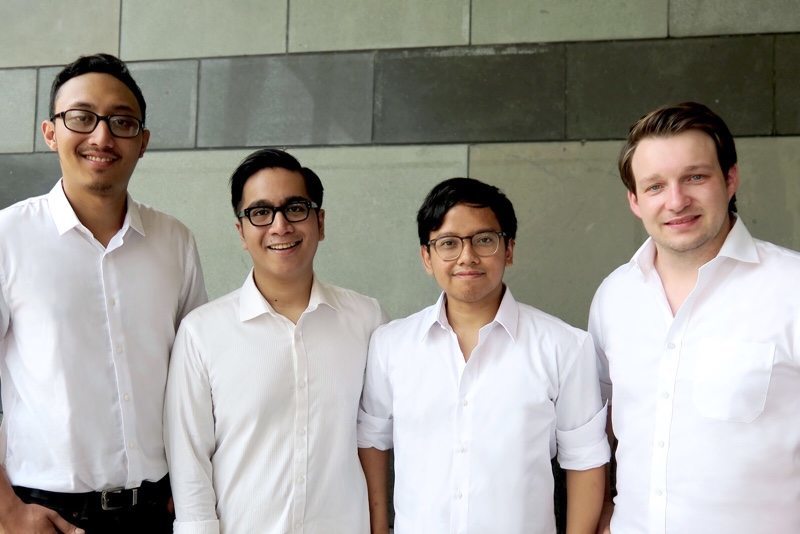
The core team of YesBoss in a photo from 2015. The service shut down at the end of October. (l-r) Wahyu Wrehasnaya (CCO), Rizqi Meydiarso (CTO), Irzan Raditya (CEO), Chris Franke (COO). Photo credit: YesBoss.
A year’s worth of data
The realization didn’t come as a surprise.
“We saw this all along, we knew from the beginning that [a virtual assistant service] is only possible if artificial intelligence comes into play. And we knew we needed the dataset,” says Irzan.
While running the consumer-facing assistant service for over a year, the team had been collecting and analyzing hundreds of thousands of customer interactions – variations of “Hey, can you get me a pizza please?” “I’d like to book a flight to Singapore,” and so on.
YesBoss’ recently dismissed customer service staff helped create the technology that replaced them.
This was a goldmine for the engineering team led by CTO Rizqi Meydiarso, who used the data to train a chatbot engine.
Chatbots are programs that can simulate human-like speech and assist customers in solving technical problems or lead them through online transactions. They’re designed to reduce the need for real human involvement in these repetitive tasks to a minimum.
First there was a word
The most advanced platform for NLP in Indonesian
Team restructure