Malavika Velayanikal · · 12 min read
How he got from surviving on half a dollar a day to getting his startup acquired
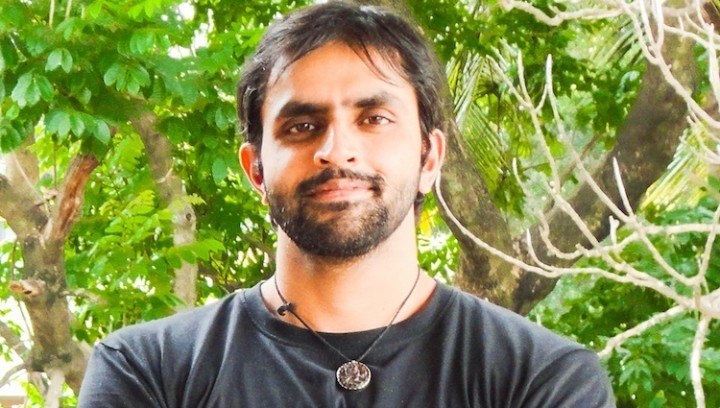
Satya Vyas, co-founder of Orobind. Photo credit: Orobind.
He was just 21 when his first startup shut down; 23 when his second startup had to shut down. He had just turned 24 when he spent a night in an electric train shuttling between Thane and Mumbai central station as he had less than a dollar on him and no place to sleep.
Today, Satya Vyas’s fourth startup, on-demand personal fitness trainer service Orobind, announced its acquisition by one of the fastest growing startups in India, Housejoy. This is the true story of an entrepreneur who started his journey from a students’ dorm at the Indian Institute of Technology (IIT) Roorkee – and the failures, disappointments, and grit that cobbled the road thus far.
A role model for the rebels
IIT is a dream, the ultimate ticket to success, for most of India’s educated middle-class. So was it for Satya, who grew up in Ghaziabad and Bikaner, two small towns in north India. He and his brother worked hard to crack the tough IIT entrance examination. His brother got through to IIT Bombay and Satya to IIT Roorkee. But that’s where Satya’s well-laid tracks took a turn. He did everything but studying after he got into the prestigious engineering college.
He was always into sports. He had played cricket at the national level for under 15-year-olds. He played for his college at inter-IIT cricket matches, won gold medals, headed the entrepreneurial cell, bunked classes, and scraped through exams with bare-minimum grades. “I just made sure I got enough scores to continue living in the IIT campus,” Satya recalls.
We fucked up on the business strategy part here too. We couldn’t scale it up. At that point, someone wanted to buy it out from us. But we were young and hot headed.
Two years into college, in 2006, he started his first venture with a friend. They named it Zabraku – just a random name they found cool. It was a social networking site centered around college festivals that allowed students to upload and share videos on low bandwidth. Like most ideas that arrive before its time, Zabraku had no revenue streams and died a quick death.
Then Satya and friend kicked off their second startup, a computer gaming magazine called Venom. They brought out a few issues which became a hit with the students. But this too didn’t last long. “We fucked up on the business strategy part here too. We couldn’t scale it up. At that point, someone wanted to buy it out from us. But we were young and hot headed. We thought, ‘we don’t want to work for anyone else!’ So we refused to sell,” Satya remembers. Eventually, they had to shut down. “On hindsight, not selling when we had a buyer was a lame move by us,” he says.
All these experiments won him good brownie points from fellow students and frowns from the faculty who couldn’t figure out how to get him to study. However, much to Satya’s surprise, and also his teachers’, he was one of the first to get a job offer on the first day of campus placements.
Schlumberger, one of the world’s top oilfield services companies, picked him up as a field engineer. “It was one of the highest paid jobs for fresh engineering graduates then. That was a big moment for me as well as all those students in college who were not studying – now they had a role model who proved you could screw around with the system and still get a job,” Satya chuckles as he tells me about those heady days.
We were meeting at a coffee shop near Tech in Asia’s office in Bangalore, and he was happy after expanding Orobind’s operations to Hyderabad. That was a few months ago. He had come a long way from graduating, rejecting the job offer, and moving to India’s startup hub of Bangalore in 2008.
First stop: CommonFloor

In 2008, a couple of Satya’s seniors from IIT Roorkee, Sumit Jain and Lalit Mangal, were building an unusual real estate startup called CommonFloor with their friend Vikas Malpani. Satya joined them for a month’s casual internship. “They were running the company from their small apartment. That stint taught me a lot of valuable lessons,” Satya says.
24 and nowhere to go
Chai Point and its charismatic founder
Epiphany of sorts
Want to start up? Be crystal clear why.
No money to pay salaries





Stay updated on the go with our mobile app.
Get latest insights with smoother, more personalized experience through TIA mobile app.