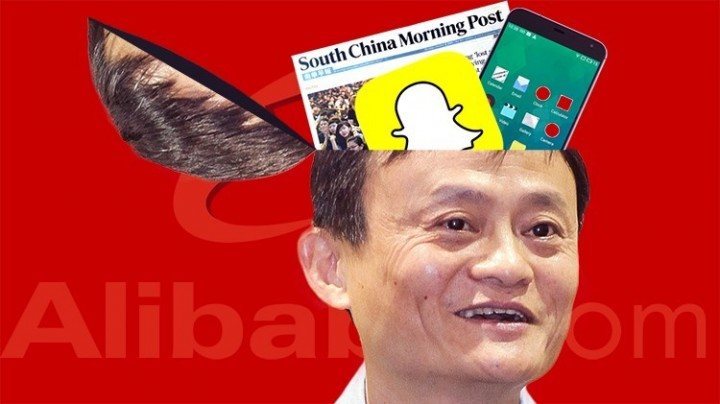
Image by TiA. Photo of Jack Ma via VN Photo Studio
To say that Alibaba invested a lot of money this year wouldn’t really capture the scope of the situation. We’ve moved beyond hundreds-of-millions-of-dollars territory. We’ve even moved out of the single-digit billions.
You don’t throw that kind of money around without having a plan. And judging from the company’s past performance and its stated goals, we reckon these five strategies played into Alibaba’s investment-crazed 2015.
See also: Alibaba’s biggest investments of 2015
1. Everybody loves content
Streaming video. Mobile games. Blockbuster movies. This article. They’re all one embodiment or another of the nebulous term “content,” and we humans just can’t get enough of it.
Over in the US, 2015 saw Netflix’s market cap hit US$42 billion. Even Pinterest touted a US$11 billion valuation this summer. Content producers – formerly known as media companies – are no small business, and Alibaba is looking to cash in.
Last year, it bought up a US$804 million majority stake in ChinaVision, the Hong Kong firm that has its hands in everything from feature films to print media and mobile games. This year was no different, with Alibaba investing in – or buying out entirely – a number of different companies handling video, games, news, and more.
Some of these were well within Alibaba’s wheelhouse. The eye-meltingly expensive US$4.2 billion purchase of Youku Tudou, for example, puts Alibaba in the footsteps of rival Amazon, which also operates a popular video streaming service (although Amazon’s is not available in China).
Its acquisition of the South China Morning Post has proven to be riddled with political and public relations sore spots.Other deals were more controversial. While Alibaba’s purchase of a 30 percent stake in China Business News didn’t exactly boil anyone’s blood – everyone read Jack Ma’s statement that “the era of data technology is here” and moved on – its acquisition of the South China Morning Post has proven to be riddled with political and public relations sore spots.
But the SCMP is largely an outlier in what was otherwise a productive year of content acquisitions. While Youku Tudou and the Post drew the most attention, Alibaba also invested in the company behind the Fast and Furious mobile game, threw a bit of cash towards an internet TV provider, and even invested in the latest Mission: Impossible movie.
Moving into 2016, the content train doesn’t seem to be slowing down. Netflix has its users on the edge of their couches waiting for the next binge session. Alibaba hasn’t yet reproduced that trick in China, but after this year’s investments and launch of its subscription-only TBO, it has most of the infrastructure ready to do just that.
2. People are lazy as hell
If there’s one thing we like more than content, it’s getting things brought right to our doors. Things like food, taxis, manicures, and repairmen.
Alibaba made several forays into the O2O economy this year, forming its own on-demand marketplace called Koubei and also investing heavily in the similar 58 Daojia.
3. Buy all the things
4. This whole ‘smartphone’ thing is gonna be huge
The Snapchat deal could prove wise in the future – if Tencent’s WeChat expands abroad, Alibaba will already have a horse in the race, and if Snapchat is uncensored in China, it will have the use of Alibaba’s massive tech infrastructure.5. Keep your friends close





Stay updated on the go with our mobile app.
Get latest insights with smoother, more personalized experience through TIA mobile app.













📅 Upcoming Events
22 October 2026
Payoneer x CSPN Summit 2026