Leighton Cosseboom · · 3 min read
Indonesia’s Kudo gets more funding from Emtek to give ecommerce a human touch
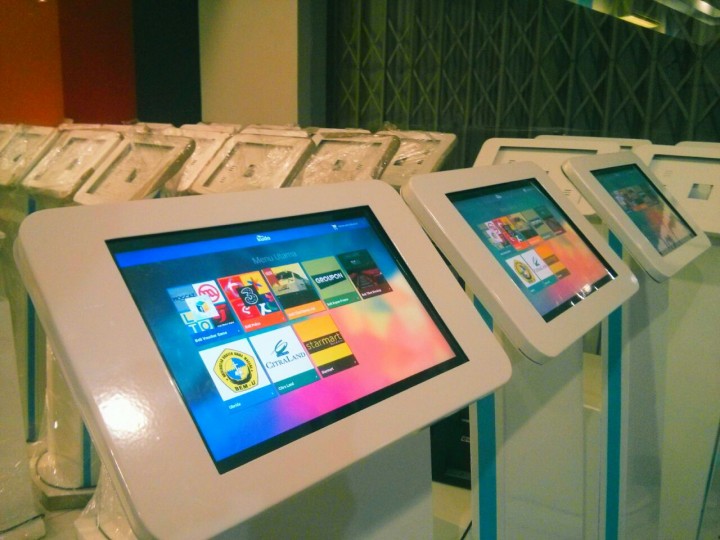
Kudo’s kiosks are popping up in parts of Indonesia.
Last year, Tech in Asia reported on an Indonesian tech startup that offered a new way to shop online through physical point-of-sale kiosks in public places around Jakarta. Essentially, it was a hardware startup with an online component – the team builds the machines and also curates the content within the collective marketplace. The company goes by the name Kudo. Its goal is to introduce ecommerce to people in Indonesia who’ve never tried online shopping before.
Now, however, the startup now also employs real-life agents with tablets to become direct ecommerce vendors. Essentially, they give Kudo’s ecommerce a more human touch.
Earlier today, Kudo announced that it raised a new funding round from Emtek Group, Indonesia’s second largest media firm. Emtek will join Kudo’s existing pool of investors, which includes Gree, East Ventures, 500 Startups, and IMJ Investment Partners. The round comes less than a month after Kudo raised series A funding. In a 30-day timeframe, Kudo has raised a seven-figure sum. (Disclosure: East Ventures also invests in Tech in Asia. See our ethics page).
“Kudo’s […] platform will nicely complement our interests in ecommerce by extending their reach through traditional, offline retailers in Indonesia,” says Adi Sariaatmadja, director of Emtek’s subsidiary and digital investment arm KMK Online. “The funds will accelerate Kudo’s regional expansion plan across the island of Java.”

Agung Nugroho (left), Willson Cuaca (middle), and Albert Lucius (right)
See: Boutique estore Bobobobo targets Indonesia’s creative millennials
The human element
“Our agents on average supplement their income by more than 25 percent,” explains Agung Nugroho, COO and co-founder of Kudo. “They can now offer a wide variety of products that are traditionally hard to obtain for the less tech savvy end-customers.”
According to Lucius, Kudo experienced a hiccup shortly after it launched, as it was simply placing its kiosks in public places. The idea was that shoppers would approach the kiosks on their own and start shopping online in places like malls and other stores.
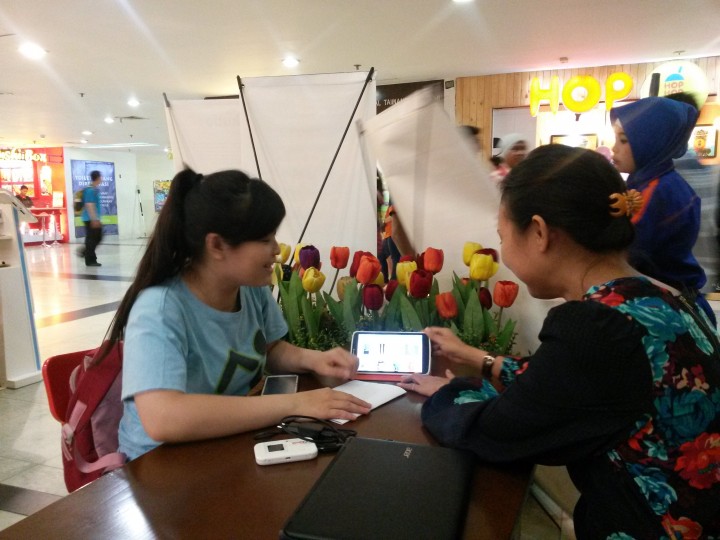
A Kudo agent talks to a prospective shopper.
“It was working, but the growth was not explosive like we needed it to be,” Lucius tells Tech in Asia. “People didn’t know what it was really. They thought it was just like a colorful ATM machine or like the simple ones they see in convenience stores.”





Stay updated on the go with our mobile app.
Get latest insights with smoother, more personalized experience through TIA mobile app.