- Premium Content It takes our newsroom weeks - if not months - to investigate and produce stories for our premium content. You can’t find them anywhere else.
 Deepti Sri · · 11 min read
Will India’s 10-minute quick commerce model last?
India has become a laboratory for the latest revolution in ecommerce – a model that promises the delivery of groceries at your doorstep in 10 minutes or less.
Several players are vying for a piece of India’s US$300 million quick commerce pie, which is expected to hit US$5 billion by 2025, according to a RedSeer Consulting report.
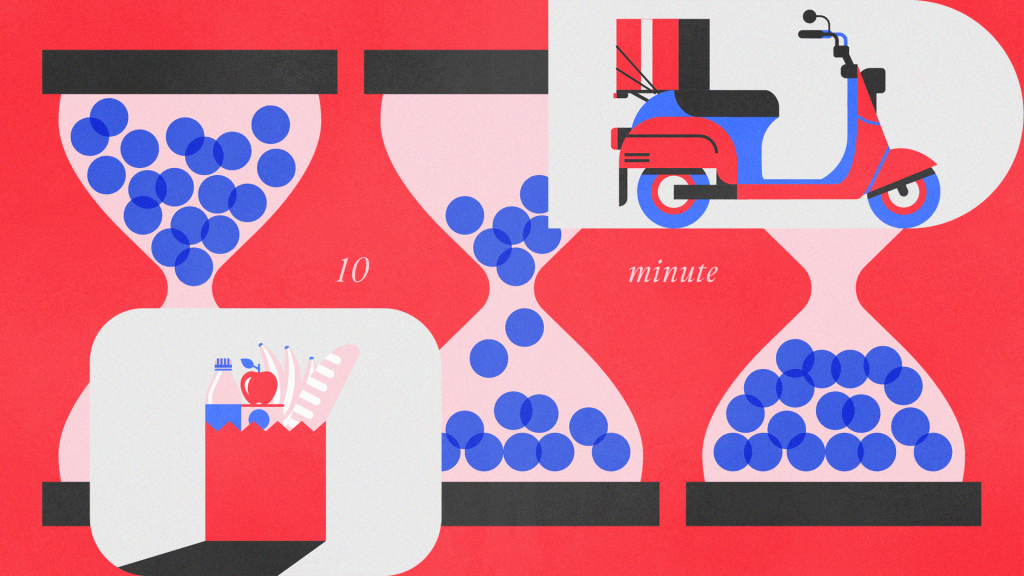
Image credit: Timmy Loen
Zepto, Dunzo, SoftBank-backed Blinkit, and Swiggy’s Instamart are all racing to hire staff, open stores, and grab a foothold in the red hot market.
Tech in Asia has reported on investors’ big bets on dark stores amid the adoption of the quick commerce model in India and Southeast Asia.
But Kalyan Krishnamurthy, Flipkart’s CEO and Tiger Global’s former managing director, has played down the surge of rapid grocery deliveries in India. “I don’t think that’s the right long-term customer model,” he told The Economic Times in a recent interview, referring to the 10-minute delivery trend.
He added that Flipkart was looking at a more sustainable model that fulfills deliveries within 30 to 45 minutes.
At present, the Walmart-backed Indian ecommerce giant offers Flipkart Quick, a service that guarantees deliveries within 90 minutes.
Tech in Asia spoke to several industry experts in India to understand how economically sustainable the 10-minute delivery model is.
Is it viable?
Players like DoorDash, Gopuff, Jokr, Getir, Buyk, Gorillas, and Fridge No More dominate the instant delivery space in the US.

Photo credit: Gorillas
However, the unit economics for these firms are underwhelming. As of August 2021, Jokr was reportedly losing US$159 per order in the US despite being “operationally profitable” in the first few cities where it was launched.
Similarly, Gopuff is also loss-making at an operating level, though it says it is “contribution profit positive.”
Cracking the hyperfast delivery model
A model only for metros
Challenges to speedy delivery
The road ahead
Stay ahead in Asia’s tech landscape
This is premium content. Subscribe to read the full story.
The 10-minute delivery is taking India’s ecommerce industry by storm. But is the business model viable in the long term?
We know this is not ideal. ⌛ Sign up in 20 seconds. Cancel anytime.
Our subscriber community includes professionals from these companies:





Stay updated on the go with our mobile app.
Get latest insights with smoother, more personalized experience through TIA mobile app.