J.T. Quigley · · 6 min read
Todai to Texas: These Japanese hardware startups wowed the crowd at SXSW (part 1)
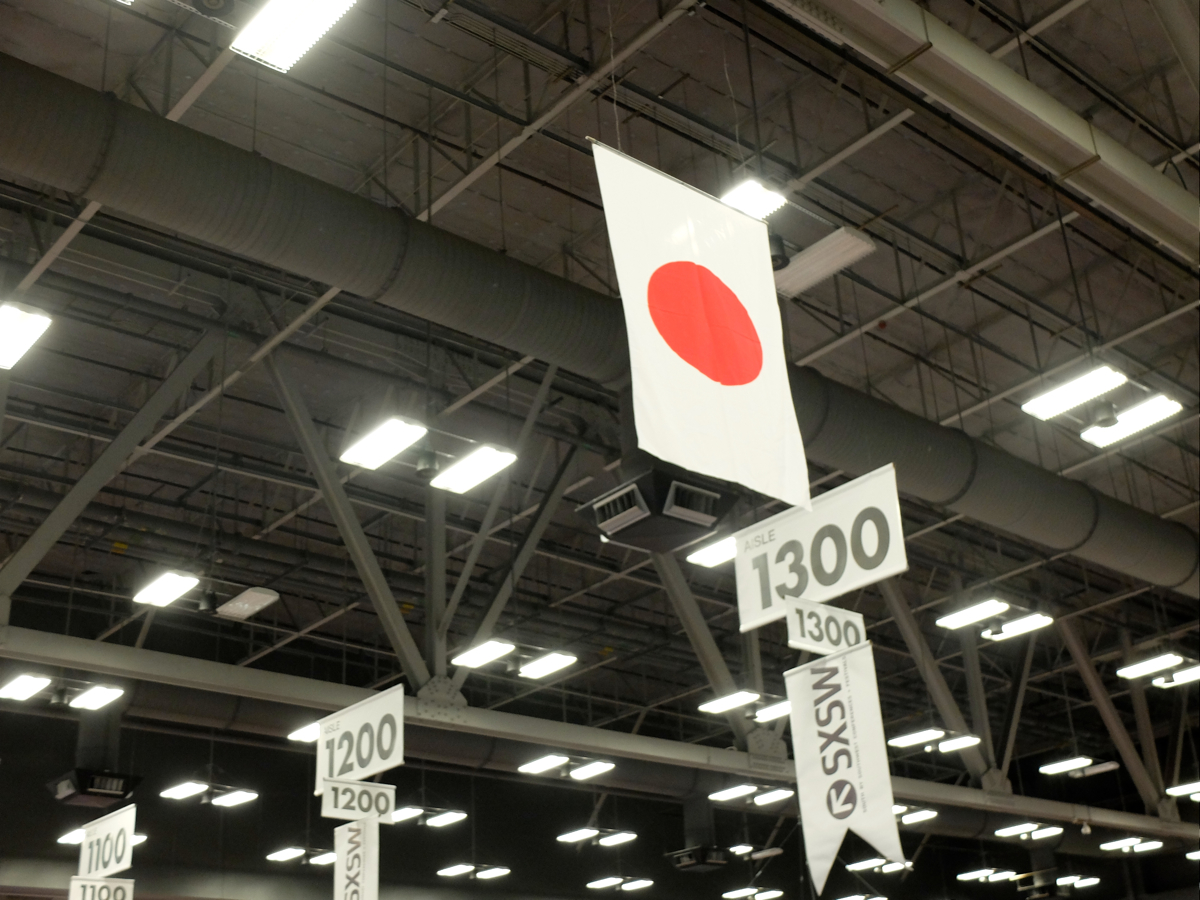
Visitors to last week’s SXSW Interactive trade show might not have even noticed the small Hinomaru flying above the back corner of the sprawling Austin Convention Center’s main exhibit hall. The simple white rectangle with a big red circle in the middle – Japan’s national flag – depicts a rising sun. It may have also been symbolic of the Japanese startup ecosystem’s continued rise to prominence, as young entrepreneurs shun corporate life to strike out on their own and venture capitalists slowly but surely begin to embrace risk-takers.
Beneath the understated flag was SXSW’s largest international section – Japan held more real estate at the trade show than any other country besides the hosting US. Despite an occasional language barrier for the predominantly English-speaking attendees, representatives from each of the Todai to Texas (“Todai” being short for the University of Tokyo, or “Tokyo Daigaku” in Japanese) startups used the opportunity to spread the word about their gadgets and plug recently-launched crowdfunding campaigns.
Todai to Texas, in its second year, is sponsored by the Division of University Corporate Relations and attendees are selected through an on-campus demo day contest. Winning teams are provided with airfare, accommodation, and event passes for up to two members.
Read below to learn more about the first five Todai to Texas hardware teams (you can read about the rest in part two).
Moff
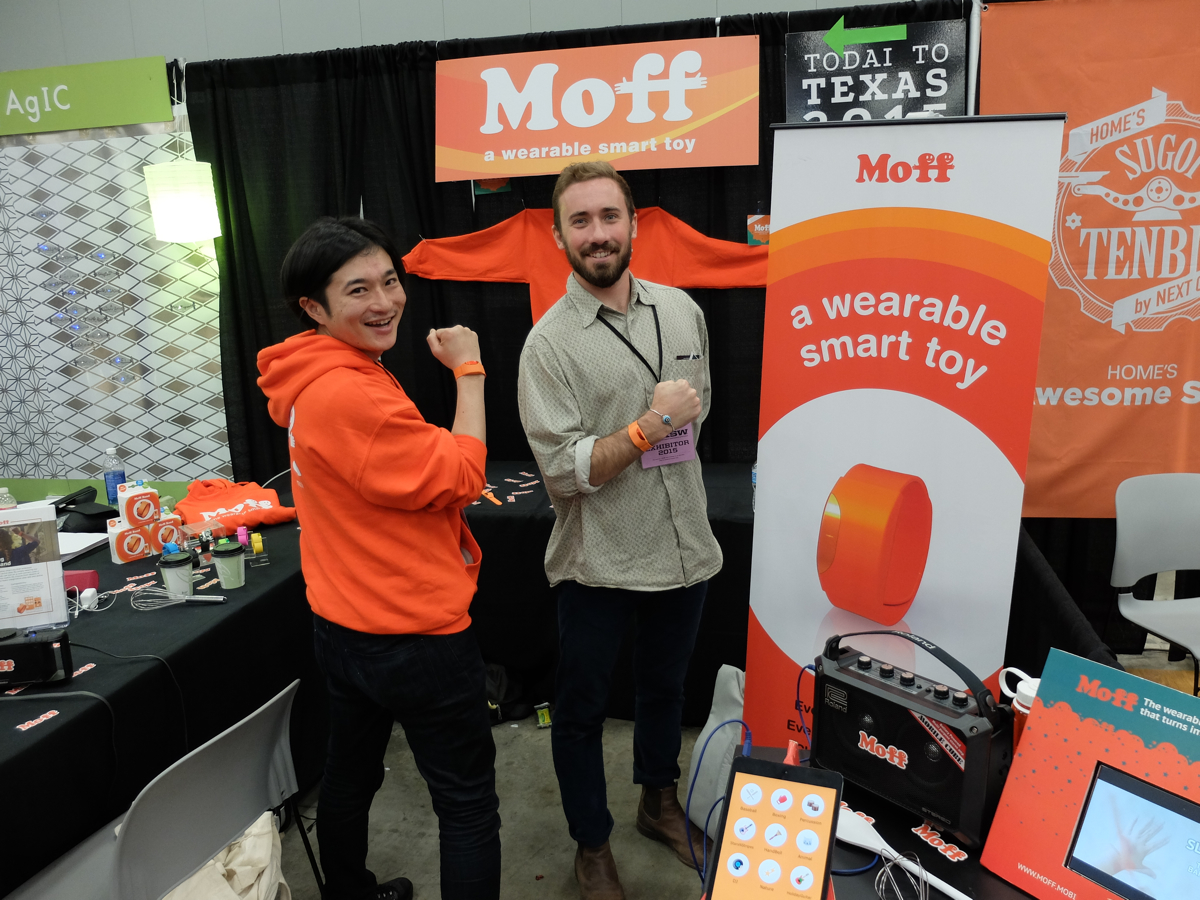
Moff is a wearable device that resembles a rubberized orange slap bracelet straight outta junior high school (for those of you born in the 80s). It allows wearers to turn anything into a toy by matching sound effects with various gestures. Simply connect Moff to your smartphone via Bluetooth, choose a sound effect within the device’s companion app, and crank up the volume. Now that old banana on the kitchen counter can become a lazer gun, or perhaps you’d rather turn the spatula into a samurai sword. Think of it as imagination enhancement.
“Last year we announced our Kickstarter campaign at SXSW, and we reached our US$30,000 goal in just two days, ending with US$80,000 in total,” Yoshinobu Ichimura, Moff’s business manager, told Tech in Asia. “Last September, we shipped [Moff bands] to backers. Then in October, we began selling on Amazon.jp, and in November, we started selling Amazon.com in the US. We’ve sold more than 10,000 units since then.”
The exposure Moff received at SXSW 2014 was a major factor in the team’s decision to return to Austin this year. But instead of Kickstarter backers, the startup came looking for business collaborators.
“We’d really like to find SDK partners,” Ichimura explained. “Moff bands have a lot of potential for not only kids, but for fitness, health care, and rehabilitation. It’s necessary to get to know app developers, especially now that we offer Unity Plugin support.”
The team was also showing off the first external app using Moff’s SDK, a toothbrushing game for kids designed in collaboration with Tokyo Motion Control Network. Ichimura said that “several toothpaste companies” already expressed interest in forming a partnership. In addition, multi-colored Moff bands (the original is still only available in orange) were on display, as requested by brick-and-mortar retailers.
Bocco
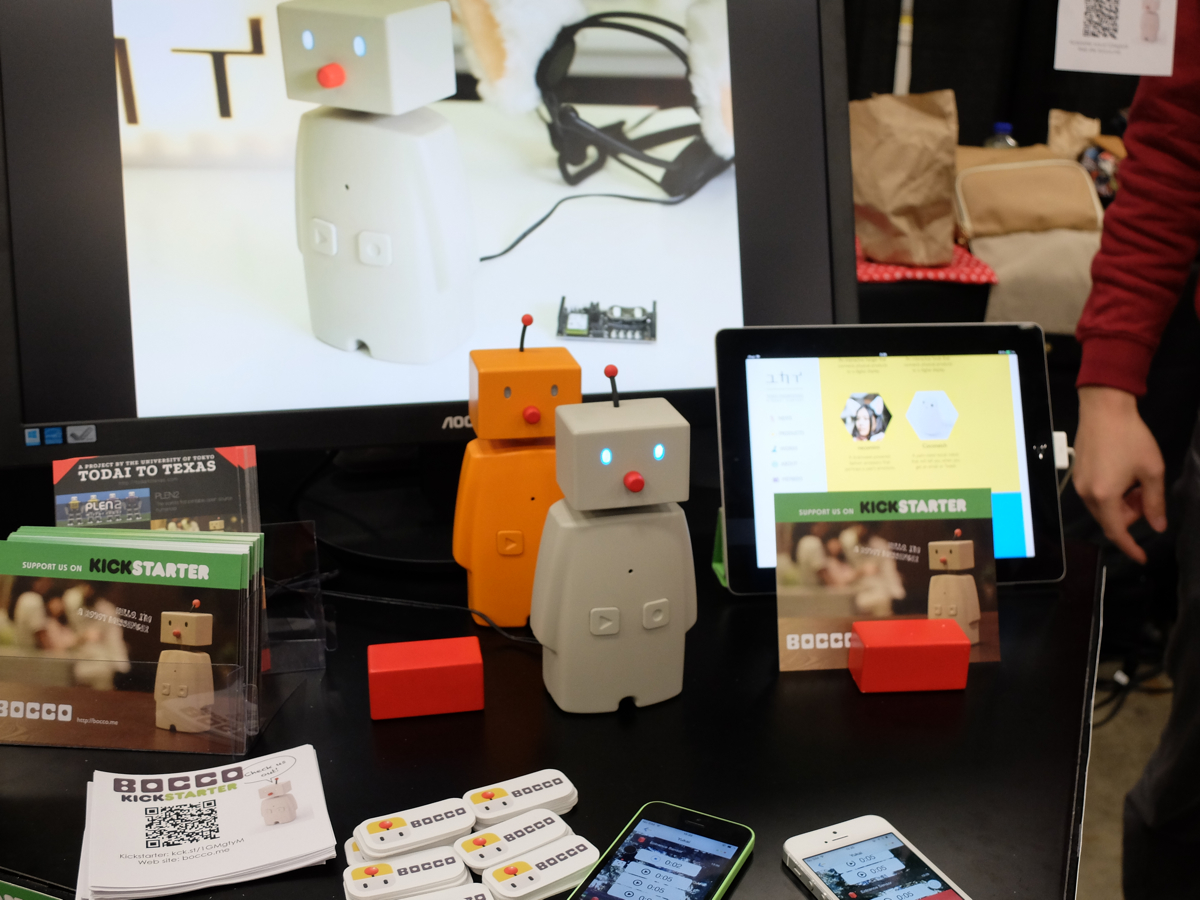
You may have heard of Tokyo-based Yukai Engineering back in 2011 when the startup unveiled mind-controlled cat ears. At this year’s SXSW, however, the team was showing off something decidedly less otaku friendly. Bocco is a cute “robot” (aesthetically more than technically) that helps family members keep in touch when separated by work or travel, without being constantly glued to their smartphone screens.
A parent on a business trip, for example, can record a voice message on their smartphone and send it to Bocco. If they opt to send a text, Bocco can also read it out loud. Their child can then speak into the Bocco to record and send a message back. There’s also a door sensor that will send notifications to the traveling parent to let them know when their kids get home from school or when their elderly parents leave the house to go shopping. The startup claims that it’s a more subtle, personal form of communication that’s easier for children and seniors to grasp.
“We founded Yukai Engineering six years ago, but [Bocco] is the first product we’re marketing internationally,” said COO Jun Harada. “[SXSW] is a great chance to spread the word to a huge, international audience.”
Bocco debuted on Kickstarter during SXSW Interactive and has raised about US$7,500 of its US$20,000 goal with 19 days remaining.
Plen2
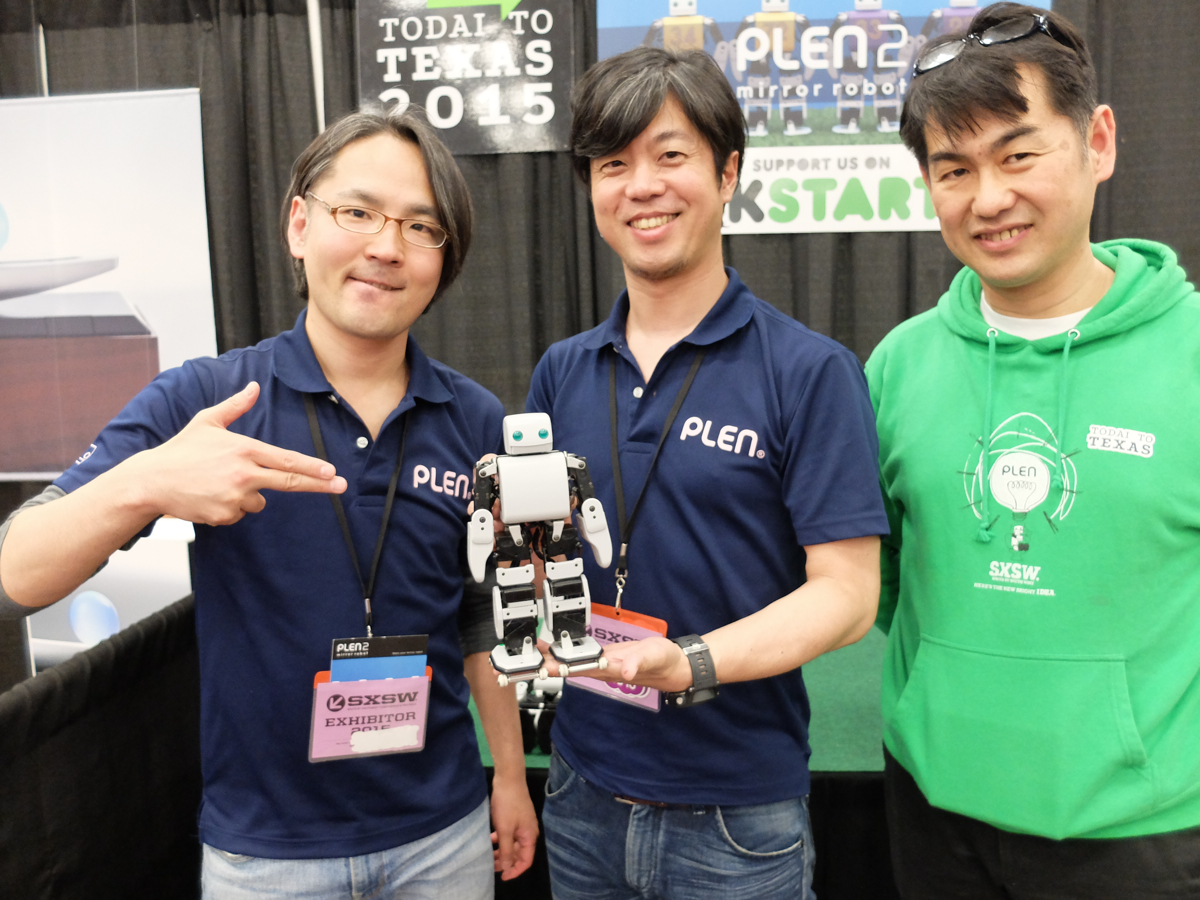
Humanoid robots were all the rage in 2014, but Plen2 claims to be the world’s first to be both 3D printable and completely open-source. At only 20 centimeters tall, Plen2 is rather small – but it’s got big customization potential.
“We provide the 3D data for major components, so people can use their own 3D printers to customize the robot,” Natsuo Akazawa, Plen Project CEO, told Tech in Asia. “Plen2’s Arduino-compatible computer board can further expand its functions. We have a small team, just three people, so without a huge internal network we chose to allow innovation take place within our user network.”
At the Todai to Texas booth, I watched Plen2 bust out dance moves and kick a soccer ball, but it’s capable of much more. An add-on sensor array, for example, allows the robot to copy the movements of a connected human. In its Kickstarter video, an elderly woman undergoing rehabilitation therapy controls Plen2 by squeezing her hand or flicking her wrist. It can even pick up and carry small objects.
With 42 days remaining on Kickstarter, Plen2 has already exceeded its funding target of US$40,000.
Trickey
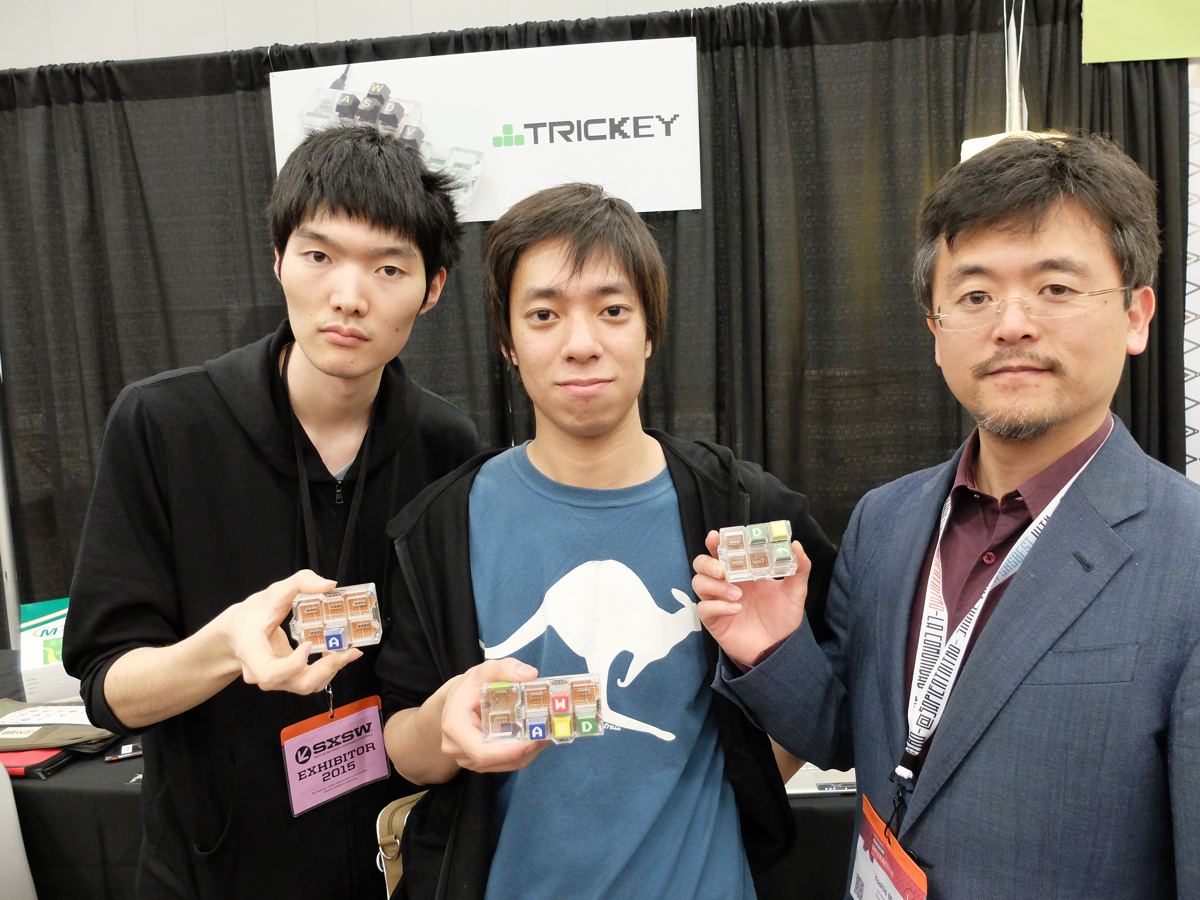
Trickey is a keyboard for hardcore gamers that features a fully-customizable building-block design. Each block has six key slots, and each removable key features the mechanical Cherry MX switches that are loved by gamers and typists alike. Blocks can stand alone, i.e. a single block with four switches for WASD, or be combined to form a full keyboard.
The entire apparatus is made from high-quality transparent plastic that reveals all of the inner workings. For customization beyond key layout, users can remove the key covers and print out original key design inserts using included software.
Trickey product manager Keisuke Shiro beat 39 other teams to win a rapid prototyping contest at Tokyo University. He’s currently a junior in the school’s engineering department.
Also currently fundraising on Kickstarter, backers have put up US$12,000 toward Trickey’s US$30,000 goal with 46 days to go.
Pixie Dust
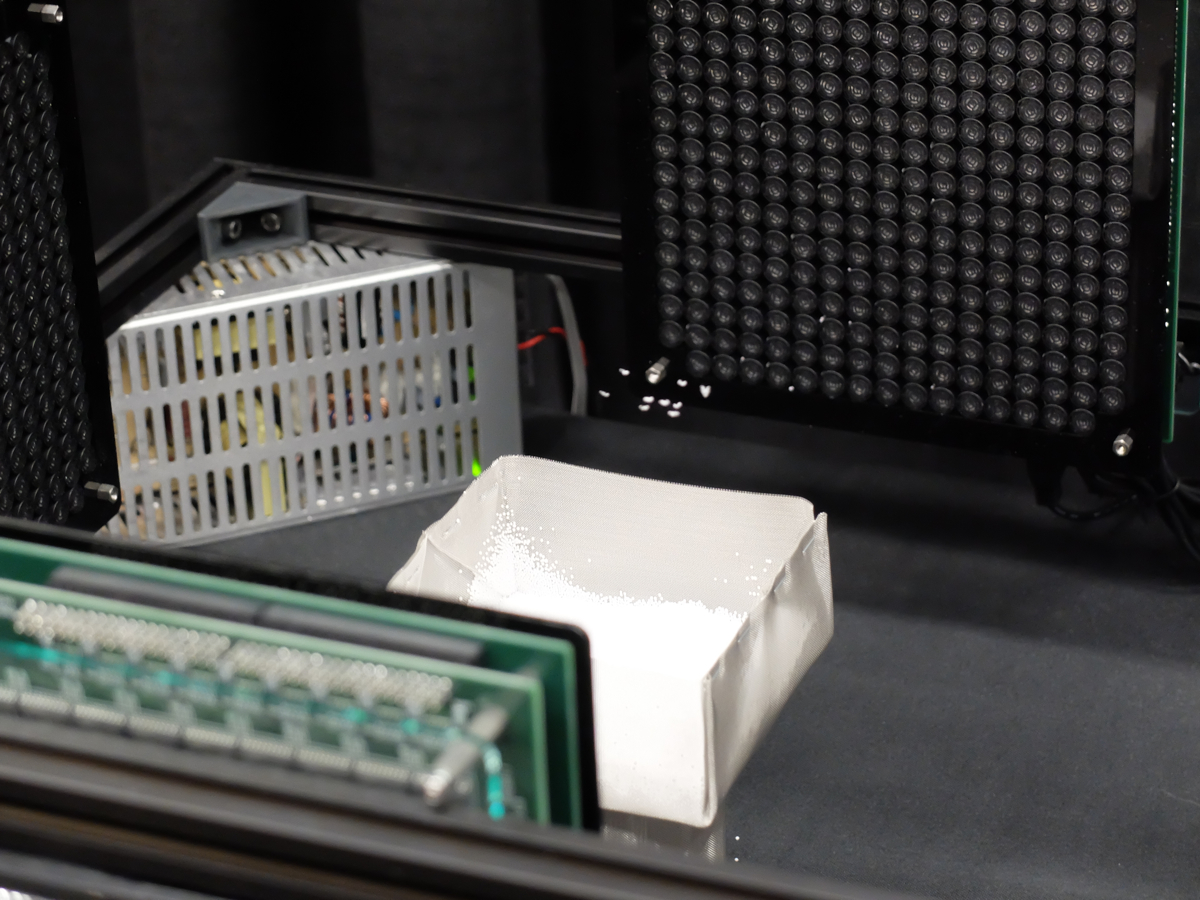
Hands-down the most technical piece of hardware in the Todai to Texas area – and perhaps the entire SXSW trade show – was Pixie Dust. It uses an ultrasonic phased array system to make objects levitate, then manipulate them in mid-air.
“This is the first time for us to show our technology, and it’s the first time in the world that particle maneuvering in 3D space has been made possible,” explained Pixie Dust Technologies senior director Leonard Mochizuki. “Until now, only levitation along the 2D axis could be achieved.”
Though the small prototype on display worked its magic with what appeared to be tiny styrofoam balls, Mochizuki says that the technology’s potential is vast: from pharmaceutical companies designing drugs that require contactless mixing to targeting sounds to specific people in a crowd. The startup even claims that it could be used to make space travel more comfortable.
Stay updated on the go with our mobile app.
Get latest insights with smoother, more personalized experience through TIA mobile app.
Recommended reads
 The 2026 Prediction Bingo update: half right, fully accountable
 Nykaa’s financial health in 5 charts
 Maximize your Saigon Summit experience at the exclusive Kickoff Mixer
 Singapore AI startup obtains $5m in Square Peg-led seed round
 Binance, YG team up for metaverse, blockchain projects
 List of SEA, India exec moves: Changes at X, Amazon, Razer
 Google launches new version of AI model, along with Search, Gmail integrations
 Philippine healthtech firm secures pre-series A money
 Indonesia’s healthtech firms test positive for growth
 BandLab acquires US-based beat marketplace Airbit




Editing by C. Custer
(And yes, we’re serious about ethics and transparency. More information here.)