- Premium Content It takes our newsroom weeks - if not months - to investigate and produce stories for our premium content. You can’t find them anywhere else.
 Peter Guest · · 7 min read
Residential real estate is falling apart. Enter housing-as-a-service
When Yoan Kamalski and Zenos Schmickrath, both professionals in their 20s, went looking for an apartment in their adopted city of Singapore, they came across a familiar dilemma. In the city’s inflated property market, the places in their price range were grim; the apartments they aspired to were unaffordable.
They were not alone. Those big, beautiful spaces were often just empty – the wealthier expat families that they had been designed for were no longer there and the new generation of workers coming into the technology sector couldn’t or wouldn’t pony up the thousands of dollars in rent and deposits.
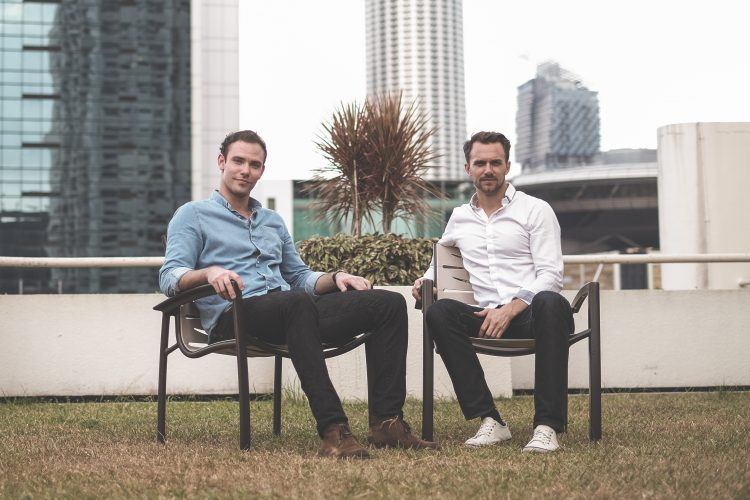
Hmlet co-founders Yoan Kamalski (left) and Zenos Schmickrath (right) / Photo credit: Hmlet
“What we started to do was go on PropertyGuru and look at all these places. [We’re] like, ‘Dude, how cool would it be to live in that space?’ In the end, we looked at our savings and went, ‘Shall we just go for it?’” Kamalski says.
“That was the first space. That was basically what [Schmickrath] and I wanted for our own space,” he adds. “We selected very carefully our flatmates. We had for a time a banker, [Schmickrath] was in the tech industry, and I was in construction. We had someone who was a nurse. And we were having a great time, bringing in people from all walks of life.”
At the same time, Kamalski and Schmickrath were “looking for the big idea, the tech startup – what everyone wants to do.”
They toyed with other services, including massage on demand, until it occurred to them that they were already living inside that big idea. They took out more floors of their apartment building, fitted them out and filled them. The result was Hmlet, a “co-living” startup that now manages properties across Singapore and Hong Kong, providing communal residential properties for millennial workers.
Real estate in flux
“Residential real estate is falling apart,” Kamalski says. Younger consumers cannot afford the properties that are available, and landlords cannot find tenants. Properties are lying fallow, while at the same time, cities are facing housing shortages. Something has to give, he says.
This has led to the emergence of co-living – essentially a more institutionalized, systematic version of the kind of flat-sharing that young professionals have been doing for generations.
The growing sector is drawing investors. In November, Weave, a Hong Kong-based operator, raised US$181 million from the US private equity firm Warburg Pincus, with an option to expand the investment to more than US$400 million. In the same month, Hmlet completed a US$6.5 million series A funding round, led by Sequoia India, following on from a seed funding round last year led by Aurum Investments.

Photo credit: Hmlet
Co-living is the result of a coming together of demographic and social change. Global cities like Singapore, Hong Kong, and Tokyo suffer from tight (and tightening) residential real estate markets, coupled with growing economic inequality that makes owning living spaces an increasingly distant prospect for millennial workers.
Those workers will have far less predictable lives than previous generations, as the idea of a linear career recedes in favor of more flexible arrangements – the so-called gig economy.
Existing players respond
Evolution of the sharing economy
Stay ahead in Asia’s tech landscape
This is premium content. Subscribe to read the full story.
Is co-living going to be a reality for most Millennials?
We know this is not ideal. ⌛ Sign up in 20 seconds. Cancel anytime.
Our subscriber community includes professionals from these companies:





Stay updated on the go with our mobile app.
Get latest insights with smoother, more personalized experience through TIA mobile app.











📅 Upcoming Events
22 October 2026
Payoneer x CSPN Summit 2026