- Premium Content It takes our newsroom weeks - if not months - to investigate and produce stories for our premium content. You can’t find them anywhere else.
 Will Chin · · 7 min read
Direct-to-consumer sneaker brand scores US$13m in seed funding
It’s tough to be a footwear brand these days. Creating products that help people look and feel good is one thing, but consumers, especially millennials and Generation Z, are increasingly drawn to brands that are “woke.” According to the 2018 Millennials Pulse Report by marketing communications firm Shelton Group, 90% of millennials favor labels that respect social and environmental causes.
But ticking all these boxes is rare, at least according to David Python, CEO and co-founder of Cariuma, a Brazillian brand of sneakers based out of Singapore. “A good-looking pair of shoes that’s super comfortable and also done in a conscious way – there are no shoe brands with all three, even if you look at the big brands,” he contends. Python would know: During his stint as the chief commercial officer for São Paulo-headquartered shoemaker Arezzo&Co, he was responsible for selling 12 million pairs of footwear annually.
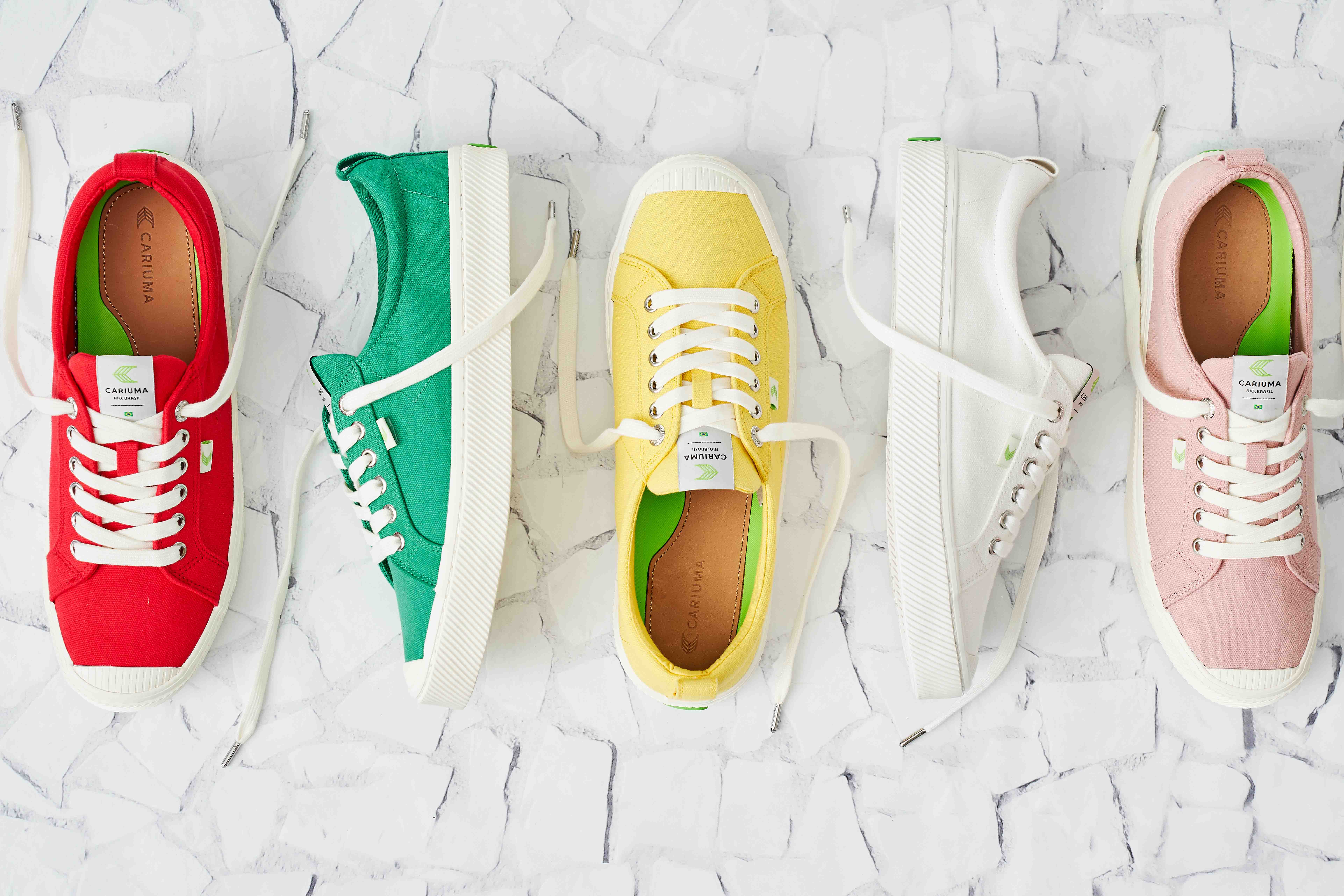
Taking up the challenge, Python and his co-founder Fernando Porto started a label aimed at satisfying all of the above.
The global market for athletic shoes is set to hit a little over US$95 billion in 2025, according to a 2018 industry report. Python believes that there are a few reasons for this growth. On the tech side, it definitely helps to have ecommerce platforms in the cloud and payment methods that are accepted worldwide as well as the ability to deliver goods to certain areas within short time frames like two days.
He also points to the “casualization trend, where people are moving away from expensive dress shoes, outdoor shoes or performance shoes.” As such, “sneakers is the only footwear category that’s on its way up.”
Even though Cariuma was founded in September 2016, it took another 20 months for its first pair of shoes to go to market. That gap, according to Python, was spent studying what customers are looking for in their sneakers.
Cariuma’s footwear spot a classic look that’s straight out of an episode of Netflix’s Stranger Things. Comfort-wise, Python notes out that the memory foam insole is partially made of premium leather from Argentina – the same grade used to make Louis Vuitton handbags. In terms of durability, all Cariuma shoes feature stitches on the outsole and vulcanized rubber to increase strength, he says.
Of course, many sneaker brands have the coolness and comfort factors down pat – it’s sustainability that trips them up. According to a report by nonprofit organization KnowTheChain, there’s a good chance that your closet is filled with clothes made by forced labor. US-based Foot Locker and Skechers, for example, scored just 12 and 7, respectively, on a scale of 100 in terms of how well they’ve eradicated forced labor from their supply chains.
On the other hand, Cariuma says its shoes are made from raw natural rubber, which is carefully harvested without harming the tree itself, and Fairtrade cotton, meaning cotton farmers have fair working conditions and receive fair wages. Its packaging is made from 100% recyclable materials, while shipping and transportation for the shoes is 100% carbon neutral (i.e., Cariuma makes up for the carbon emissions by purchasing carbon offsets.) And for the company’s canvas-based styles, the leather in the insole will soon be replaced with plant-based alternatives.
These sustainable features don’t necessarily translate to hefty price tags, either. Cariuma’s shoes start at US$79, and the startup has been able to keep costs manageable because of its “deep expertise in the category.” The company declined to comment on its unit economics, though its products’ price range is in line with other sneaker brands.
Python credits Cariuma’s chief operating officer Tiago Klaus – specifically his experience running a shoe factory – for this feat. “He was in product development and produced over 50,000 samples per year. He’s able to jump into a factory, teach the workers there how to produce high-quality shoes, bring suppliers on board, increase perceived value, and control costs,” explains Python.
Direct to (the heart of) consumers
Launched in May 2018, Cariuma shoes are now available in over 40 cities across the world. The brand was able to extend its reach – as well as stay affordable – not through retailers or online marketplaces, but by using a direct-to-consumer or D2C model, according to Python.
First, by cutting out the middleman, it allows Cariuma to collect all the revenue and then reinvest it in the brand, products and its people. Second, selling directly to customers allows Cariuma to have full control over how its brand is marketed and gain a better understanding of what its customers want.
Stay ahead in Asia’s tech landscape
This is premium content. Subscribe to read the full story.
Sidestepping online marketplaces, Cariuma is making a beeline for millennial customers.
We know this is not ideal. ⌛ Sign up in 20 seconds. Cancel anytime.
Our subscriber community includes professionals from these companies:





Stay updated on the go with our mobile app.
Get latest insights with smoother, more personalized experience through TIA mobile app.