Anh-Minh Do · · 5 min read
Why Facebook, Google, and Twitter Made It in Vietnam, But Not in China
Oftentimes, people like to compare Vietnam with China. In some ways, the similarities are pretty obvious. The Chinese dynasties ruled Vietnam for one thousand years. Vietnamese people celebrate Lunar New Year, and our names have Chinese roots. But online and in the tech industry, things look really different.
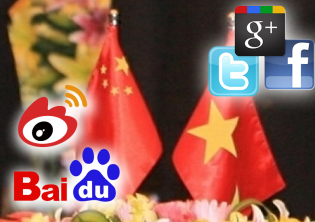
In Asia, there are four communist countries: China, Vietnam, Laos, and North Korea. Laos and North Korea are so small they’re not really on the tech map (even if North Korea is finally using mobile internet). That leaves China and Vietnam. In China, Baidu, Tencent, and Sina Weibo are the search and social media giants. In Vietnam, Google and Facebook are tops and Twitter isn’t blocked. What happened?
Search
China began interfering with Google’s search service in 2010, and it frequently fails to load but is not fully blocked. It’s due to China’s effort to manage the content that the majority of its population has access to; it’s also, some have argued, a big part of the protectionist success of Baidu and Sina Weibo who fill the shoes of Google and Facebook/Twitter. Today, Baidu gets an average of five billion search queries per day, and Google gets over 100 billion searches per month. But with Google partially locked out of China (it’s still the fifth most used search engine there), Baidu basically has near-exclusive access to the biggest market in the world.
In Vietnam, Google.com.vn is the number one search site and Google.com is number three. Vietnam has some new locally-made players like Wada.vn and CocCoc, but they’ll have a hard time up against Google’s dominance. In the mid 2000’s, Google was already slowly creeping into Vietnam. Youtube was and still is one of the most used and viewed websites in Vietnam and so Google was allowed to slowly creep in.
The interesting thing about Vietnam is that Google never officially opened up an office here. It still hasn’t. Google slowly entered, its value was assessed by users, and then it slowly rose to dominance. Now, if Google were blocked in Vietnam, it would leave a huge black hole in the Vietnamese cyberspace.
This is the trend in Vietnam. Let them in, assess how politically harmful they could be, and then realize it’s too late to cut them. For social media, it’s a little more complex. But the same principles apply.

from Doubleaf via Flickr
Social Media
China began blocking Facebook in 2008 and Twitter in 2009. In China, the Great Firewall has been very hard to get through, so China’s users have flocked to local social services like Sina Weibo 1. Although many would argue that Chinese sites would still have more users even if others were not blocked. I don’t buy it. If Facebook wasn’t blocked in China, Zuckerberg would open up an office there and/or be collecting the same wealth of data that Weibo now collects on its users. Today, Sina Weibo supposedly has 500 million users. That’s more than Twitter’s 200 million and less than Facebook’s billion.
Vietnam started blocking Facebook in 2009. But the block was relatively casual. Most users still get on via DNS tweaks or using HotSpotShield with no problems. This is exactly why we’ve seen such explosive growth in Vietnam – doubling its numbers in a year. It’s currently the fastest growing Facebook country in the world, and Facebook has surpassed Zing as the nation’s top social destination.
Vietnam let Facebook in and let it grow until it was too late. Recently, I learned from an undisclosed source that Facebook supposedly has 15 to 20 million users in Vietnam already, so if authorities pull the plug it would be disastrous for users in the country. Hundreds and thousands of businesses have set up shop in Vietnam with Facebook Pages and advertisements.





Stay updated on the go with our mobile app.
Get latest insights with smoother, more personalized experience through TIA mobile app.