 Josh Horwitz · · 9 min read
Highlights from day 2 morning session at Startup Asia Tokyo 2014
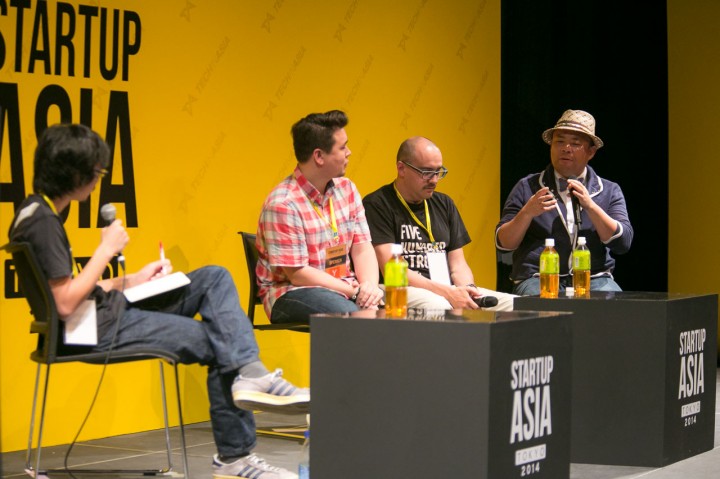
Keynote by Yoshiaki Ishii, Director for New Business Policy Office at Japan’s Ministry of Economy, Trade, and Industry – Supporting the startup boom in Japan
We kicked off our second day at Tech in Asia’s Startup Asia Tokyo 2014 with a keynote address by Yoshiaki Ishii, who Tech in Asia profiled recently. Ishii is known within Japan’s startup community for proactively working to unite the country’s large companies and government entities with its emerging small businesses.
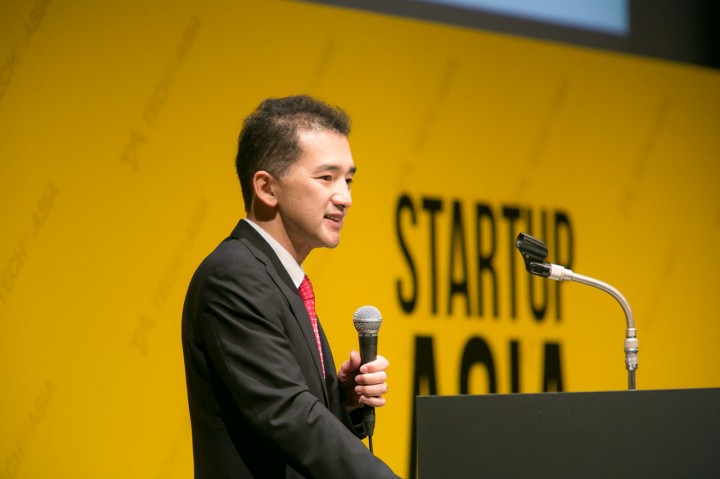
“We have a key index,” said Ishii. “We want to have a higher business startup rate than closing rate. The business startup rate right now is 5 percent, we want to double that to 10 percent.”
Ishii then described the various initiatives that the New Business Policy Office had been working on since June 2013 to promote the country’s startup ecosystem. These include a new startup creation committee, which puts the country’s leading financial and tech institutions in the same room with startups in an effort to promote a dialogue.
“In Japan, in order to have a thriving ecosystem of small companies, you need to have the support of large companies,” said Ishii. “We need to create a middle place for smaller and larger companies to meet up.”
Ishi is also working with the Ministry of Education to help instill an appreciation for entrepreneurship among Japanese schoolchildren.
“We ask elementary school kids what they want to be when they grow up, and they will say a sports player, or a candy maker, or a research manager,” said Ishii. “Nobody said they wanted to be the CEO of a startup. We need to nurture a mindset [in these children] that they can create something out of nothing.”
Keynote by Taizo Son, CEO at MOVIDA JAPAN – How entrepreneurs can help Japan to remain competitive
Taizo Son, founder of Tokyo-based accelerator Movida Japan, then took the stage to discuss how Japan can benefit from what he believes to be a looming paradigm shift.
Taizo enjoys a fun moment #StartupAsia conference. pic.twitter.com/BOP5U1e0A6
— Dave McClure (@davemcclure) September 4, 2014
Son mapped out the evolution of the internet in seven-year increments. In 1995, consumers en masse experienced the narrowband internet on PCs as they visited web portals like Yahoo! In 2002, Facebook and YouTube brought about the rise of social media on broadband internet. 2007 saw the rise of mobile smartphone sales and the subsequent popularity of native apps. What’s next? The Internet of Things, and Son believes that could be Japan’s big break.
The country is home to countless manufacturers of air conditioners, remote controls, refrigerators, and washing machines. Startups that recruit from or form partnerships with these companies can then get behind the eight-ball, just as ordinary households start ditching their dumb washing machines for smart ones. Son concluded with a few words of encouragement for young entrepreneurs. “Treat forming a startup like forming a rock band with your friends,” he said. “We are not competitors with silicon valley, we are teammates working together with Silicon Valley to create value.”
Panel Discussion: How can Japan and US top accelerators embrace Asia
We then joined Taizo Son for a panel discussion with Kevin Hale of Y Combinator, Dave McClure of 500 Startups, and Hiro Manedo of Beenos. The conversation began with an overview of how the Japenese startup ecosystem differs from that in Silicon Valley. McClure observed that Japan (nor any country, for that matter) can’t compete with Silicon Valley’s decades-long tradition of venture capital-driven startup entrepreneurship, which means there’s a dearth of mentors.
“In the last five years in Japan, there’s been a lot more accessible capital,” said McClure, “but I would still say there’s a lack of a ton of experience, through the entire cycle. In many places, not just in Asia, there’s not multiple generations of success.” Hale pointed out how Japanese entrepreneurs tend to work “in a vacuum,” compared to teams in the Valley, meaning that they tend to keep their product under wraps until they feel it’s ready to hit the market. ““In Silicon Valley, [startups] will show us turds. In Japan, they show us polished gold.”
Awesome fireside chat at #StartupAsia Tokyo with Kevin Hale, Dave McClure and Taizo Son. #tech #asia #startup pic.twitter.com/3ipg60y2oz — Meganne Ohata (@ohmeganne) September 4, 2014
When asked how Japanese entrepreneurs can help encourage local talent to build their own startups, Hale suggested working to export some of Silicon Valley’s cultural touchstones eastward – even if it just means translating Paul Graham blog posts. McClure encouraged aspiring entrepreneurs to focus on unsexy but tangible problems. “Uber became a very big company because they found a simple place to start,” said McClure. “Finding a taxi isn’t an earth-shattering idea. A seemingly unsexy idea has gone from a US$18 billion dollar company.”
Fireside chat with William and Daniel Sato – The future of tech entrepreneurship in Japan
Tech in Asia’s J.T. Quigley sat down William Saito, currently advisor to Prime Minister Abe and a part-time angel investor, and his brother, Daniel Saito, founder of RedRobot to discuss opportunities for Japanese entrepreneurs.
Of all the speakers we’ve heard from thus far at Startup Asia Tokyo 2014, William was the most optimistic towards the future of startups and Japan.
“As an investor, it’s perfect,” he said. “A lot of entrepreneurs have failed before they succeed. In Japan, if traditional venture capitalists invest in a company that failed once, they’ll be reluctant to invest again. That opens a lot of investment opportunities for me.”
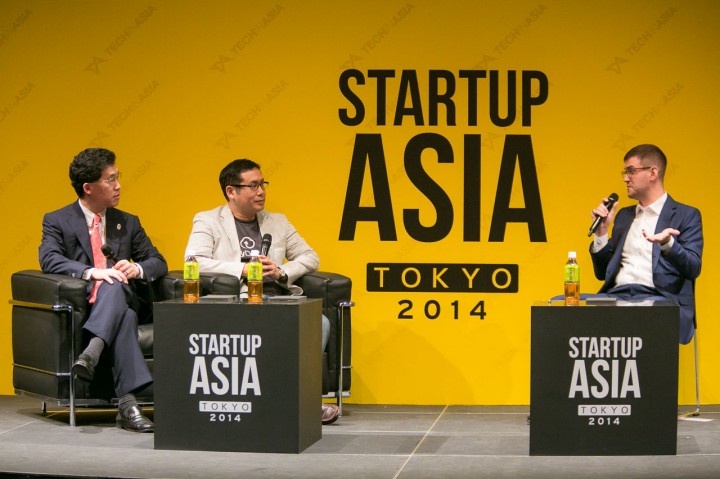
As for negative trends that founders and investors face, William pointed to what he perceived as an unwarranted enthusiasm for IPO exits, without first considering its possible consequences.
“Too many Japanese think of an IPO as a goal line, whereas if you actually look at the words IPO, it stands for ‘initial,’” he said.
Daniel noted that even as the number of consumer-facing startups has increased dramatically over the past five years, enterprise-minded founders won’t attract much attention from venture capitalists.
“The money is there. But I’ve noticed that in the VC world, trying to get an enterprise-based startup funded in Japan is difficult,” he said.
Here it is! Stage selfie with @whsaito and @saitodaniel – thanks for joining us at #StartupAsia #Tokyo! pic.twitter.com/uLwtQh7zQx
— JTQuigley (@JTQuigley) September 4, 2014
William cited the country’s aging population, its expertise in medical care, and its legacy in electronics as opportunities for startups. He pulled out a pet example to illustrate his point: “Cardiology is a very strong suit. There are world renowned cardiologists in Japan. As we all know, the electronics industries are not too shabby. But even though we have strong cardiology and strong electronics companies, we have zero companies that have pacemakers. That’s because the big companies here don’t want to take a risk merging the two fields. It’s going to take the ventures to do this.”
See more: This is where the Saito brothers invest their money in Japan
Asia startup showcase – Swimmy Minami, co-founder of BizReach
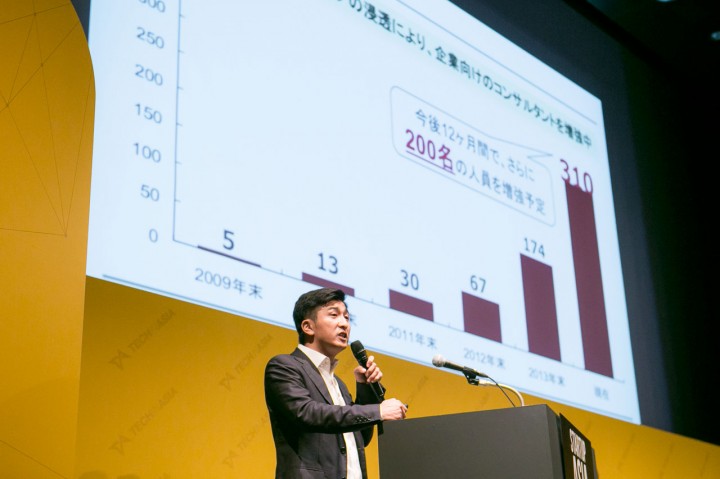
Swimmy Minami provided a lengthy account of what led him to start BizReach, a LinkedIn-esque job hunting site for Japanese professionals. Job marketplaces like monster.com or Indeed might not seem like such a novel concept to most in the English-speaking west, but in Japan, where pay-to-play recruiting industries remain deeply entrenched in Japanese work culture, introducing an online job searching websie required educating the market. Minami officially launched BizReach in 2009 as an antidote to Japan’s recruitment firms. The startup directly matches working professionals with companies that need their skills, without going through a middleman. It differs from LinkedIn and other job hunting sites by actively vetting out job seekers it considers poor matches for the firms it works with.
Asia startup showcase – Moo Natavudh, co-founder of Ookbee
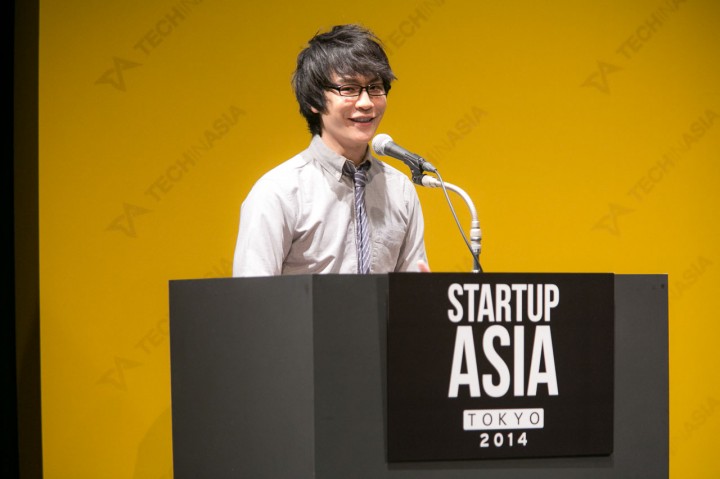
Moo Natavudh described how Bangkok-based e-book vendor Ookbee is beating Amazon and Google by targeting the market for ultra-local reading materials. The company forms partnerships and exclusive licenses with publishers that are big among certain Southeast Asian demographics but unknown among others. By moving quickly and inking deals before high-profile US competitors will even think of moving into Thailand, Ookbee has united a number of disparate, niche markets under its umbrella. It’s also worked around the region’s low credit card penetration by opening up to every payment solution under the sun, including cash transactions at convenience stores. The company has offices in Thailand, Vietnam, the Philippines, and Malayisa.
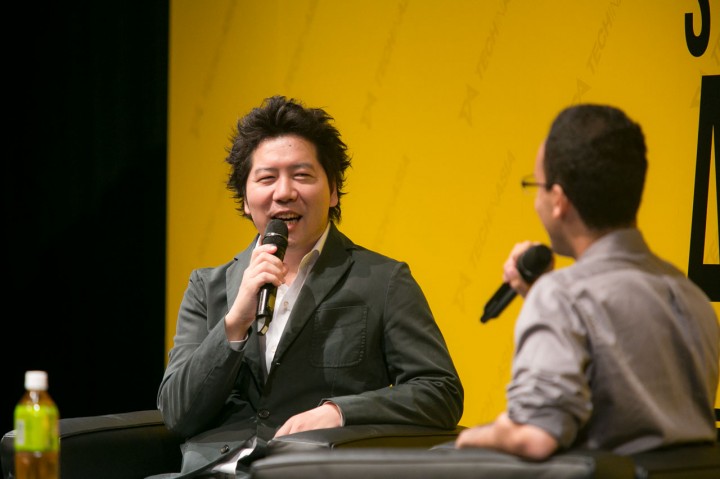
Fireside chat with GREE CEO Yoshikazu Tanaka – GREE’s challenges and its future ahead
Tech in Asia’s David Corbin sat down with GREE founder to chat about his company’s past, present, and future. Tanaka started GREE as a hobby in his free time, and only turned it into a full-fledged venture when it became to difficult to run himself. While the company had a boon when its games for ordinary cellphones achieved popularity in Japan, it quickly found itself at a turning point once consumers worldwide started ditching their dumbphones for smartphones. The company shifted and broadened its focus accordingly. “We knew it would be difficult to do many things at once. Our first priority was to go from feature phones to smartphones. Our second priority was to go global, and the final goal was to do native apps.”
Gree の田中さん #StartupAsia pic.twitter.com/3RiNgeuzc4 — Minoru (@678Kjtfa) September 4, 2014
Lately, Gree has expanded beyond gaming into other verticals. Tech in Asia reported the launch its hotel-booking app Tonight back in June, and the company also released an app that connects babysitters with parents looking for someone to watch after their kids.
When asked what these recent launches mean for the future of Gree, Tanaka said that while the company still sees itself as a gaming firm, it’s pursuing services that were made possible by the uptake in smartphone adoption.
“We’re thinking about what the next big trends are, and one company we’re looking at is Uber. We’re interested in expanding the definition of ecommerce. For example, Uber is a new model, but it’s only possible because all drivers have smartphones,” said Tanaka.
See more: Gree looks for the ‘next big round’ with diverse investments
Keynote by Mahiko Honma of Incubate Fund – Why I chose to move to Singapore
We closed our morning session with a speech from Mahiko Honma of why he settled on Singapore as a base camp for Incubate Fund, his seed-stage investment firm.
Mahiko pointed Southeast Asia’s rising smartphone adoption and large youth population as primary reasons for location. He noted that the percentage of young people in Southeast Asia’s population currently resembles the percentage of young people in Japan’s population around 1970.
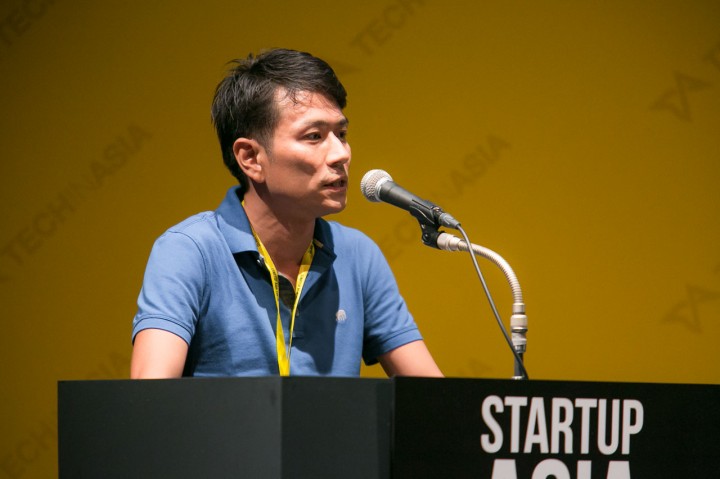
Since Singapore serves as a hub of sorts for Southeast Asia, it’s easy to view the city as a bridge that connects East Asia, Southeast Asia, and the West, according to Mahiko.
“Japanese companies should use Singapore as a hub to hire people and expand into other areas. Southeast Asians can speak multiple languages and labor is relatively cheaper,” said Mahiko. Rakuten, Softbank, and GungHo already have offices there, and DeNA said they’ll be investing there too. So more and more large Japanese companies are starting to look into those markets. Many major US companies use Singapore as their hub for Southeast Asia too, so Japanese companies can leverage that and use Singapore as a means to slowly enter the US market.”
Stay updated on the go with our mobile app.
Get latest insights with smoother, more personalized experience through TIA mobile app.
Recommended reads
 Animoca backs $70m round of 🇹🇼 VC firm’s maiden Web3 fund
 Meet the 50 top-funded startups and tech companies in Indonesia
 This Indonesian edtech startup tried to pivot, but it wasn’t enough
 Surge backs $5.1m round of first accelerator participant from Thailand
 Tech in Asia Conference 2020 Virtual by the numbers (INFOGRAPHIC)
 Daily news roundup – February 8
 Vietnamese education-focused fintech firm banks $1m
 Why this South Korean accelerator is bringing its expertise to SEA
 Entrepreneur First to halt programs in SG
 Mastering the art of virtual pitching at our TIA Live event





Terence Lee
(And yes, we’re serious about ethics and transparency. More information here.)




