Sign up for the Daily Newsletter, sent exclusively to our Premium subscribers. We break down the big and messy topics of Asia’s tech and startup community. Get the newsletter in your inbox everyday with a Premium subscription.
Hello reader,
When non-fungible tokens first took off last year, much of the initial conversation I heard around their use was in the realm of art. This was in part due to the sale of Everydays – The First 5000 Days, an NFT artwork by digital artist Beeple, at Christie’s for US$69 million.
People talked a lot about how NFTs could make a difference in how artworks are sold, serving as a proof of authenticity and ensuring greater transparency in pricing. By cutting out the middlemen, NFTs can help artists benefit more from the sale of their works.
Since then, the applications of NFTs have only gotten bigger. Music, for one, has come up as a particular area of interest. Like other artists, musicians often get the short end of the stick when selling their work, fighting for exposure on streaming platforms and having to split royalty fees and other monetary gains with record labels, distributors, and other third parties.
For fans, NFTs could present an exciting way to support their favorite musicians in a more direct manner. For musicians, NFTs can open up new channels to reach potential audiences.
Today we look at:
- Why music may be the next frontier for NFTs
- What this holistic healthtech startup is doing with its fresh funding
- Other newsy highlights such as ShopBack’s new CTO and stricter internet regulations in Vietnam
P.S: Tech in Asia’s annual Product Development Conference is coming up. If you’re a company looking to build successful digital products, this is the place to be, as leaders from thriving startups and multinational firms weigh in on the world of product development. Learn more here.
Premium summary
When NFTs get musical
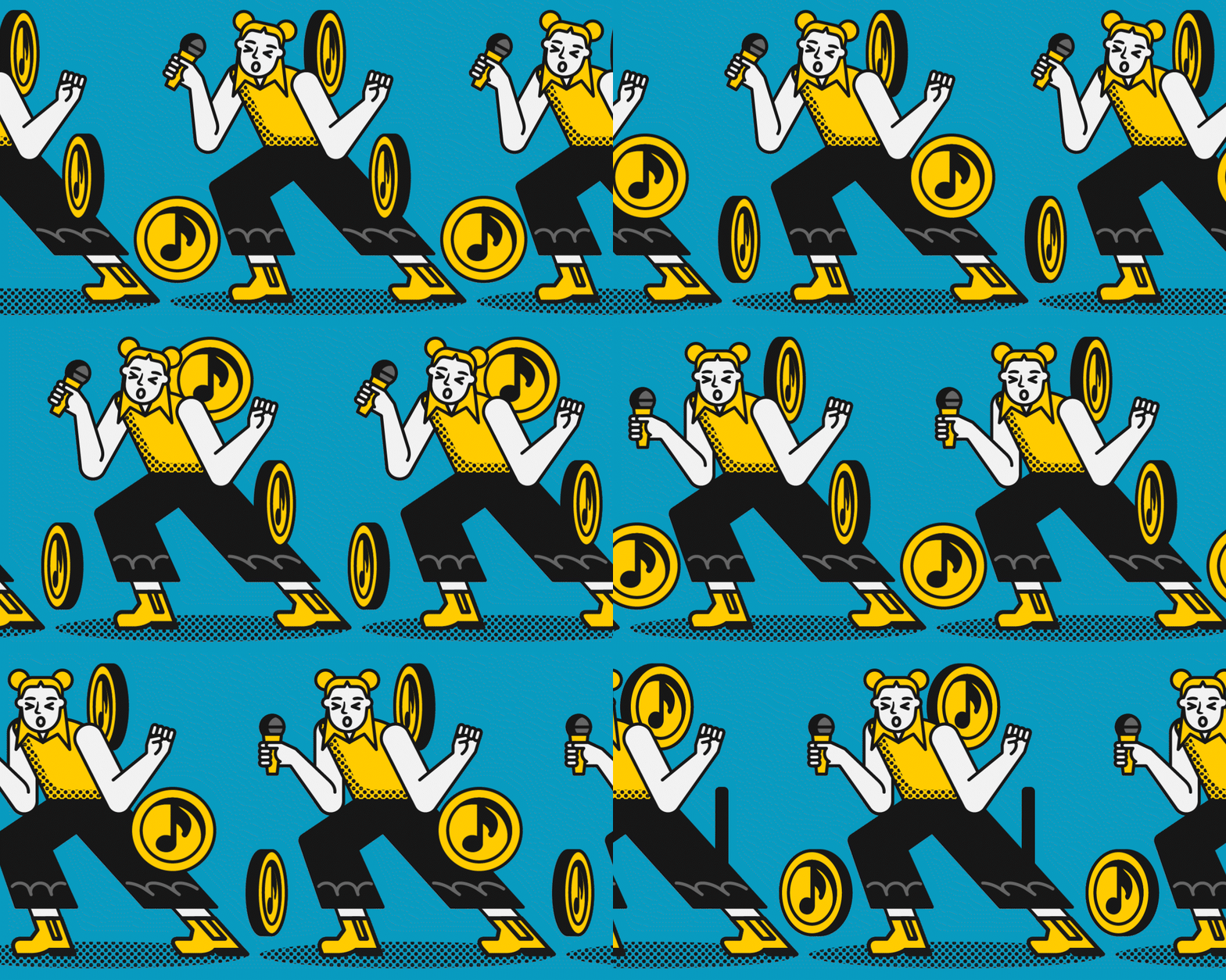
Image credit: Timmy Loen
As people went from buying CDs to signing up on streaming apps to platforms to listen to their favorite tunes, musicians had to evolve with the times. However, many music artists say that streaming platforms do not compensate them fairly. This is why music blockchain platforms have come up as an attractive option, especially for independent artists.
- Making the music matter: Music blockchain platforms allow artists to mint their songs as NFTs on their marketplaces. Through the sale of music NFTs, artists can access a new source of revenue and obtain the proceeds almost instantly.
Some NFTs even come with copyrights baked in, providing an avenue for ardent fans to back their favorite musicians while sharing in monthly royalty revenues. Music NFTs can also offer fans other exclusive benefits, such as access to front-row concert seats, exclusive album art, and merchandise. -
Music and gaming: Aside from having songs minted as NFTs, some platforms are looking to go a step further. For example, Cadenverse wants to combine a music NFT platform with play-to-earn games.
Artists can tokenize their songs as “game song NFTs,” which pays them royalties each time their work is used in a game, or as “collectible song NFTs,” which can be bought and sold on Cadenverse’s NFT marketplace. This gives artists exposure for their music while users can support budding artists that they have chanced upon in the games.
Not-so-ordinary folks
The evolution of payments in Southeast Asia
Quick bytes





Stay updated on the go with our mobile app.
Get latest insights with smoother, more personalized experience through TIA mobile app.