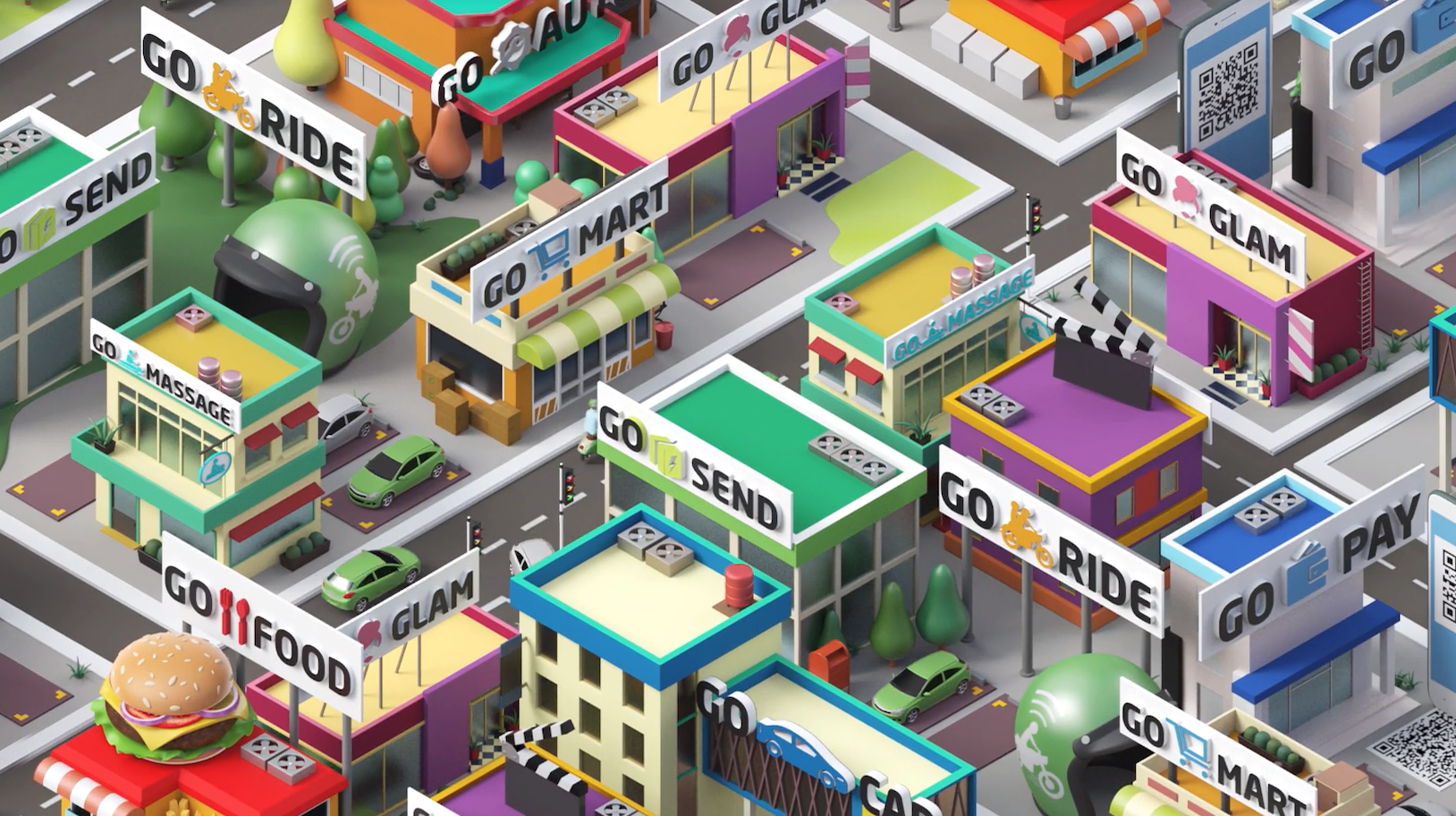
It’s Friday night. You just want to get home and chill after a week of working hard. So you pull out your phone and book yourself a Gojek ride.
While on the road, you shortlist some content on GoPlay that you plan to watch. As you arrive at your place, you log onto GoFood to order dinner.
“Ah, ada diskon! Maybe Indomie goreng sambal roa from Upnormal Cafe,” you tell yourself.
Done with your order, you take a shower. After that, you load up your GoPlay as you dry your hair, selecting a program from the list you made earlier.
The bell rings, so you go to the door. You say “Terima kasih,” to the delivery person as you collect your food.
You dig into your noodles and spend the evening indulging in a local romantic comedy. Midway through your second show, you scratch your belly and settle in with a choco chizu from Fore Coffee to complete your night.
Going hyperlocal
Launching GoPlay, a streaming service aimed at its home market, is a signal that Indonesian decacorn Gojek is going hyperlocal, not regional.
It’s not a bad move. Gojek aims to be the super app that truly understands Indonesian users, and it’s still in a good position to do so. But to achieve that, it has to refocus its resources and position to have a better shot at pulling away from the competition. That means, Gojek has to become even more Indonesian and maybe drop its regional ambition.
In theory, producing local content and games can attract more consumers into the Gojek ecosystem, therefore creating a stickier user habit and brand loyalty. It also helps the company understand its users much better as customers use its suite of services in Bahasa Indonesian. It may drive down average user acquisition costs as well.
After all, Indonesia is the market that matters most in Southeast Asia. The archipelago may not be a top-paying market today, but it has enormous potential given its size and growth.
If Gojek loses its grip on Indonesia, it loses everything. So going hyperlocal is the next logical step as it plays to win.
Grab’s food delivery and ride-hailing services are popular in Indonesia, running neck and neck with Gojek. And even though Grab was named the fifth unicorn in the country, I don’t foresee it going down the same hyper-localization path for Indonesia.
Building high-quality content is hard and will open up a can of worms. Not only do you have to fight against local content companies, but you also have to fend off giants like Netflix, which will soon be unblocked in Indonesia.





Stay updated on the go with our mobile app.
Get latest insights with smoother, more personalized experience through TIA mobile app.