 TIA Visuals · · 4 min read
Why Indonesia’s economy will experience a boom in this decade
Charts and visuals, only for subscribers
WHY IT MATTERS
By going digital, Indonesia can unleash US$150 billion in annual economic impact by 2025. Its government is also on a mission to become the world’s fifth-largest economy by 2045, with a target gross domestic product of US$7.3 trillion.
If you’re a founder or corporate leader with your sights set on Indonesia, the time to grab this opportunity is now.
ABOUT
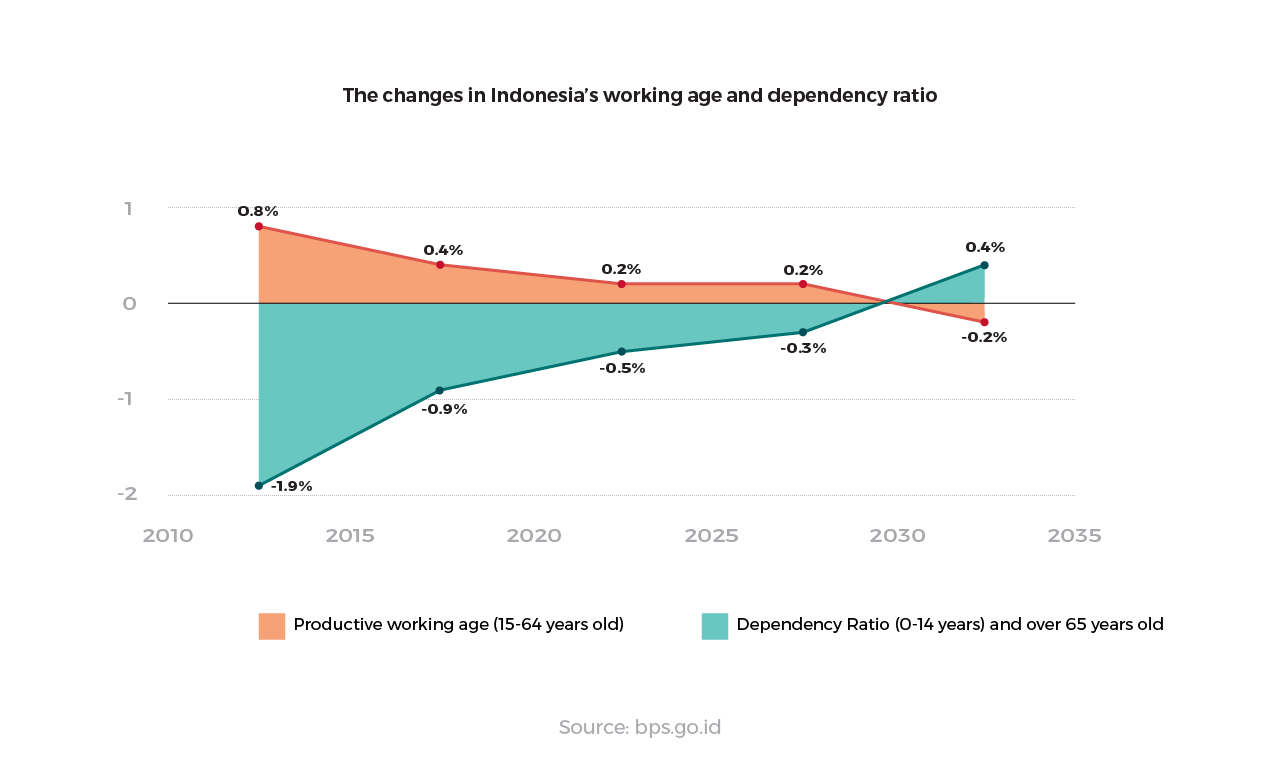
When a country’s working-age group is bigger than its nonproductive population, it earns a “demographic bonus,” which accelerates economic growth. For Indonesia, the demographic bonus will peak by 2030 when 64% of its 297 million-strong populace will be productive.
But it’s too early to celebrate. Besides poor infrastructure and job availability, the country contends with many challenges, including poverty, underprepared new graduates entering the workforce, relatively low access to higher education, and cultural issues surrounding gender roles.
The rise of entrepreneurship
Despite Indonesia having a large available workforce, job opportunities may be scarce. That’s why President Joko Widodo set up a program in 2016 to support young entrepreneurs and accelerate the country toward Industry 4.0, with the hope that major innovations can lead to more jobs.
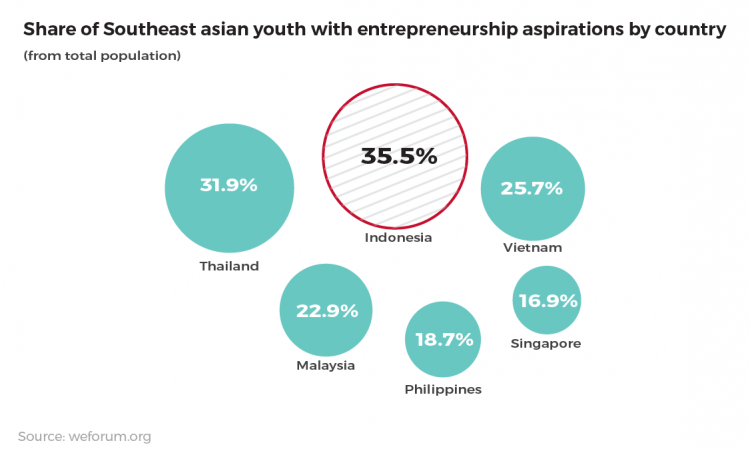
According to a report by the World Economic Forum, 34.1% of young Indonesians “worked for themselves” in 2019. Among ASEAN countries, it has the highest share of youth with entrepreneurship aspirations.
The government hopes that such programs can expand the country’s middle class, which has become the fastest-growing socioeconomic group in the country. Indonesia’s poverty rate has more than halved since 1999, resulting in at least 52 million Indonesians – one in every five people – becoming economically secure.
Education is critical
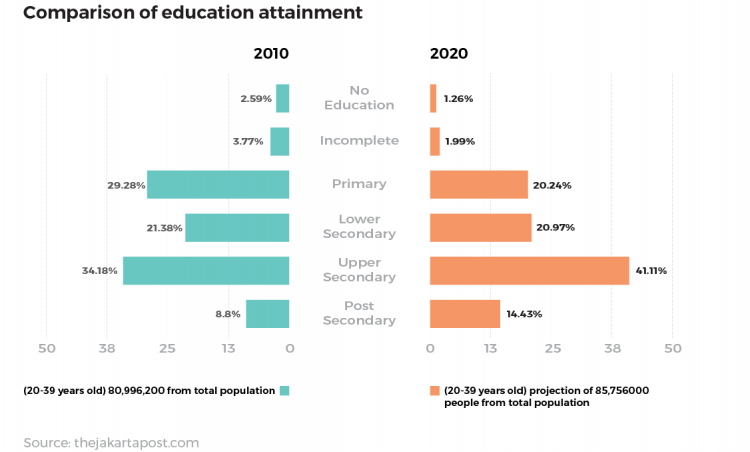
Gojek founder Nadiem Makarim recently became the country’s education minister. While his plans involve increased investment and innovation through private sector collaborations, education becoming a gateway to high-paying jobs is still a dream for most Indonesians. Just 14.43% of the population have postsecondary education, and many still fall into blue-collar work in the informal sector, which typically offers low incomes and little career growth.
Vocational schools seem to be one of the government’s priorities. In 2018, the unemployment rate of graduates from these institutions stood at 8.92% – higher than the country’s overall unemployment rate of 4.3% that year. However, the government said it would revitalize 5,000 out of the archipelago’s 14,000 vocational schools by the end of 2024. The Covid-19 outbreak has also led the government to launch a pre-employment card for vocational training, though its effectiveness is still up for debate.
CONCLUSION
SOURCE
Share, tag us, and land on our Wall of ❤️ !
Stay ahead in Asia’s tech landscape
This is premium content. Subscribe to read and use our charts, graphics, and other visuals legally
Whether it’s boom or doom, it’s interesting to see how Indonesia utilizes its demographic bonus.
We know this is not ideal. ⌛ Sign up in 20 seconds. Cancel anytime.
Our subscriber community includes professionals from these companies:





Stay updated on the go with our mobile app.
Get latest insights with smoother, more personalized experience through TIA mobile app.