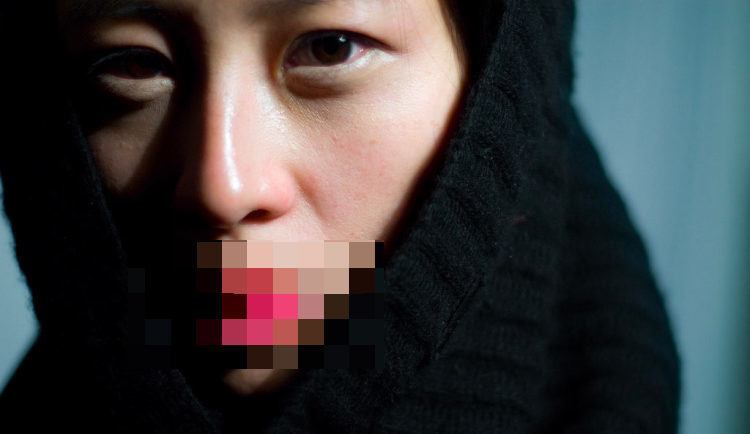
Original photo credit: Craig Cloutier.
China’s internet censors have been busy recently. Last week we saw the uptight folks at SAPPRFT take down Papi Jiang, a viral video comedian of sorts who had even attracted VC funding, over a few curse words. We also saw Apple’s online books and movies platforms get taken offline, reportedly thanks to SAPPRFT’s sudden demands.
It’s all very depressing, but it also highlights one of the most effective aspects of China’s online censorship regime: it’s totally unpredictable.
Why the fuck can’t you say fuck?
Last week’s Papi Jiang case is a perfect example. According to SAPPRFT, her videos were taken offline because of her use of vulgar terms like wocao (roughly, “fuck”) and xiaobiaozi (“little whore”) – those are the specific examples that SAPPRFT gave. But those terms aren’t illegal, and until last week, there was little indication that their use would attract the attention of censors. Hell, there are thousands of videos on Youku right now that use wocao (“fuck”) in the video title. The number of videos across all of China’s online video platforms that include these very common curse words has got to be astronomical.
There’s no toeing the line, because nobody knows exactly where the line is.
(And of course, anyone who’s ever spent more than a few seconds in China’s northeast knows that they’re extremely common in everyday speech, too.)
So why was Papi Jiang singled out for saying something that everybody else also says? Why was she singled out even though as far as anyone can tell, she didn’t violate any laws, regulations, or rules? That’s something I went into in detail last week, but there’s another angle to the Papi Jiang crackdown and others like it.
Papi is far from the first to feel this kind of unfair treatment, after all. Thousands of people have made jokes about China’s government on Twitter, but only one has ever been arrested for it, and he wasn’t an internet celebrity. It’s not all just about punishing highly visible people to send a message.
The edge of the cliff
Imagine being near a steep cliff. During the day, when you can see clearly, you might walk right up to the edge to take in the view. But at night or during a thick fog, you’re probably going to steer well clear of the cliff’s edge to ensure that you don’t accidentally misjudge where you are and tumble to your death.
China’s vaguely-defined web content rules and inconsistent censorship enforcement work the same way as the fog near a cliff: since people can’t see exactly where the edge is, they’re more likely to stay far away from it, just in case. There’s no toeing the line, because nobody knows exactly where the line is. So instead of pushing the envelope, many people choose to censor themselves.
This is something you can see all across China’s web content industries. In the gaming industry, for example, it’s common for foreign game developers to remove skeletons and other “superstitious” content from their games before submitting them for Ministry of Culture approval in China.
Are skeletons illegal in China? No, and in fact plenty of Chinese games have skeletons in them. But supernatural elements can sometimes be a stumbling block, so foreign game companies remove their skeletons and similar game elements because they want to play it safe. It’s never totally clear where that line is, and since crossing it can lead to delays or to your game never getting released in China, it’s not worth the risk. It’s easier just to self-censor.
In my opinion, this is the cleverest and most insidious aspect of China’s censorship regime. Beijing’s censors do an awful lot of proactive deleting too But through vague rules and enforcement they have created an environment where much of their constituency is inspired to censor itself.





Stay updated on the go with our mobile app.
Get latest insights with smoother, more personalized experience through TIA mobile app.