 C. Custer · · 5 min read
China doesn’t censor skeletons: the truth about game censorship in the Middle Kingdom
China is one of the most misunderstood nations on earth when it comes to censorship. Yes, its government is very trigger-happy when it comes to censorship, but that doesn’t mean that a lot of the common myths about Chinese censorship are correct. And when it comes to video games, there’s one we’d especially like to debunk: the illegal-skeletons theory.
(See: China declares Battlefield 4 illegal)
If you talk about games in China, you’ll often hear people espouse this theory: skeletons, blood, and other things have been censored in games like World of Warcraft and Dota 2 for cultural reasons, or because the government doesn’t want to encourage superstition.
But, while it’s true skeletons and blood are censored in WoW, Dota, and a bunch of other foreign games, the blanket ban people talk about doesn’t exist. For example, here are a couple of screenshots from two Chinese-developed games. The first is from a game called 倩女幽魂, developed by Netease. The second is from a game called Age of Wushu, developed by the Suzhou-based Snail Games.
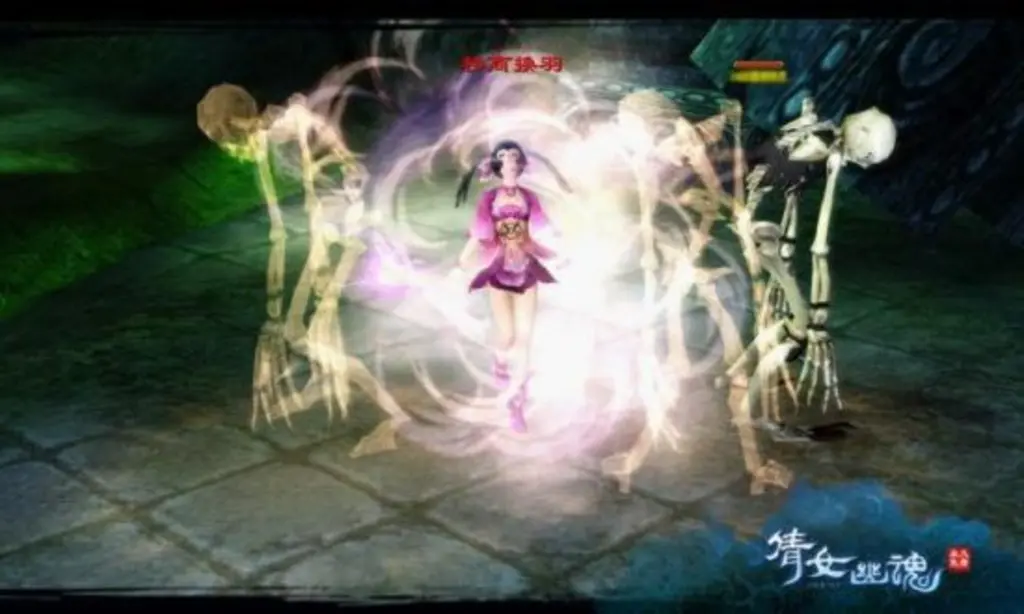
Well, there are a bunch of skeletons.
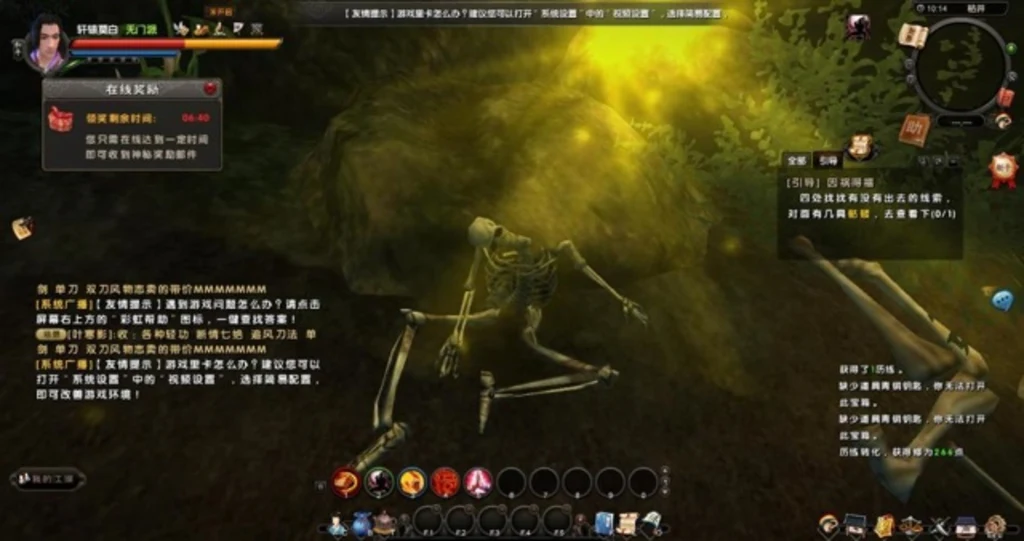
And there are even more skeletons.
OK, so skeletons and the like obviously aren’t straight-up banned in Chinese video games. And in truth, they’re not that uncommon in Chinese culture, either. Chinese literature is full of the supernatural, from the ghost stories of Zi Bu Yu in the Qing period to the Baigujing skeleton-spirit in the Ming dynasty novel Journey to the West.
But if skeletons are allowed in games and present in Chinese culture, that does beg the question: why are they censored in games like WOW and Dota?
The answer can be a little difficult to pin down.
What laws are on the books?
It’s impossible to know what pressure the Chinese government might be exerting on game companies behind the scenes, but in terms of public censorship regulations for games, the relevant regulations are here. Specifically, the Ministry of Culture forbids:
- Gambling-related content or game features
- Anything that violates China’s constitution
- Anything that threatens China’s national unity, sovereignty, or territorial integrity.
- Anything that harms the nation’s reputation, security, or interests.
- Anything that instigates racial/ethnic hatred, or harms ethnic traditions and cultures.
- Anything that violates China’s policy on religion by promoting cults or superstitions.
- Anything that promotes or incites obscenity, drug use, violence, or gambling.
- Anything that harms public ethics or China’s culture and traditions.
- Anything that insults, slanders, or violates the rights of others.
- Other content that violates the law
It’s a somewhat broad list that, at the end of the day, comes down to interpretation. Could a skeleton in a game be interpreted as “promoting superstition,” for example? Possibly. Likely, it would depend on who—and when—you ask. And that leads to…





Stay updated on the go with our mobile app.
Get latest insights with smoother, more personalized experience through TIA mobile app.








📅 Upcoming Events
22 October 2026
Payoneer x CSPN Summit 2026