Lilian Tang · · 6 min read
Beyond classrooms, AI is changing the game for educators

Summary:
- AVPN’s AI Opportunity Fund is entering its third phase, deepening its focus on educators and youth through locally embedded training partners across Asia Pacific.
- Educators can multiply the impact of AI training by improving how they teach and guiding successive groups of students to use the tech critically and responsibly.
- Looking ahead, the Fund is integrating regional education networks and consolidating learning resources, while educators explore personalized learning and subject-specific AI tools.
- Find out more about the AI Opportunity Fund here.
Over the last few years, the conversation around AI has rapidly shifted from applications within specialist circles to everyday use. However, growing familiarity with the tech has not necessarily been matched by the skills needed to use it effectively.
Across Asia Pacific, 58% of individuals surveyed said they were excited about AI’s potential, yet only 15% had participated in an AI skilling program.
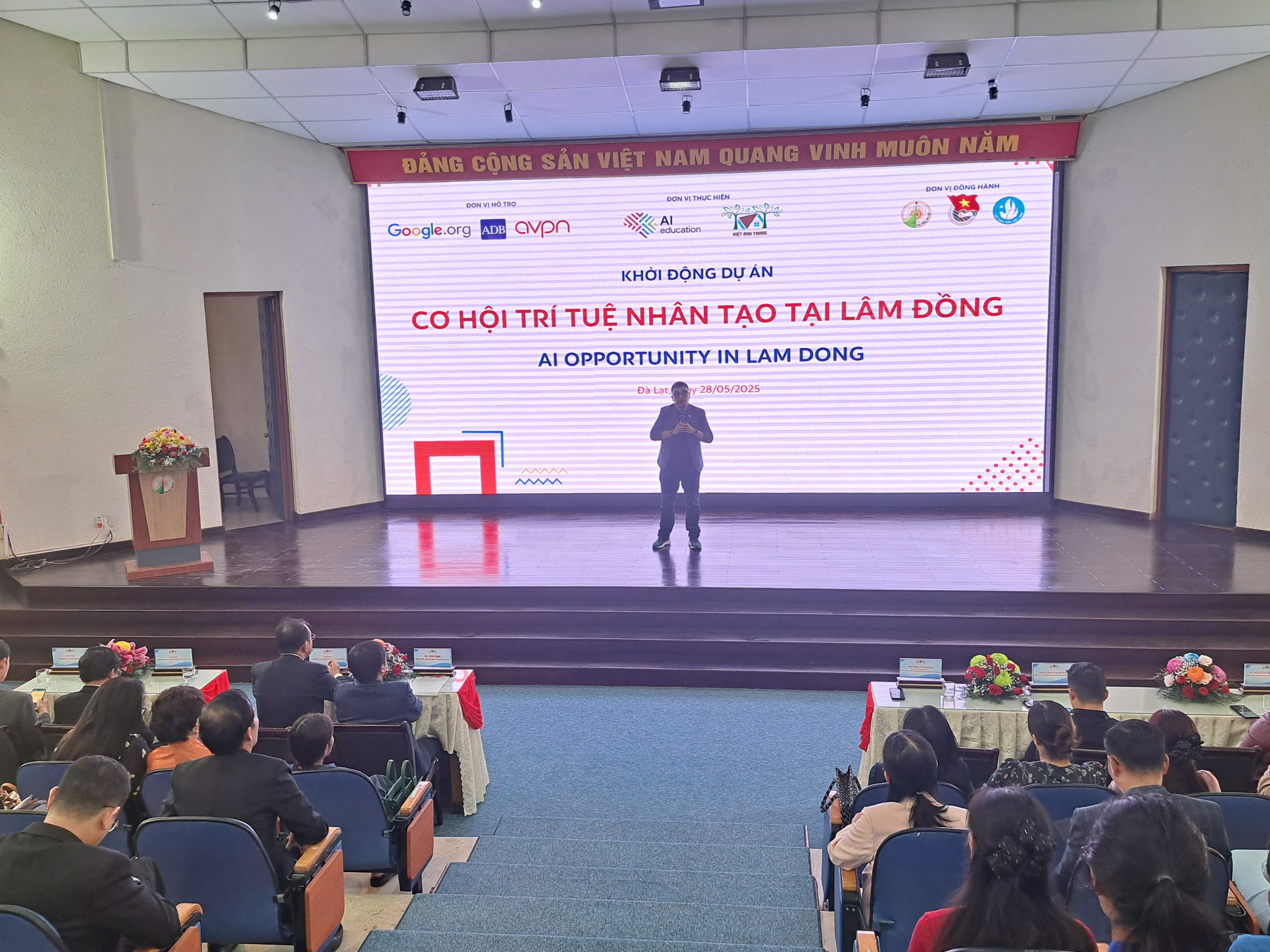
The Kick-off Ceremony of the AI Opportunity in Lam Dong program, held on May 28, 2025 / Photo credit: Viet Anh Trung Consultancy
That’s where initiatives like the AI Opportunity Fund: Asia Pacific can help. It was launched in 2024 by AVPN, Asia’s largest platform for social impact, with support from Google.org and the Asian Development Bank.
In May 2026, the Fund announced that it had received an additional backing of US$10 million from Google.org, bringing the initiative’s total commitment to US$35 million.
The Fund began by bringing trainers and strategic partners together, helping workers build practical AI skills. Tech in Asia previously explored the scale of this upskilling opportunity, as well as the local organizations bringing these AI courses into communities that needed them the most.
Now in its third phase, the Fund is setting its sights on forming deeper engagement with end-users like educators and youth.
“When a teacher gains AI fluency and embeds it into how they teach, that impact carries through every student they teach for years,” says Young Park, director of the AI Opportunity Fund at AVPN.
Bringing AI fluency closer to the ground
The Fund has trained more than 850,000 workers and 63,000 small businesses across more than a dozen markets, according to Park. Its current network includes almost 60 local training partners, delivering programs in more than 30 languages.
According to AVPN, teachers and educators are one of the largest groups of learners.
Tran Xuan Tho, a lecturer and deputy head of the Basic Sciences Faculty at Dalat College in Vietnam, is one of the educators engaged through the Fund. Having spent 22 years in the education sector, he knows how quickly teaching demands can change.
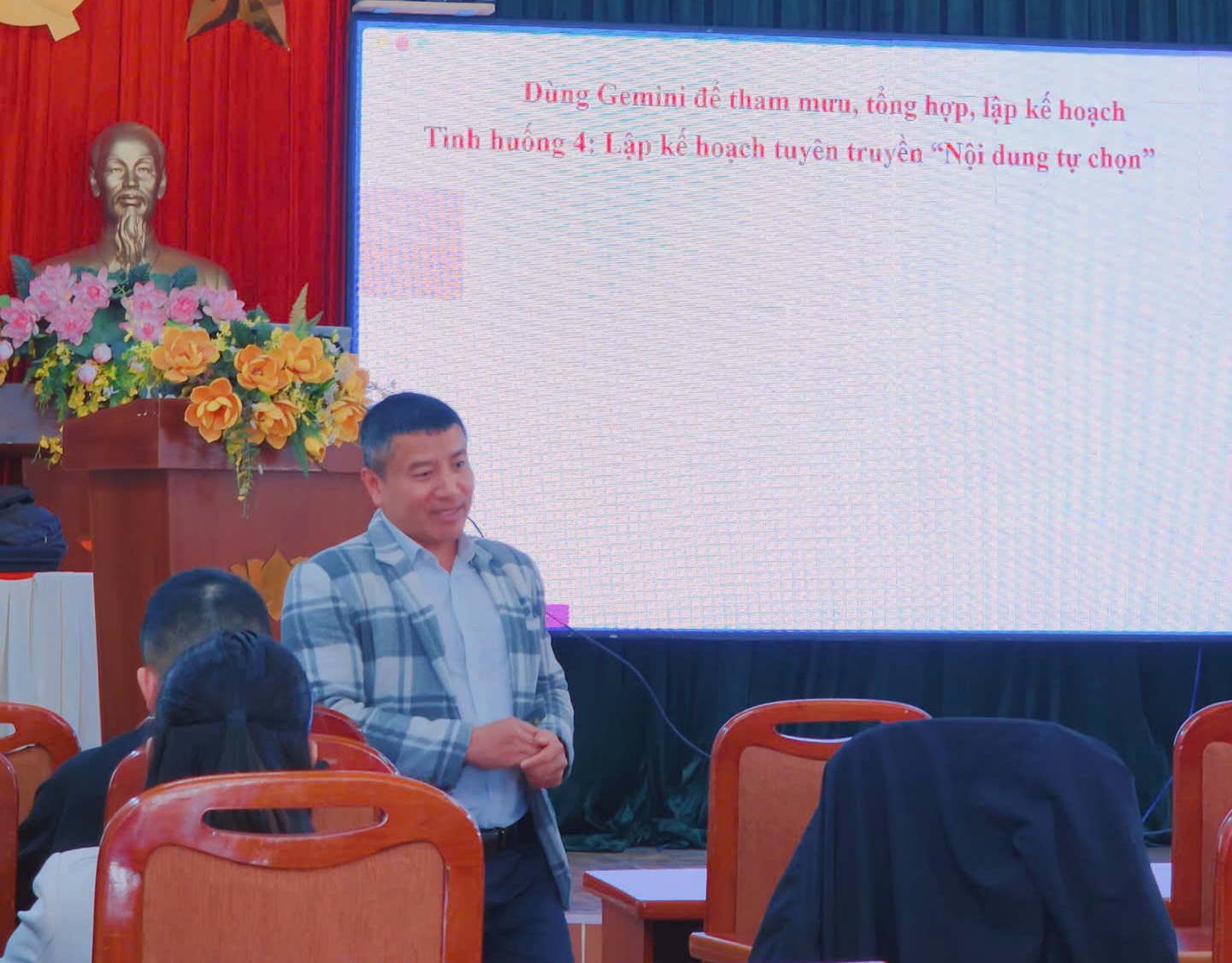
Tran Xuan Tho, lecturer and deputy head of the Basic Sciences Faculty at Dalat College / Photo credit: Tran Xuan Tho
“One of the biggest challenges today is that knowledge and technology change very rapidly,” he says.
Teaching materials must always be updated, requiring educators to keep learning to ensure that lessons are anchored in reality.
Educators also need to tailor lessons to increasingly diverse student needs – all while navigating time-consuming administrative tasks such as planning, grading exams, and compiling reports.
“Without appropriate methods and tools, we can spend too much time on repetitive tasks, while the time dedicated to learners is reduced,” Tran explains.
Learning to use AI with intent
Tran’s motivation to explore AI stems from a “very practical need,” particularly “how to reduce time spent on technical and repetitive tasks yet still improve teaching quality.” As such, he trained under the AI Opportunity in Lam Dong program, which was delivered by his institution and Viet Anh Trung Consulting Company as part of the Fund.
Before joining the program, he had experimented with the tech independently. But he saw a difference between operating an AI tool and using it methodically. Simply asking a question and copying the response could produce generic, inaccurate, or unsuitable material for his students.
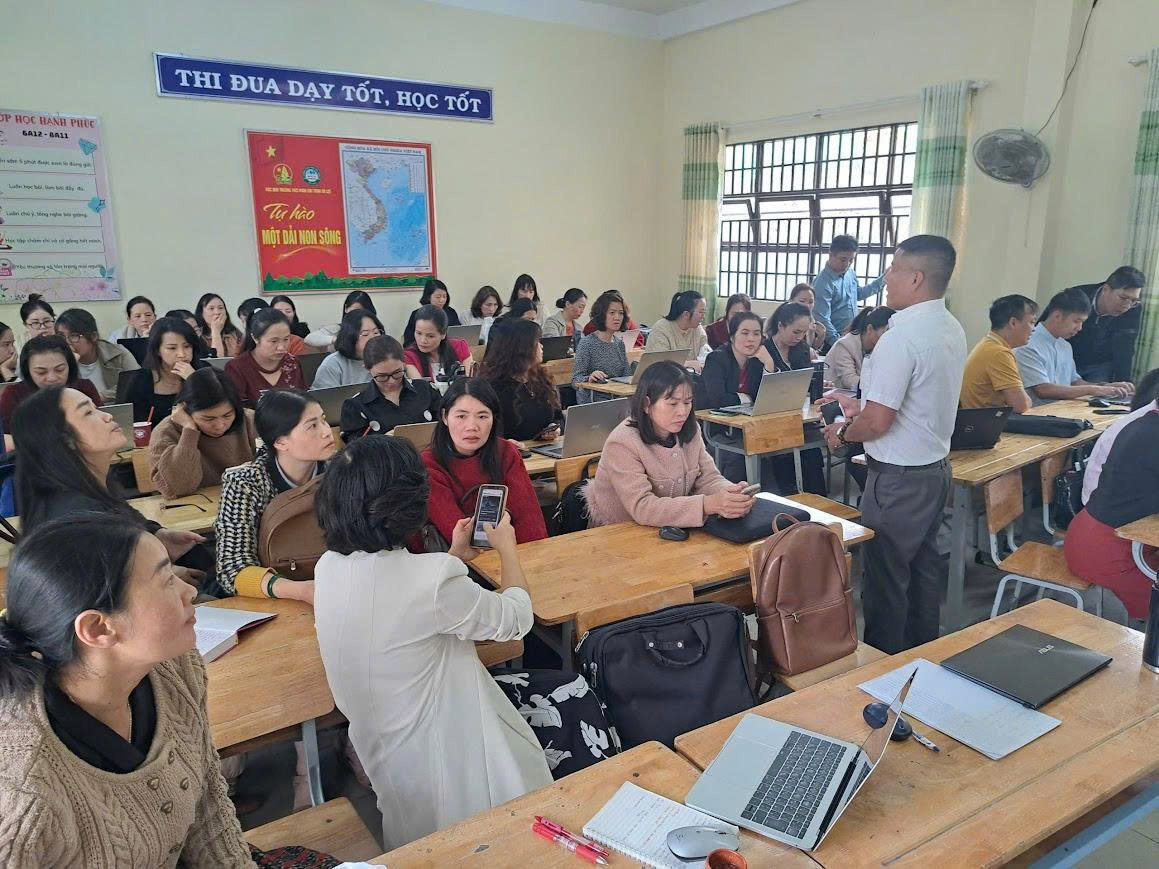
Tran giving a lesson to his college students / Photo credit: Tran Xuan Tho
“When the prompt is generic, the results are often generic,” Tran notes. “The first lesson is to start with a real-world problem, not with the tool.”
The program introduced tools including Gemini and NotebookLM, but what stood out to him was its focus on hands-on application rather than a showcase of product features. Participants built prompts, created materials, and revised them during the session. Tran quickly learned that useful responses require context, including the audience, objective, criteria, and output format.
“The course helped me view AI more realistically,” he adds. “AI has a very fast processing speed, but it is not always correct. Users must still check sources, cross-reference data, edit the language, and take responsibility for the final product.”
Tran has the same expectations in the classroom setting, where AI should be treated as a learning assistant rather than a substitute for students’ own thinking.
“I do not encourage verbatim copying of AI’s answers,” he emphasizes.
A faster draft, not a final answer
The biggest change has been how Tran prepares a lesson.
Previously, he would spend hours manually reading documents, structuring outlines, and searching for media. Now, he can input original documents into an AI tool and ask it to organize the content around learning objectives, suggest practical scenarios, or develop questions for different skill levels.
After that, Tran carefully reviews the content in detail.
“I must check every piece of content, eliminate inaccuracies, adjust terminology, and select examples that match the learners’ proficiency level,” he explains. “AI helps me get a draft faster, but I am still the one who decides the final product.”
Tran estimates that the tech can save up to 70% of the time required by his previous workflow for suitable tasks. Of course, this does not apply to every aspect of his job, as tasks involving professional judgment, sensitive information, or direct interaction with learners still require his full attention.
“The time saved can be dedicated to things AI cannot replace, such as listening to learners, counseling, encouraging, observing their progress, and adjusting teaching methods,” he says.
Beyond one classroom
Tran’s experience highlights why educators are central to Phase 3 of the AI Opportunity Fund. They act as a multiplier, passing responsible digital habits and practical knowledge on to successive cohorts of learners.
“My goal is not to chase after every new tool that appears, but to select truly useful technologies, use them responsibly, and turn them into concrete value for education as well as the community,” he points out.
Next, Tran hopes to explore personalized learning, subject-specific AI assistants, and repositories of learning resources. He also wants to continue sharing practical AI skills not only with students but also with fellow teachers, public officers, and community groups.
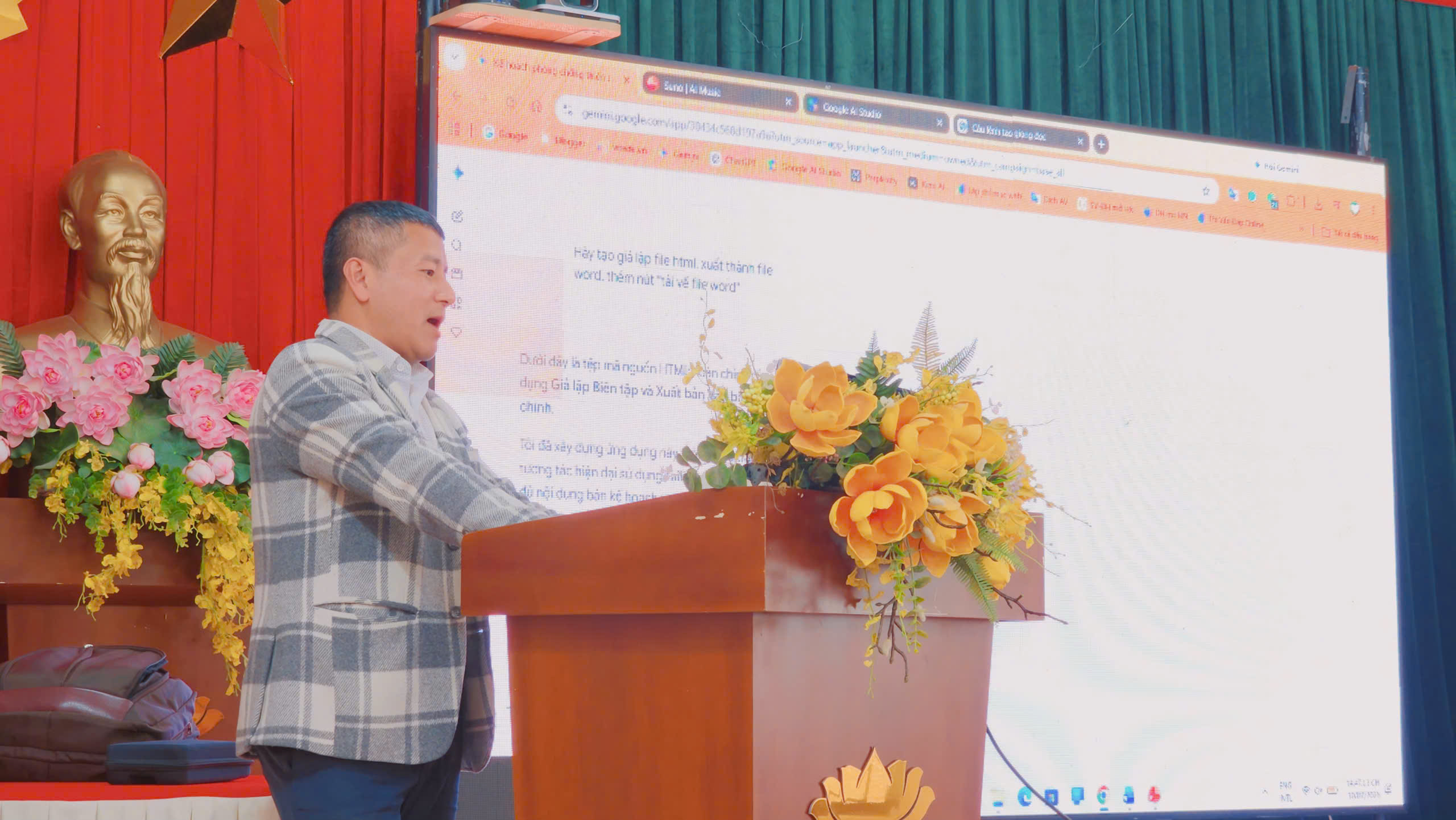
Just a little help from Gemini and Tran is good to go / Photo credit: Tran Xuan Tho
To scale this approach, AVPN plans to formally integrate AI Ready ASEAN, developed with the ASEAN Foundation, into the Fund and build on its network involving the ASEAN Secretariat and ministries of education. All training information under AI Opportunity Fund will be accessible on a dedicated platform, which will serve as a single access point where learners can find training that’s relevant to their market and language.
The expanded program aims to reach nearly 5.5 million workers, learners, and MSMEs by 2030.
But for Park, the numbers are not the end-all, be-all.
She says what matters more is that “AI fluency can become a foundational literacy – the way earlier generations built digital literacy into education and workforce systems, deliberately rather than by default.”
“That’s the horizon we’re building toward, one phase at a time,” Park adds.
AVPN is Asia’s largest platform for social impact, where over 700 resource providers, innovators and intermediaries from across 43 markets collaborate to mobilize capital. Grounded in deep regional expertise and partnerships, AVPN is building a thriving ecosystem that accelerates measurable progress toward inclusive growth, empowering Asia to lead the way in global impact. Find out more about its mission and how it’s fulfilling it here.
GET A DEEPER LOOK AT AVPN’S WORK
This content was produced by Tech in Asia Studios, which connects brands with Asia’s tech community. Learn more about partnering with Tech in Asia Studios.
Stay updated on the go with our mobile app.
Get latest insights with smoother, more personalized experience through TIA mobile app.
Recommended reads
 TikTok creator agencies turn to AI to cut costs
 Tracking AI hiring in Singapore: OpenAI, Anthropic, and more
 Last to board: why travel may be AI’s final frontier
 Why ‘cheaper’ no longer wins dev deals for Vietnam
 Alibaba’s capex isn’t the full story
 Forget startups. Buy the business running on Excel
 Life’s a game, and AI agents are Animoca’s new play
 Indonesian AI startup goes global
 Forrest Li on scaling Sea, building smarter bots, and founder grit
 An AI assistant that joins sales calls and scores team skills





Editing by Jonathan Chew, Stefanie Yeo, and Mina Deocareza
(And yes, we’re serious about ethics and transparency. More information here.)