
The region is working towards a more AI-ready social and economic landscape, but is it truly ready for such a revolution?
Billions have been poured into AI investments, but economic growth and productivity gains will not be realized if people aren’t taught how to use these new tools.
“A big part of the population is aware of AI and has a keen interest, but some have no clue on how to engage with it,” says Young Park, director of special projects at AVPN, one of the largest social investor networks in Asia. A report by AVPN revealed that 57% of survey respondents are unaware that AI upskilling resources exist.
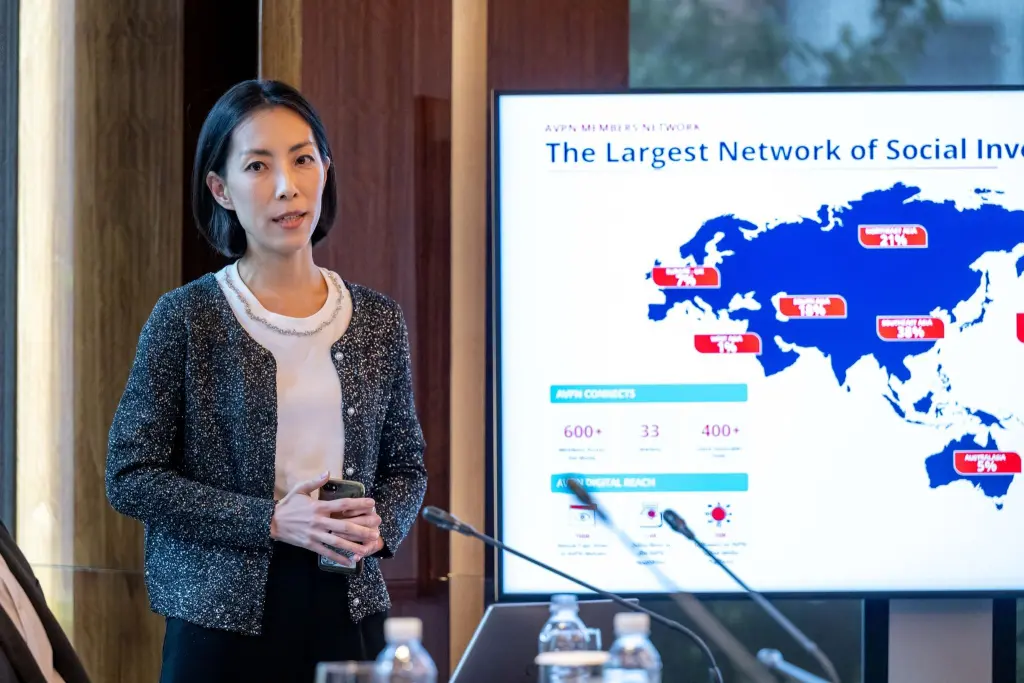
Young Park, director of special projects AVPN / Photo credit: AVPN
Here’s the good news: Investors including tech giants such as Google are funding efforts to upskill the region’s workforce across every demographic.
If everything goes smoothly, here are some of the people that could benefit the most.
A multitrillion potential
Note: These are hypothetical examples – based on data and anecdotes – of people from these demographics, and not real people.
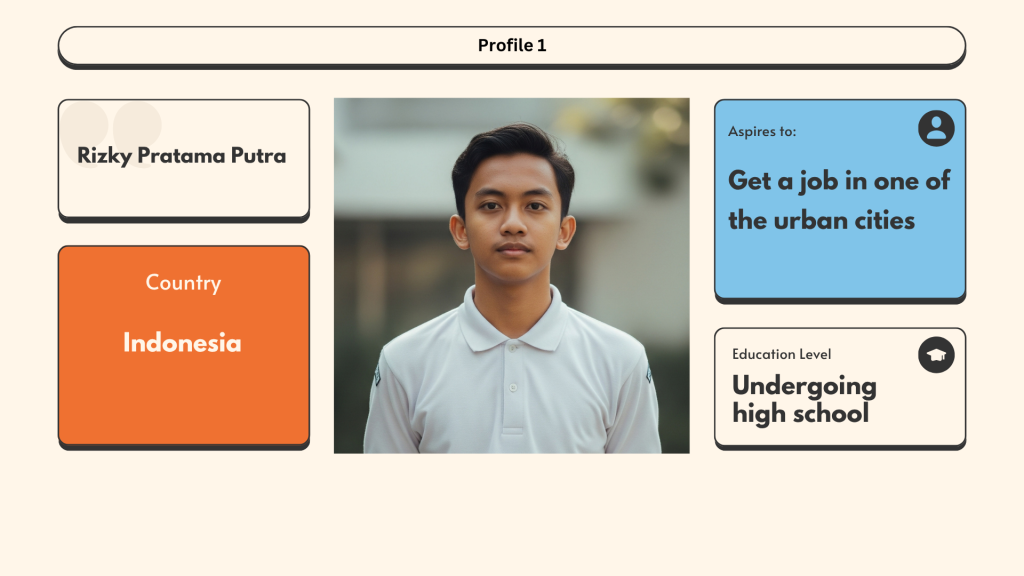


These are just some examples of the demographics in Asia Pacific that can benefit from robust AI upskilling initiatives. Others include older employees, rural dwellers, and SME workers, among others.
Upskilling communities with unmet needs is important not only because it could help close the AI labor gap, but also because it could lead to tangible economic benefits, Park explains.
Businesses continue to lead this shift, leading the adoption of AI in their workflows. A Google report found that if companies in Asia Pacific can ensure that AI solutions are properly implemented and fully utilized by their employees, it could lead to a total of US$3 trillion in economic benefits for the region. For people on the ground, having AI skills will open doors to pursue new work opportunities, paving the way for better job security.
Upskilling across diverse demographics could also bring about significant social and cultural benefits.
“Many algorithms may not be equally represented across all populations,” Park points out, adding that it’s critical to have what AVPN calls an “AI Just Transition.”
By including more demographics to AI tools’ user base, “we can address those discriminations before they get amplified,” she says. “If we can get more people to speak up and contribute, then more perspectives will be recorded in AI development.”

A workshop by Seoul National University to train attendees on how to conduct AI upskilling courses / Photo credit: Seoul National University
Additional access to AI tools could empower communities with unmet needs to help them engage more within their local societies and ensure they can have a voice.
“Learning how to use AI tools means they’ll be equipped with the right language to engage with others effectively,” Park says.
Bottom up
Governments across Asia Pacific are already implementing measures to ensure that AI upskilling takes place across various demographics.
For example, the Australian government established The National AI Centre in 2021, pumping US$39.9 million into the agency to “enhance AI capabilities and address workforce skill gaps,” according to a report by AVPN. Meanwhile, Indonesia’s National AI Strategy is aimed at equipping 9 million individuals with digital skills by 2045.
However, relying solely on top-down approaches won’t be enough.
“This is something too big for any one organization to solve alone. We need the support of the government, private sector actors, and community partners to provide a safe and conducive environment to upskill people,” Park notes.
She adds that these groups need to ensure that various population cohorts can engage with AI effectively within their own cultural, social, and economic contexts, so it’s more relevant and comfortable for them to use these tools. For example, outreach efforts to upskill local communities in Vietnam – where manufacturing is responsible for roughly 24% of the country’s gross domestic product – could focus on how to implement AI tools in supply chain workflows.
This is where organizations like AVPN come in. It introduced the US$15 million AI Opportunity Fund, which will deploy capital to strategic partners and 49 local training providers. The fund was launched with support from Google.org and the Asian Development Bank to offer localized opportunities.
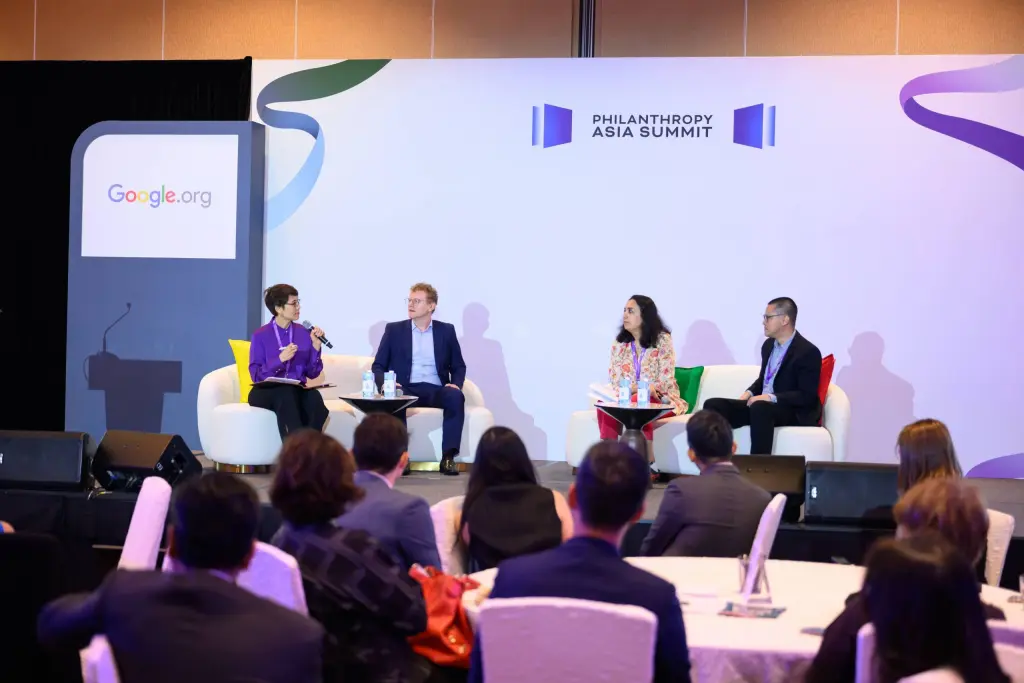
A panel discussion titled “Unlocking AI Opportunity For Everyone in APAC,” featuring speakers from Tech for Good Institute Singapore, Google, AVPN, and AI Singapore. / Photo credit: Google.org
Local training providers are chosen based on their ability to implement a ground-level, grassroots approach to upskilling communities with AI. For instance, one of the selected local training providers is Hapinoy (At1ndahan Inc) . The Philippines-based social enterprise’s mission is to create opportunities for sari-sari store owners to grow, making it well-suited to help small business owners and craftspeople pick up AI skills.
“We need a community-based approach to try and reach every person we can,” Park says.
Building bridges
Clearly, the work to upskill communities with unmet needs in Asia Pacific is well underway.
AVPN, for its part, is focused on rolling out its training programs together with ground-level partners. These partnerships aim to “find people at the boundaries of the social and economic system, such as persons with disabilities or housewives returning to the workforce,” Park shares.
She remains optimistic about these efforts, noting that there’s already a lot of interest from various local communities in developing AI skills. The most urgent task right now is facilitating access to training programs.
“We’re very privileged to be working in this space and excited to help every country have an AI-ready workforce going forward,” Park says.
AVPN is a social investor network with more than 600 members. It seeks to build an ecosystem that can deploy capital effectively, driving systemic changes across Asia. Find out more about its mission and how it’s fulfilling it here.
This content was produced by Tech in Asia Studios, which connects brands with Asia’s tech community. Learn more about partnering with Tech in Asia Studios.
Stay updated on the go with our mobile app.
Get latest insights with smoother, more personalized experience through TIA mobile app.
Recommended reads
 From data to durians: H2O.ai’s journey to AI-led accessibility
 This startup helps chipmakers stop repeating the same mistakes
 The data center rush reshaping Batam
 QuickBytes: How GovTech Singapore is fighting fire with fire in cybersecurity
 Freeze headcount until AI becomes the true production line
 Southeast Asia pulls ahead of global average on AI adoption
 Why Notion warns that AI token spend hides actual product ROI
 A middleman model makes free patient tracking possible
 Why robots still need humans to make warehouse automation work





Editing by Winston Zhang and Eileen C. Ang
(And yes, we’re serious about ethics and transparency. More information here.)








📅 Upcoming Events
22 October 2026
Payoneer x CSPN Summit 2026