Nicolette Tan · · 4 min read
Klook co-founder on how the company scaled in Asia in 3 years
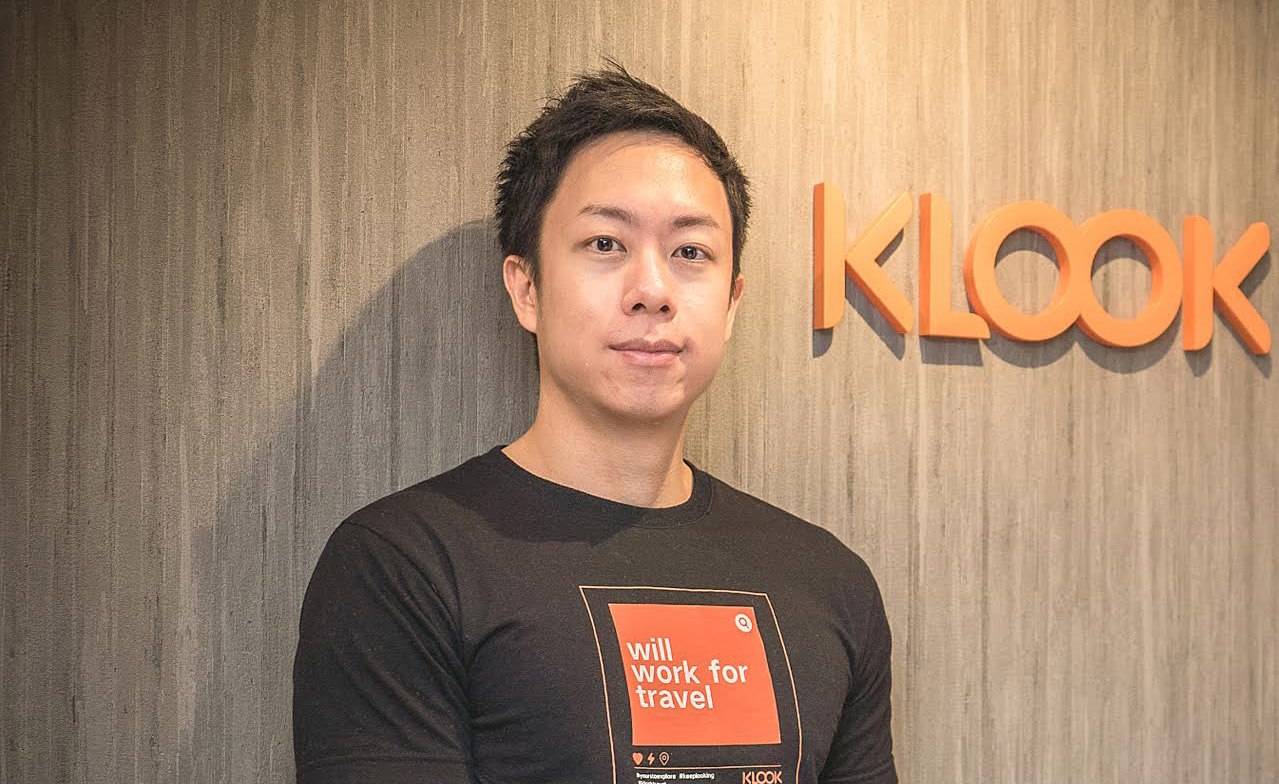
Klook co-founder and COO Eric Gnock Fah.
In 2014, three founders created Klook, a Hong-Kong-based in-destination services booking platform. The company recently raised US$30 million in a series B funding round led by Sequioa Capital. It now operates in over 100 destinations worldwide.
In this interview, I spoke with one of the founders, Eric Gnock Fah, about how the company has scaled to a team of 300, with offices in 10 cities, in less than three years.
How has the company grown since 2014?
Klook started in Hong Kong and Macau, targeting inbound tourists. We then opened the first overseas office in Shenzhen (China), followed by Taipei (Taiwan), and then scaled from there into Southeast Asia.
We identify new markets by seeing which cities have larger inbound traffic into our existing markets. When that inbound is significant and we see positive social metrics and organic growth, we will then set up a local team and start to really localize user acquisition initiatives.
How are your 10 regional offices managed?
We have three management roles for each region—business development, user acquisition, and local operations. These roles could be managed by two or three people.
I actually travel quite a lot now to each market because I believe that face-to-face interaction is important. The Southeast Asia business is mostly managed through the Singapore office. For example, we just hired someone for Vietnam recently, and she spent some time learning about the business from the Singapore office. We also have a playbook to ensure that our processes are scalable and consistent across markets.
We also hold bi-monthly video conferences with all our regional leads to provide them with updates and support. Twice a year, the regional leaders and senior management will also gather for an all-hands sharing session.
Going ‘glocal’ is almost mandatory for companies wanting to expand. What’s the company’s take on that?
Product localization is key in the service industry. For example, a 101 walking tour in Hong Kong may be less appealing to frequent Asian visitors vs long-haul travelers. Our local sourcing team will feedback what the existing preferences and trends are and we accommodate accordingly. Hiring local is key to our strategy. It is not enough to be able to speak the language, but to fully understand local habits.
What are some trends that have worked in favor of your expansion?
When we pitched to investors back then, the fact that we wanted to cover both China and Southeast Asia was confusing to [them]. They thought that we were biting off more than we can chew. But today, Southeast Asia is starting to feel the effects of China’s tech domination. Our team’s prior [experience] with Chinese tech companies […] has helped us stay ahead of this trend.
On hiring, another trend that works in the favor of Asian entrepreneurs (including Klook) is that a lot of foreign-educated Asians are coming home. This means that we have a lot more talent that understands local markets but have a global mindset and can see the bigger picture of where our business is headed.
All companies I’ve interviewed said hiring is important. What challenges have you faced with regard to that?
As everyone will tell you, it’s very important to hire the right team. We don’t really work with headhunters but rely more on referrals and personal networks. These are people who understand our culture, and that helps us filter through the many resumes we receive daily. We also hire people with very strong execution skills because I believe that being a quick learner and having the right attitude [can help you achieve anything].
As we go global, our teams will be further away from HQ. So, we will need to have new processes that accommodate for a wider disparity in time zones.
How has investing in influencer marketing worked for your expansion?
Influencers and key opinion leaders (KOLs) are important to us because the travel business relies very heavily on customer trust. So other than friends, people tend to trust these influencers who review [our] experiences after trying them out. It is how we gain brand awareness in any market.
What’s next for the company?





Stay updated on the go with our mobile app.
Get latest insights with smoother, more personalized experience through TIA mobile app.